
A lab coat tender specification checklist should begin with the intended use, rather than a price target or a photograph of a white coat. Buyers need to distinguish ordinary uniform requirements from separately substantiated protection needs. That distinction determines which questions belong in the garment brief, which evidence needs qualified review and whether the supplier can confirm the requested scope.
This guide provides six critical checks and an original tender review worksheet. It addresses procurement scope, evidence ownership and bid clarification. It does not establish that an ordinary lab coat protects against chemicals, flame, biological exposure or another hazard. The buyer’s qualified safety and compliance lead must determine destination-specific requirements and review any protective claim before it becomes an accepted tender condition.
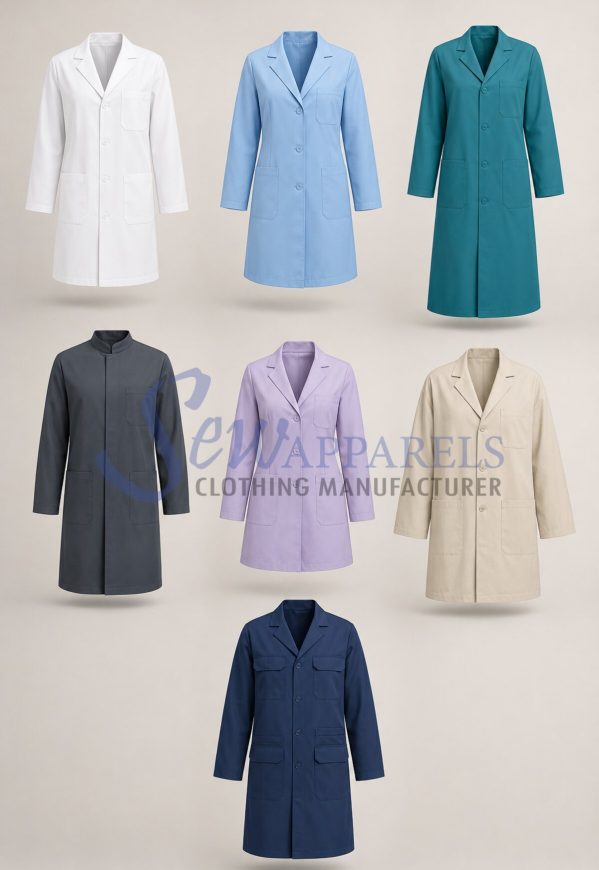
1. Lab coat tender specification checklist: intended use
Start the lab coat tender specification checklist with the users, activities, destination and procurement purpose. Describe whether the request concerns an ordinary institutional uniform, visitor apparel or another defined application. Avoid using a department name as the complete use statement. Two buyers working in a laboratory may require different products because their activities and assessed conditions differ.
The lab coat intended use tender statement should identify the accountable buyer representative and any safety or compliance reviewer. State which decisions that person must resolve before the specification is issued. Where the intended role remains uncertain, preserve the question as an open item. Do not let a supplier quotation silently decide whether the coat is ordinary apparel or protective equipment.
An ordinary lab coat uniform procurement brief can describe appearance, identification, fit, pockets, closures, fabric and packing. Those are useful purchasing requirements, but they do not substantiate protection. Keep the uniform brief accurate about its scope. A professional-looking garment or familiar medical setting is not evidence of barrier performance, chemical resistance or flame protection.
Define the order configuration as well as the application. List styles, colors, sizes, quantities, intended users and delivery allocations. Identify whether the tender includes personalization, samples, labels or other development work. A garment-only bid should not be compared directly with a proposal that includes additional services until those differences are recorded and resolved.
2. Separate appearance from protection requirements
The second check in a lab coat tender specification checklist is the boundary between visual preferences and performance claims. Terms such as “professional,” “white” and “laboratory style” describe appearance or context. They should not be used as substitutes for defined protective requirements. Identify each requested claim independently and name the evidence owner responsible for its review.
Lab coat protective claim clarification should explain what protection is being requested, for which intended use and on what basis it will be assessed. The qualified reviewer must determine the applicable requirements and supporting evidence. Do not add a test number or certification phrase merely because it appears in another supplier’s brochure. Requirements must match the actual product, destination and claim.
For lab coat uniform versus PPE scope, keep the decision visible in the tender rather than relying on a general heading. If an ordinary uniform is requested, state that scope accurately. If separately assessed protection is required, flag it for capability confirmation and evidence review before acceptance. No protective option should be attributed to Sew Apparels without actual confirmation of the relevant manufacturing and documentation scope.
The FDA overview of PPE for infection control explains that requirements for PPE intended as medical devices depend on the specific product and intended use. It provides regulatory context; it does not approve an ordinary lab coat or establish a supplier’s capability. The buyer’s qualified reviewer should assess the destination requirements applicable to the exact tender.
Name the lab coat protection claim evidence owner and specify the review stage. That owner should resolve whether the proposed evidence addresses the complete requested claim and product. Procurement staff can collect documents and track questions, but an attractive bid or a generic report title should not replace the required technical or compliance decision.
3. Specify materials and an evidence schedule
A lab coat tender specification checklist should connect the material request with a defined garment version. Record the proposed fabric, composition information, color reference, construction and finishing requirements. Ask bidders to identify alternatives separately. If one bidder offers a substitute, keep that proposal visible rather than treating the same broad fabric description as proof of equivalence.
Lab coat tender material evidence should identify what information the buyer needs and when it must be provided. Distinguish a material description, an approved swatch, a performance report and evidence concerning the finished garment. They answer different questions. A fabric document does not automatically substantiate the behavior of closures, seams, embroidery or a complete coat after the specified care process.
Build a lab coat buyer evidence schedule with the requirement, product or component reference, document requested, submission stage and reviewer. State which items are mandatory and which require clarification. Where a method or acceptance criterion is needed, obtain the responsible technical reviewer’s input. Avoid inserting universal pass limits without an agreed basis for the intended product.
Check the identity behind submitted evidence. Record the garment or material revision, relevant date, source and any stated limitations. A report for a different construction should not be silently assigned to the tender sample. Ask the bidder to explain the relationship and obtain the designated reviewer’s decision before relying on it.
Preserve the distinction between a requested result and an observed result. A tender can state a requirement, but that does not mean the supplier has already met it. Use separate fields for the buyer requirement, bidder response and accepted evidence. This simple structure makes unresolved items visible without presenting an incomplete file as an approved specification.
4. Define laundering, identification and packing
The lab coat tender specification checklist must describe the proposed care route and who is responsible for confirming it. State whether the buyer uses an institutional laundry provider or another arrangement. Request relevant process information from the responsible parties. Do not assume that every ordinary lab coat is suitable for every laundry process or that one wash trial establishes indefinite service performance.
A lab coat laundering requirement schedule should list the actual buyer requirements and the evidence needed for the complete garment. Include fabric, closures, labels and decoration where these are part of the order. Record the sample identity, agreed evaluation conditions and reviewer. Any proposal to change a component should be assessed against that controlled scope.
Lab coat laundry bid requirements should clarify what the bidder includes: care information, samples, agreed testing or other confirmed work. Identify which laundry details come from the buyer or its provider. If process information is missing, show it as unresolved. Avoid substituting a generic “industrial washable” phrase for product-specific requirements and supporting evidence.
The CDC healthcare laundry guidance describes institutional laundry considerations and facility responsibilities. It is not a durability certificate for a proposed coat or proof of protective performance. Use the facility’s applicable procedures and qualified review when setting the tender’s handling and care scope; keep those decisions separate from a supplier’s garment quotation.
Define identification requirements using approved artwork, wording and placement references. State whether names or role titles are included and who approves the entries. For preliminary costing, use anonymized examples where actual personal information is unnecessary. A department logo approval should not be treated as approval of every individual name or professional title.
Lab coat tender packing scope should identify quantities, size allocation, garment identification, carton information and delivery grouping. Ask whether packing materials and specified labels are included in the bid. Keep site allocation separate from garment size totals so the buyer can reconcile both. Do not assume that a standard packing proposal satisfies a different receiving workflow.
5. Set sample criteria and review responsibilities
A lab coat tender specification checklist should state what sample the bidder must provide, which version it represents and who reviews each requirement. A photograph, fabric swatch and finished garment serve different purposes. Define the expected output and approval stage. Samples should support an identifiable decision rather than becoming an informal substitute for the written brief.
Lab coat procurement sample criteria can cover the agreed appearance, garment construction, dimensions, closure operation, identification and packing presentation. State the references and checking conditions needed for each decision. Detailed length and mobility development belongs in the related product guidance; the tender should identify the accepted requirements and responsible reviewer without creating a conflicting fit specification.
Assign responsibilities before the sample arrives. Procurement can check commercial inclusions and receiving records, while the appropriate technical parties review construction and performance evidence. Protective claims require the designated qualified reviewer. Do not combine all approvals into a vague “sample approved” note if different decisions remain outstanding.
Record revisions and conditional decisions. If a sample is accepted only after a closure or label change, identify that condition and the further evidence required. Preserve the earlier version for traceability. An accepted appearance sample does not automatically approve a later material substitution, different decoration or revised care route.
Use a lab coat tender approval checklist to show the requirement, current response, evidence reference, decision owner and status. Distinguish accepted, rejected and unresolved entries. Final release should refer to the approved version and applicable conditions. This gives the buyer a clear record of what was actually reviewed before an order is confirmed.
6. Lab coat tender specification checklist: compare clarified bids
The final check in a lab coat tender specification checklist is a like-for-like comparison. Price alone cannot show whether two proposals cover the same garment, quantities, evidence, samples or packing. Build the comparison around the issued requirements and each bidder’s written response. Keep assumptions and exclusions visible until the buyer resolves them.
A lab coat bid comparison worksheet should separate the following original review fields. It is a decision aid, not a price list, compliance certificate or guarantee of available services. Buyer requirements and supplier-confirmed terms must be entered for the actual tender.
- Use and scope: intended users, ordinary-apparel requirements and separately flagged protection needs.
- Garment configuration: style revision, materials, colors, size quantities and approved alternatives.
- Evidence: requested records, matching product identity, submission stage and review owner.
- Care and identification: buyer process inputs, decoration references and approval responsibilities.
- Samples and packing: required outputs, revision conditions, carton allocation and receiving information.
- Commercial response: inclusions, exclusions, current quotation terms and unresolved questions.
Complete a lab coat bidder exclusions review before selecting a proposal. Ask whether development, additional samples, testing, personalization or delivery are outside the quoted scope. Record actual terms and any buyer responsibilities. An excluded item should remain visibly excluded; it must not be treated as an included service merely because the overall bid appears comprehensive.
Keep a dated lab coat bid clarification record for questions and responses. Link each answer to the requirement it resolves and preserve any revised proposal. Where bidders offer different scope, obtain comparable information or record the buyer’s reason for accepting a difference. Avoid changing the issued requirement silently during the comparison.
Share the intended use, checklist and evidence schedule when discussing custom lab coat manufacturing. Confirm the actual manufacturing scope before describing any protective capability. Keep private label lab coat production aligned with the approved ordinary-apparel brief or the separately qualified requirements that the responsible parties have confirmed.
Review the lab coats buying guides for related product decisions. A completed lab coat tender specification checklist helps the buyer identify scope differences, allocate evidence reviews and document approval. It does not replace the institution’s qualified safety assessment or establish that a proposed coat meets an unverified protective claim.