
PE uniform sublimation quotation comparison starts with a common design brief, not two headline prices. A school kit made with printed panels and a kit assembled from separately coloured fabrics may express a similar identity, yet the quoted materials, artwork preparation and construction can differ. Buyers need to see those differences before deciding which offer fits the programme.
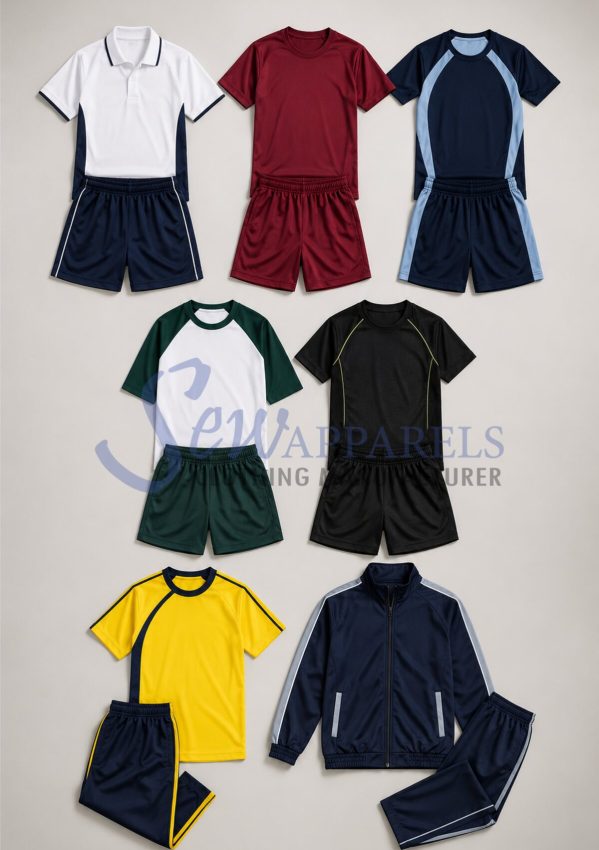
This guide sets out five critical checks and a production-route matrix for comparing supplier proposals. It focuses on the commercial scope of each route, rather than prescribing colour-block seam geometry. Treat every material, process and configuration as subject to supplier confirmation. Discuss the common specification with the PE uniform manufacturing team before requesting route-specific offers. Neither a printing method nor a low unit price proves that the finished kit meets the approved design, care or delivery requirements.
1. PE uniform sublimation quotation comparison: define one kit brief
Start PE uniform sublimation quotation comparison with the garments included in the set. Identify the top, shorts, trousers or optional layer separately. Record the size range, order ratio, school colours, crest dimensions and intended placement. Give the artwork and specification a revision reference so both suppliers can identify the same starting point.
A school PE sublimation quote needs more than a digital illustration. State which areas are printed, which remain plain and whether names or other variants are included. Show the front, back and side views, and distinguish an intended visual effect from a mandatory construction feature. If a contrast area may be created by either print or a sewn panel, explain whether both interpretations are acceptable for review.
Use that same reference for PE kit cut and sew costing. Ask the supplier to describe how the proposed fabric colours and panel boundaries reproduce the approved design. Record any differences in seam placement or visual appearance as exceptions. Review PE uniform colour-blocking construction separately when a sewn-panel option changes the approved design. An alternative route can be worth evaluating, but it should not silently replace a compulsory school identity detail.
Fix the quotation boundary too: garment-only, complete set, labels, individual packing and delivery terms are separate decisions. A school sports kit printed panel quotation may exclude garment assembly, while another offer includes a finished packed set. Compare like scope before interpreting the price difference.
2. Identify the actual material and colour route
PE uniform production route comparison should name the proposed substrate and process. Request fibre composition, finished weight, structure and the supplier’s printing or colour-construction description. Do not infer an exact blend from the word “sublimation,” or assume that a cut-and-sewn route uses the same material as its printed alternative. Ask the supplier to confirm suitability for the proposed process.
Keep the PE uniform sublimated fabric specification beside the alternative material specification. Note differences in surface, stretch, opacity and intended care that may affect the buyer’s decision. Compare production-intent samples where available. If one supplier has priced a different fabric weight or composition, retain that difference in the matrix rather than presenting the two offers as interchangeable.
For PE kit colour construction cost, identify whether the offer includes separately coloured panels, printed colour areas, trims or a combination. Ask how colours will be approved and which physical references control production. A screen image helps communicate the design but does not explain the agreed shade standard or viewing conditions.
PE uniform sublimation quotation comparison also needs destination-specific product information. The FTC textile labelling guidance explains US requirements for information such as fibre content, origin and responsible business identification. For a US-bound programme, confirm the applicable labels and who supplies their data. Other destinations need their own review; this reference is not a universal labelling specification.
3. Separate artwork, pattern and development charges
Request a line for school PE artwork setup charges and identify what that line buys. It might cover preparing a production file, adapting approved artwork to garment patterns or reviewing variant layouts, depending on the offer. Ask the supplier to state included revisions and approval deliverables. Do not assume that a setup charge transfers file ownership or includes future artwork changes.
List school sports kit sublimation inputs in the brief: artwork version, garment pattern reference, colour instructions, crest files and any personalisation data format. Use fictional examples for development if individual identifiers are unnecessary. Name the party responsible for preparing and approving each input, and keep unresolved information out of the final production release.
For a PE kit sample development quotation, distinguish a material swatch, printed panel, assembled prototype and graded sample. These are different deliverables. Ask whether the sample uses proposed bulk materials and whether the price includes any agreed assessment or revision. A sample made from an available substitute should be labelled as such, with the remaining confirmation recorded.
In PE uniform sublimation quotation comparison, pattern work also needs a clear boundary. A supplier may adapt an existing shape or develop a new pattern from measurements. Record which route is quoted and whether artwork placement across sizes is included. Keep school PE design route assumptions visible so a later request for a different neckline, fit or size range is evaluated as a defined change.
4. Request comparable quantity and charge schedules
For PE uniform sublimation quotation comparison, use the same quantity scenario for school sports kit comparable quotes. Break the order down by garment, size, colour and approved variant. Ask each supplier to state the basis of the price, the currency and the offer validity. Record any quantity band or material condition that changes the commercial terms. There is no useful comparison if one offer assumes a different assortment.
A PE uniform print route minimum needs written confirmation for the specific design and material. Clarify whether a minimum applies to the complete order, a fabric colour, a printed design or another defined unit. Do not invent a standard minimum or assume that unrelated variants can share it. Keep an unresolved minimum marked “supplier confirmation required.”
Record the PE uniform decoration price basis: per garment, per set or another clearly stated unit. Distinguish recurring garment charges from one-time development charges, and identify any item paid separately. If names or crest variants are proposed, ask how they affect the quotation rather than extending a base price without confirmation.
PE kit cut panel quote exclusions deserve the same treatment. Check whether labels, trims, assembly, inspection, packing or agreed delivery costs are omitted. Include a charge only when the supplier has priced it for the common scope. A blank cell is missing information, not a zero-cost service.
A transparent cost calculation
For each route, multiply each confirmed garment quantity by its matching quoted unit charge. Add confirmed setup, development and other separate charges once. Keep provisional or excluded costs outside the confirmed subtotal, with an explicit action to resolve them. Do not spread a one-time charge over an invented future order to make the current offer appear cheaper.
PE uniform sublimation quotation comparison should show both the confirmed subtotal and the unresolved scope. If currencies or delivery terms differ, record the assumptions used for any conversion or adjustment. Preserve the original supplier offer alongside the buyer’s calculation so another reviewer can reproduce the result.
5. Approve samples and evidence before selecting a route
A PE uniform route approval should identify the sample, specification revision and exceptions that the buyer has accepted. Review the complete set for the intended appearance, fit and care requirements. Keep printed areas, sewn colour areas, trims and decoration in the same approval record. An attractive sample does not automatically settle a missing quantity price or unconfirmed packing requirement.
Agree the assessment evidence before comparing performance statements. ISO 105-C06:2010 addresses colourfastness to domestic and commercial laundering. Where relevant to the programme, ask the responsible laboratory or supplier to identify the chosen method, conditions and reported results. The standard’s existence does not certify either proposed kit or establish a pass result for an untested sample.
Keep commercial and technical decisions connected. If the preferred sample changes the fabric, colour route or construction, obtain a revised quotation for that exact version. Record approval responsibilities and the next sample or production step. PE uniform sublimation quotation comparison is complete only when the chosen price describes the chosen product, with remaining actions clearly assigned.
PE uniform sublimation quotation comparison matrix
Use one row for each decision below and separate columns for Route A, Route B, supplier evidence and buyer action. The matrix is a working record; it contains no assumed prices or guaranteed factory capabilities.
| Decision and required information | Route A | Route B | Supplier evidence | Buyer action |
|---|---|---|---|---|
| Common design: artwork revision, garments, crest placement, sizes and required visual details. | To confirm | To confirm | To confirm | To confirm |
| Material: composition, weight, structure, proposed supplier reference and sample status. | To confirm | To confirm | To confirm | To confirm |
| Colour route: printed areas, separately coloured panels, trim choices and approved shade references. | To confirm | To confirm | To confirm | To confirm |
| Development: pattern scope, artwork preparation, samples, included revisions and separate charges. | To confirm | To confirm | To confirm | To confirm |
| Order basis: quantities by garment and variant, confirmed minimums, price bands and quotation validity. | To confirm | To confirm | To confirm | To confirm |
| Delivery scope: labels, packing, inspection responsibilities and the stated delivery terms. | To confirm | To confirm | To confirm | To confirm |
| Evidence: sample identity, relevant reports, open exceptions and named approval owner. | To confirm | To confirm | To confirm | To confirm |
| Decision: confirmed subtotal, unresolved costs, chosen version and required revised offer. | To confirm | To confirm | To confirm | To confirm |
Example of a scope difference
Suppose Route A describes printed top panels but omits assembly, while Route B prices a finished top and shorts. These are illustrative offers, not actual supplier quotations. First request a complete-set price for Route A against the same garment quantities. Then reconcile fabric, labels and packing. Until that happens, the difference between the two quoted totals cannot establish which complete kit costs less.
Prepare a focused PE uniform quotation enquiry
Bring the common artwork, proposed materials, quantity schedule and matrix to the Sew Apparels PE uniform manufacturing team. Ask which routes can be evaluated for the actual brief and which inputs are still needed. For custom PE uniform manufacturing, confirm current capability, minimums, sample scope and commercial terms in the written offer.
Use the existing PE uniforms buying guides to connect the quotation decision with movement, materials and colour-construction planning. A private label PE uniform production enquiry should identify branding and approval responsibilities without assuming that every optional process is currently offered. Keep the final PE uniform sublimation quotation comparison with the approved product file so repeat enquiries start from a traceable decision.