
Pleated skirt production approval should preserve the intended rhythm of the pleats across panels, side seams and openings. A neat row of folds on a fabric trial is useful, but it does not show how that row will meet the closure or fall on the wearer. Buyers need an identified pleat map and a finished sample that connect appearance to construction.
This guide explains six checks for that decision: repeat sequence, junctions, panel allowances, worn appearance, care and signoff. It does not assume that every fabric can retain the same pleat or that a newly pressed sample proves permanent performance. Approval belongs to the actual material, pleating method, pattern revision and care proposal.
For custom skirt manufacturing, send a pleat reference with the fabric proposal and size range. Use pleated skirt production approval to resolve the layout before the team treats the sample as a production reference.
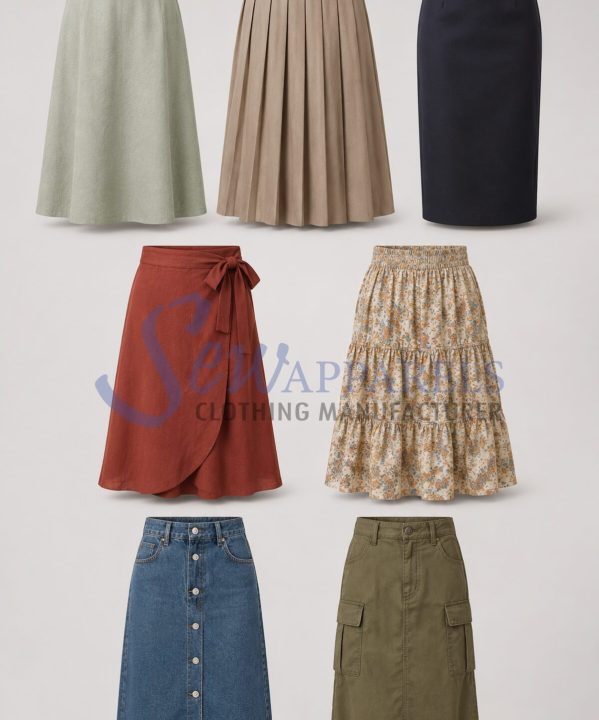
1. Define the pleated skirt production approval repeat map
Start with the pleated skirt repeat specification. State the pleat type, its direction, the visible repeat and the arrangement around the garment. If the design combines different pleat types, identify where each begins and ends. A mood photograph can communicate the overall effect, but it should not be the only record of the sequence.
The skirt pleat sequence drawing should show front and back panel orientation, fold lines and any intentional change in direction. Label the garment center and the relevant panel landmarks. Distinguish the visible face of a pleat from material hidden inside it. This allows the pattern and sampling teams to discuss the same construction instead of interpreting a sketch differently.
Use a pleated skirt repeat map that includes the closure and side seams, not only the uninterrupted front section. State whether the repeat is intended to look continuous at each junction or whether the design deliberately changes there. Name the reference points from which positions are measured and record the approved units.
Separate proposed values from accepted sample measurements. If a repeat is still under development, mark it for trial rather than assigning a finished tolerance prematurely. Pleated skirt production approval becomes easier to trace when the map, pattern and sample carry linked revision numbers.
2. Position pleats at side seams and openings
Review skirt pleat side seam alignment while the skirt lies flat and while it hangs. Decide whether a side seam sits inside a fold, at a visible edge or in a deliberate plain interval. That placement changes the visual junction and may change how the seam allowance behaves inside the pleat. Inspect both sides of the finished sample.
The skirt pleat opening junction deserves its own drawing detail. Show how the sequence approaches the zip, placket or other closure, where the final fold terminates and whether an underlap remains visible. An opening should operate as intended without pulling a nearby pleat out of position. Check it open and closed rather than approving only the closed photograph.
If a repeat looks interrupted at a junction, document whether the cause is layout, assembly or final finishing. A skirt pleat junction correction might require a panel or seam-position change; simply pressing the visible area harder may hide the symptom for one photograph. Ask for the revised junction on an identified sample and compare it under the same viewing conditions.
Keep symmetry expectations explicit. A design can be intentionally asymmetric, but an accidental difference between the left and right side should not be described as design intent after sampling. Record the accepted junction views in the pleated skirt production approval file so later inspections have a useful reference.
3. Confirm panel allowances and material suitability
Establish pleated skirt panel allowances with the pattern and pleating teams before cutting the approval sample. The cloth needed inside the folds, assembly seam allowances and finishing allowances serve different purposes. Label them separately so an adjustment to one is not mistaken for a change to the visible repeat.
Identify the sequence of operations. Pleating a panel before assembly and pleating an assembled garment can lead to different handling questions at seams and openings. Record the proposed route, relevant material identification and how panels are oriented. Ask which dimensions are checked before pleating and which are checked after it.
A skirt pleating material trial should use the proposed fabric and a documented process. Examine the fold definition, surface appearance and behavior after the intended handling and care. Supplier descriptions can guide the discussion, but the selected material and process still need evidence. Avoid claiming that a fiber name alone proves permanent pleat retention.
For pleated skirt panel approval, retain the marked trial together with measurements and the process reference available from the responsible team. A changed finish, fabric construction or pleating route can alter the result. Review the effect of those changes before carrying an earlier approval forward.
4. Check release points and the worn silhouette
The skirt pleat release point spec identifies where a stitched or otherwise controlled pleat begins to open freely. Some designs have no stitched release section; state that condition rather than adding an assumed one. Where a release point exists, specify it from a named garment landmark and show its relationship to the intended silhouette.
Review the pleated skirt hip release measurement on the correct fit sample. A release position should be evaluated together with fit, garment length and how the skirt sits at the waist. If the sample is worn in a different position from the design brief, the observed opening of the pleats may not represent the intended result.
Assess pleated skirt worn sample appearance from front, side and back, standing and during the agreed movement. Observe whether folds open evenly, whether one junction twists and whether a closure pulls on the neighboring pleat. Record the sample size and styling conditions so the comparison can be repeated after a revision.
Review relevant sizes with the buyer instead of assuming that the visual rhythm automatically survives every grading change. Identify whether the repeat count, width or distribution changes across sizes. Different design solutions are possible; the important point is that the approved approach is clear and supported by the selected samples.
Pleated skirt production approval should distinguish a fit concern from a repeat-placement concern. A tight hip section can force folds open even when the pleat map is accurate. Investigate the garment measurements and pattern together before changing the pleat sequence to compensate for an unresolved fit issue.
5. Assess the pleat after the proposed care
A skirt pleat sample care assessment needs an identified sample and a defined procedure. Record the cleaning and drying route, the agreed number of treatments and the observation conditions. Photograph the sample before care and again afterwards. If recovery or pressing is allowed, record its method and assess it as a separate stage.
CottonWorks quality testing guidance discusses appearance after laundering, dimensional stability and retention of desired creases or pleats. Use those principles to organize a before-and-after comparison. They do not establish that a particular skirt has permanent pleats.
Keep a skirt pleat after care reference that shows the approved fold definition, alignment and overall appearance. Record losses of definition, uneven opening, dimensional change or surface damage. Separate what the sample did immediately after treatment from what it did after an agreed recovery procedure; those are different observations.
For garments intended for the US market, the FTC care-labeling guidance explains the need for reliable evidence supporting care instructions for the whole garment. Discuss the intended market and care wording with the responsible compliance team. A fabric-only result should not be treated automatically as proof for the finished skirt and all its components.
Include the care outcome in pleated skirt production approval before accepting a retention claim. If the buyer wants a maintenance requirement stated, it should reflect supported care instructions and the actual approved construction. Do not turn one fresh sample into an unsupported promise about every future wash.
6. Complete the pleated skirt sample signoff
A pleated skirt sample signoff should join the physical reference to the map, measurements and evidence. State exactly which fabric, pattern, pleating route and sample revision were approved. Identify unresolved questions and the person responsible for answering them. A general “looks good” message cannot replace a specific construction decision.
- Repeat: pleat type, direction, visible sequence and intentional transitions.
- Junctions: side seam positions, closure details and accepted inside and outside views.
- Panels: identified allowances, operation sequence and material trial reference.
- Fit: release points, relevant size observations and agreed worn-sample conditions.
- Care: procedure, initial result, any permitted recovery and supported claim wording.
- Decision: accepted revision, remaining action and circumstances requiring another review.
For example, when a side seam creates a double-width visible interval, mark that junction on the map and photograph the finished sample. Determine whether that interval is intentional. If it is not, ask for a panel-layout correction and a new sample. Check that solving the side seam has not moved the closure junction or changed the release behavior.
Use pleated skirt production approval as the reference for later construction checks. If production proposes a different fabric lot, process route or component arrangement, identify whether the change affects the accepted result. The responsible team can then decide what evidence is needed instead of assuming that a previous signoff covers an altered configuration.
Check button front skirt opening specifications where a functional placket interrupts the pleat sequence. Keep the opening map and pleat junction reference coordinated.
Frequently asked questions
Does a sharp pleat on a new sample prove permanent retention?
No. The claim needs evidence for the intended material, construction and care conditions. Review the identified sample after the specified treatment. Describe the observed result rather than promising indefinite retention from the first pressed appearance.
Must every side seam disappear inside a pleat?
No. Seam placement is a design and construction decision. Show the intended junction on the map and approve the finished appearance. A visible seam can be intentional; an unplanned interruption should be investigated.
Can waist-facing approval replace pleat approval?
No. Waist-facing support and pleat mapping have different scopes. Keep their references connected within the product brief, while checking the repeat sequence, junctions, release and care evidence separately.
Prepare a pleated skirt development enquiry
For private label skirt production, share the pleat photograph, fabric proposal, intended size range, opening type and care expectation. Include the repeat drawing and any junction questions. Pleated skirt production approval can then progress through a defined panel trial and finished sample rather than repeated interpretations of the same photograph.
Keep the pleated skirt production approval record available when reviewing the next sample revision. Browse the Skirts Buying Guides for related skirt construction decisions, and combine the accepted references into one coherent manufacturing brief.