
A wrap skirt fastening specification should connect the overlapping panels to the actual closure, wearer access and movement. A tie can hold the waist in place without controlling the lower front, and a comfortable standing fit can behave differently when the wearer sits. Buyers need an identified sample that demonstrates the intended arrangement.
This guide explains six checks for an overlapping skirt closure: the drawing, internal and external fastening points, movement, size grading, attachment and care. It does not prescribe a universal overlap depth or promise coverage from one measurement. The assessment belongs to the proposed silhouette, fabric, sizes and intended use.
For custom skirt manufacturing, provide the silhouette reference, target size range and preferred closure arrangement. A wrap skirt fastening specification gives the pattern and sampling teams a clearer development brief than a photograph of the tied waist alone.
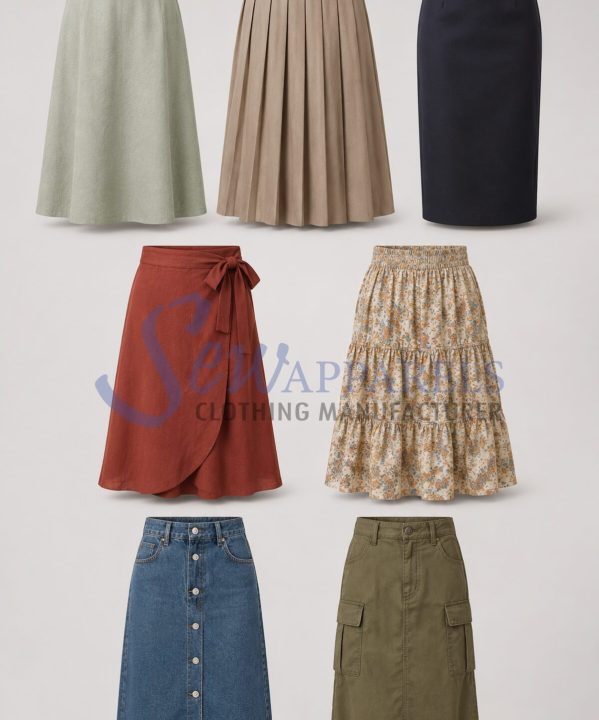
1. Draw the wrap skirt fastening specification
Begin with a wrap skirt overlap drawing showing the garment open and closed. Identify which front panel overlaps, the intended waist position, the underlap and the free lower opening. Show the internal closure, external ties or hardware, and all attachment landmarks. If the garment includes a concealed fixed section, state where the true opening ends.
Define the fastening system rather than assuming that every wrap skirt uses the same ties. An internal button, tab or other specified component may perform a different job from the external fastening. Identify the proposed components, their dimensions and the construction around them. Record any alternatives as separate development options.
Set up wrap skirt overlap fit approval with the drawing, pattern and sample carrying linked revisions. Specify how the overlap is measured and where the measurement is taken. A value at the waist does not describe the overlap at the hip or lower opening; use named landmarks that correspond to the intended coverage review.
The wrap skirt fastening specification should distinguish proposed positions from accepted positions. Where the reference does not reveal an attachment point, mark the question for sampling. Do not leave the team to invent a hidden detail and then treat it as though the buyer had already approved it.
2. Map internal and external fastening access
Review wrap skirt internal fastening as a functional component. Confirm how the wearer finds and operates it, what it controls and whether it remains accessible once the other panel is positioned. The sample should allow the intended dressing sequence without an unexplained twist, inaccessible attachment or uncomfortable pull.
Assess wrap skirt internal closure reach with the garment worn in its intended position. Ask the wearer to complete the agreed operation and record where access is awkward. Reach is affected by location, garment fit and the user’s interaction with the closure. A convenient location on a flat drawing is not sufficient evidence of convenient operation.
Specify the external fastening separately. For ties, identify the free length reference, width, finished construction, routing and attachment point. For another component, identify its opening and closing action. Show whether a tie passes through an opening or around the waist and inspect how that route behaves against the garment and body.
Create a wrap skirt closure operation record with the sample identifier, dressing sequence and observed concerns. Photograph relevant inside details and note the condition under which a closure pulled, loosened or obstructed access. Keep functional observations separate from the decision about the decorative appearance of the knot or hardware.
Use the wrap skirt fastening specification to settle which component controls each panel. If both fastenings depend on the same unsupported area, changing one detail may affect the whole arrangement. Review the assembled interface before accepting the locations individually.
3. Review walking and sitting coverage
Define wrap skirt movement coverage with the buyer before the trial. Specify the intended wearer, styling conditions and normal activities relevant to the product. Record the sample size, relevant garment measurements and waist position. If the fit is incorrect, resolve that problem before attributing all opening behavior to the fastening.
A wrap skirt walking coverage trial should observe the garment during the agreed movement, not only after the wearer stops. Note whether the overlapping edge swings clear, whether the underlap remains where intended and whether the closure creates pulling elsewhere. Record the action and location of a concern so the development team can reproduce it.
Complete a wrap skirt seated fit check under the seating conditions agreed for the design. Inspect overlap, panel displacement, closure comfort and access after sitting. Where a coverage concern appears, record the panel relationship and posture instead of using a vague instruction to “make it more secure.”
A deeper overlap may be one possible revision, but it is not the automatic solution to every concern. Closure position, fit, fabric behavior and panel shape can also matter. Compare proposed revisions on an identified sample under the same conditions. Avoid claiming that a single overlap dimension guarantees coverage for every wearer.
Carry the accepted movement observations into the wrap skirt fastening specification. If the design deliberately includes an open lower front, describe that intent. Buyers should be able to distinguish the chosen silhouette from unwanted movement that the sample did not resolve.
4. Check fastening across the size set
Document wrap skirt closure size grading rather than checking the middle size alone. Show how attachment positions, overlap and tie routing change across the intended range. A closure may remain visually similar while becoming harder to reach or creating a different overlap relationship in another size.
Review wrap skirt smallest size fastening on the selected sample with the intended fit. Check whether excess tie length, component placement or panel bulk interferes with operation. Record the actual configuration; avoid assuming that a smaller body automatically makes the fastening easier to use.
Review wrap skirt largest size fastening for access, overlap and comfortable operation under the agreed conditions. Confirm that the wearer is using the intended closure position rather than improvising a different fastening to achieve fit. Where the design offers adjustment, state which positions are approved and how they are intended to be used.
Select representative size-set reviews with the buyer based on design risk and the range being offered. Identify the sample sizes and observations that support acceptance. Approval of one selected sample should remain identifiable as that sample’s evidence, rather than silently becoming a universal claim about all sizes.
Keep the wrap skirt fastening specification aligned with the final size-set decision. If an extreme size needs a changed attachment position, update the drawing and grading record. Recheck whether that change affects the visible design or movement coverage before releasing the revision.
5. Inspect tie anchors and care function
Specify wrap skirt tie attachment durability through the identified tie, anchor construction and buyer-agreed assessment. Check local fabric distortion, stitch condition and the inside finish around the attachment. An attractive outer tie does not show whether its anchor was constructed as intended.
The Coats seam types bulletin describes different joining and finishing constructions and the importance of specifying stitch details. Use that distinction when documenting the anchor and tie finish. It is a terminology reference, not a universal wrap-skirt attachment recipe.
For wrap skirt tie anchor strength, agree the appropriate inspection or test method and acceptance criteria with the buyer and responsible test provider. Retain the result with the exact material and construction tested. A hand pull on one development sample cannot replace a defined assessment, and there is no single force limit asserted here for every design.
Coats guidance on soft and secure seams discusses strength, appearance, stretch, bulk and softness as connected considerations. Apply that principle to the wearer-contact area and anchor review. Its thread examples should not be copied into a skirt specification without confirming suitability for the actual fabric and construction.
Complete a wrap skirt fastening care trial using the proposed care procedure. Record the treatment, sample identity and observations before and after it. Check component condition, tie behavior, attachment appearance and closure operation. If recovery is permitted, identify it separately instead of concealing the initial after-care result.
6. Freeze the coverage and closure approval
Wrap skirt coverage sample approval should connect the drawing to the accepted sample and its evidence. Record the fabric, components, pattern revision, size observations, movement conditions and care outcome. Name any remaining question and the required next action rather than leaving it inside a broad approval message.
- Configuration: style, sample and pattern references; shell, tie and fastening components.
- Drawing: panel orientation, overlap landmarks, internal and external attachment points.
- Operation: dressing sequence, reach, fastening action and intended adjustment positions.
- Coverage: defined walking and sitting observations with the relevant sizes and styling conditions.
- Attachment: anchor construction, inspection or testing reference and care results.
- Decision: accepted revision, open question, responsible reviewer and resubmission requirement.
For example, if the external tie remains fastened while the underlap moves unexpectedly during sitting, record both observations. Do not describe the whole closure as passing merely because the knot did not loosen. Review internal fastening position, overlap and fit, then repeat the same check on the revised sample.
Use wrap skirt fastening specification records in private label skirt production discussions so that a later reorder can identify the accepted arrangement. A changed fabric, component or panel construction may require another targeted review. Keeping the earlier evidence available makes that decision more precise.
Review skirt waist facing stability alongside tie and internal closure anchors, keeping the support construction and fastening approval references connected.
Frequently asked questions
Can one overlap measurement prove coverage?
No. Review the panel relationship with fit, movement and closure operation on the selected samples. Document the conditions assessed and the result observed. The wrap skirt fastening specification should make those limits clear.
Does a secure external tie prove the internal closure works?
No. The components can serve different functions. Check access and operation of the internal fastening, then assess the whole arrangement during the agreed movement. Record which panel each component controls.
Should a fastening change be treated as a new revision?
Yes. Identify the changed location, component or construction and decide which checks need repeating. A minor-looking substitution can still affect operation, anchor behavior or overlap.
Prepare your wrap skirt sample brief
Share the silhouette, fabric proposal, size range, fastening preference and intended coverage conditions. Add the drawing and any concerns about reach or tie routing. A clear wrap skirt fastening specification lets SewApparels discuss a practical sample review with the relevant evidence.
Use the Skirts Buying Guides to connect this decision with other skirt development topics. Preserve each accepted reference within one product brief so the closure, material and construction discussions remain traceable.