
School legging seam integrity evidence should explain what opened, where it opened and which sample conditions were involved. A photograph of a gap can show a problem, but it cannot establish whether the thread broke, the fabric ruptured, stitches were missing or the construction was stretched beyond the approved fit. Buyers need a traceable investigation before accepting a correction or requesting a new quotation.
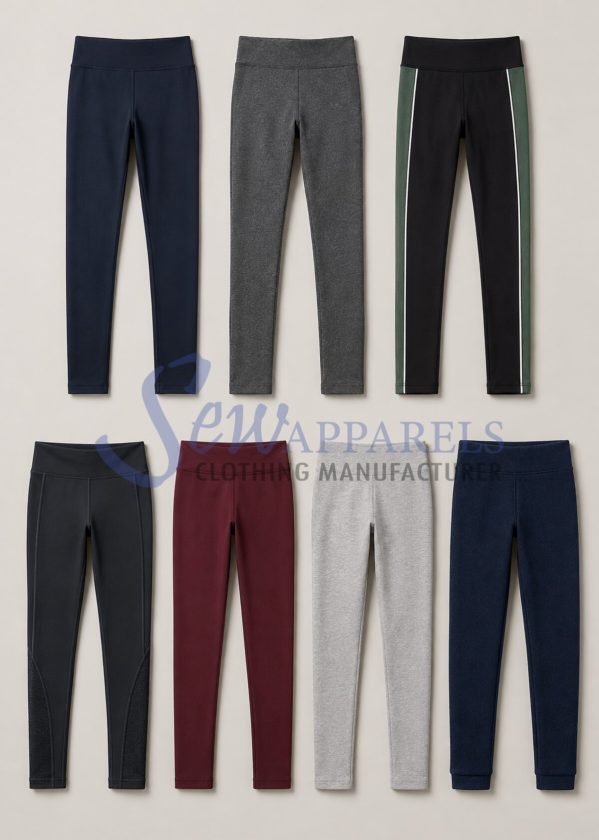
This guide uses five critical sample questions and a seam investigation worksheet. It separates visible observations from possible causes, records the material and care history, and helps the laboratory select an evaluation appropriate to the actual fabric and seam. It does not prescribe a universal strength value, certify a garment or promise that one construction change will prevent every failure.
What school legging seam integrity evidence should establish
Define the problem before naming a test. School leggings seam opening can describe several different events: broken sewing thread, fabric damage beside the seam, missing stitches, a joining gap or an opening visible only under extension. These observations may require different investigations. Do not treat every opening as proof that the same thread, stitch density or needle change is needed.
Keep knee bagging, opacity and replenishment planning separate from this decision. Those topics can affect a buyer’s wider product brief, but they do not prove the cause of a seam failure. Link the investigation to the approved garment revision and size specification so the construction team and laboratory are examining the same product.
1. Map the location and actual sample use
The school legging seam damage location record should identify the exact seam and position: for example, a section of the inseam, a joining intersection or a waistband attachment. State whether the opening is inside the stitch line, beside it or across a panel. Describe its length and visible features without pulling the sample further apart to make the defect easier to photograph.
A school leggings movement seam observation should record the approved action involved, garment size, fit assessment and whether the sample was new or previously cared for. Do not ask a wearer to repeat an uncomfortable movement or continue using a damaged sample. A development observation is not a standardized test, and a child’s activity should not be turned into an uncontrolled failure experiment.
School legging seam integrity evidence becomes more useful when the event is dated and its limits are clear. If the buyer only received a returned garment with no reliable movement or care history, record those fields as unknown. Avoid replacing missing information with assumptions about how the garment was worn. Retain the sample identity and the report from the person who first observed the problem.
2. Separate broken thread from damaged fabric
Build school legging broken stitches evidence around visible thread condition, stitch continuity and the location of any loose ends. Compare the affected area with an undamaged section of the same seam, where possible. Distinguish an observation such as “thread discontinuity at the joining line” from an unproven conclusion such as “thread quality caused the failure.”
For school leggings fabric seam failure, note whether the textile itself is torn, cut or otherwise damaged beside the stitches. A school legging fabric rupture record should identify the damaged material region and whether thread remains intact across it. This distinction matters because a stronger joining thread alone cannot demonstrate that the surrounding fabric will withstand the intended use.
Record missing or uneven stitches separately. Examine any transition, overlap or seam intersection associated with the opening. The investigation may need a construction review, material assessment or a combination of evaluations. Ask the supplier to identify possible mechanisms and evidence for each rather than selecting a correction solely from the appearance of one failed sample.
A school leggings stretch seam review should consider the finished garment geometry and approved fit as well as the seam assembly. Compare what the seam must accommodate with the actual sample construction. Do not assume that more stitches always improve the result: proposed stitch, thread, needle or seam changes need evaluation as an assembly on the relevant material.
3. Record material identity and care history
School legging seam integrity evidence needs the fabric identity, lot or reference, garment revision and sample size. Record the seam and stitch description, thread identification and available manufacturing settings in the investigation file. If the supplier cannot confirm a detail, mark it as unresolved. A material name alone may not distinguish samples with different finishing, stretch behaviour or production histories.
The school leggings care seam history should state whether the sample was unwashed, subjected to an agreed development procedure or returned after consumer use. Record the known washing and drying route and the number of documented cycles. Do not label a sample “after wash” without explaining what that means, and do not infer an exact care sequence from an appearance change.
The official description of ISO 6330:2021 identifies domestic washing and drying procedures for textile testing and notes that procedure parameters can affect results. If a laboratory uses this reference, request the selected procedure details and sample state. The reference is not itself a seam pass threshold, and a specified cycle count cannot be translated into a guaranteed garment lifetime.
Keep care-related evidence separate from the proposed cause. A failure observed after laundering does not automatically prove laundering caused it. Compare the affected and retained samples, their identities and their documented histories. Ask what additional work would distinguish a care effect from a construction or material difference.
4. Ask the laboratory to select a relevant evaluation
The school legging seam testing scope should begin with the question the buyer needs answered. Is the concern thread breakage during extension, fabric rupture near the seam, visible opening at a joining line or a change after an agreed care procedure? Provide failed samples and construction details so the laboratory can advise what evaluation is suitable and what limitations apply.
The current ISO 13935-2:2026 seam tensile reference describes a grab method for maximum force to seam rupture with force applied perpendicular to a straight seam. Its stated scope addresses woven textiles and allows possible applicability to other production techniques. Do not automatically prescribe it for every elastic knit garment or curved seam; ask the laboratory to confirm suitability for the actual sample and investigation.
School legging seam integrity evidence should identify the chosen method and edition, specimen preparation, conditioning, orientation, sample quantity and any agreed deviations. Request a description of the failure mode with the result. A number without the test conditions can be difficult to compare with a previous sample or another laboratory report.
Agree acceptance criteria before using the result for release. This article supplies no universal force, extension or cycle requirement. The buyer, supplier and relevant technical advisers should establish criteria appropriate to the product and intended use. If a method cannot represent the curved or highly elastic region being investigated, record that limitation and ask what complementary evidence is needed.
5. School legging seam integrity evidence: approve the corrected garment
For school leggings seam sample comparison, identify the original and corrected garment revisions and every intentional difference between them. A revised thread, stitch formation, seam allowance, needle specification or pattern adjustment is a development proposal subject to supplier feasibility. It is not a claim that a particular configuration is currently offered or guaranteed to solve the issue.
Keep the comparison conditions aligned. Use the same relevant size, material reference, evaluation route and sample state where feasible. Record unavoidable differences, since a corrected sample in a different fabric may not prove improvement in the original fabric. A school leggings seam correction approval should connect the chosen revision to its observations, laboratory evidence and unresolved limitations.
School legging seam integrity evidence must remain traceable through release. Retain the approved construction reference and the decision owner. State whether approval applies to a specific material and size range or whether additional sizes remain to be evaluated. Do not turn a successful result on one sample into a universal claim about every lot, movement or care condition.
Build a seam investigation worksheet
A school legging seam evaluation worksheet should keep the facts, technical questions and decision together. The following fields support an investigation; they are not a standardized test method. Record “unknown” where evidence is missing rather than leaving an empty field that another reviewer might interpret as confirmed.
- Sample identity: garment revision, size, fabric reference, lot, finish and sample origin.
- Location map: seam name, exact affected region, visible opening and adjacent construction features.
- Failure observation: thread continuity, stitch formation, textile damage and sample condition when received.
- Use and care history: approved movement, fit context, known care procedure and undocumented events.
- Laboratory question: evaluation objective, method suitability, sample preparation and limitations.
- Correction: proposed construction change, feasibility confirmation and matched comparison plan.
- Approval: acceptance criteria, evidence references, chosen revision, scope and responsible reviewer.
School leggings retained sample evidence is important when the investigation could consume or damage specimens. Ask the laboratory and supplier which samples should be preserved before destructive evaluation begins. Keep a clear record of which specimen was tested, which remains available and whether the retained reference represents the same production revision.
Example: an opening near a seam intersection
Consider a hypothetical development sample with an opening close to an inseam intersection. The initial observation identifies the location and broken thread, but the care history is not confirmed. The investigation should record that gap rather than assuming the sample was new. Preserve the garment and compare its construction with the approved reference before choosing a corrective action.
Next, prepare a school legging stitching failure brief for the supplier and laboratory. Include the material identity, affected seam, photographs retained in the investigation file and the technical question. Ask whether the relevant region can be evaluated by the proposed method, and what specimen preparation would change its relationship to the garment. No numerical result is invented for this example.
If the supplier proposes a revised joining construction, record it as a new sample revision. Evaluate the correction under an agreed comparison plan and retain the result and observed failure mode. The school leggings seam integrity review can then support an approval decision within that plan’s scope; it cannot prove that an undocumented consumer event or every future garment will behave identically.
Prepare a product-specific supplier brief
For custom school leggings manufacturing, share the failed sample identity, construction record and evidence gaps before requesting a revised sample or quotation. For private label school leggings production, connect the investigation to the approved product specification so a correction does not unintentionally change fit, labeling data or the material basis of the order.
Use the school leggings manufacturing product page to discuss the product brief and supplier feasibility. Keep this seam decision connected with the existing School Leggings Buying Guides. The original product page remains the commercial destination, while this article explains one focused evidence decision.
Frequently asked questions
Does an opening prove that the sewing thread is unsuitable?
No. School legging seam integrity evidence should distinguish thread discontinuity from fabric damage, stitch formation and the sample’s use and care history. The visible opening is the starting observation, not a complete root-cause conclusion.
Can one tensile result approve all seam locations?
Do not assume so. The method, specimen and garment location must match the question being investigated. Curved regions, seam intersections and elastic constructions may need a different or complementary evaluation selected by the laboratory.
Should buyers request a fixed seam-strength value?
Request agreed product-specific criteria and the evidence supporting them. School legging seam integrity evidence is stronger when the method and failure mode are clear than when an unsupported universal number is attached to every garment.
A school legging seam integrity evidence file connects the failed sample, material history, suitable evaluation and corrected construction, supporting a supplier brief within the evidence’s limits.