
SEW APPARELS · DEVELOPMENT RESOURCES
School Shirt Buying Guides
School shirt buying guides help uniform buyers connect fabric coverage, collar appearance and everyday comfort in one development brief. A school shirt has to work as a complete garment: the body fabric, neckline, sleeves, buttons and decoration must suit the intended age range and care routine. Start with a clear reference before comparing materials or requesting prices.
Before sampling, capture the school context, age range, wearing position, care route and required size assortment beside the shirt reference. Record the finished measurement points for the body, sleeve and collar, then identify which features must remain consistent across repeat orders. Review fabric coverage, collar support, badge position and comfort on the assembled shirt. Keeping these decisions in one current file helps the supplier explain the effect of a fabric or interlining change before it reaches the next approval round.
Use these school shirt buying guides to organize decisions that otherwise become scattered across sample comments. The detailed articles below examine white fabric opacity, collar shape retention and sleeve variant ordering. This resource brings those topics together with sizing, order assortment and approval records so brands can prepare a practical schoolwear specification. Additional articles address easy-iron claim evidence, multipack label planning and seam-slippage investigation, connecting care wording, retail packing and traceable corrective samples to the same approved shirt brief.
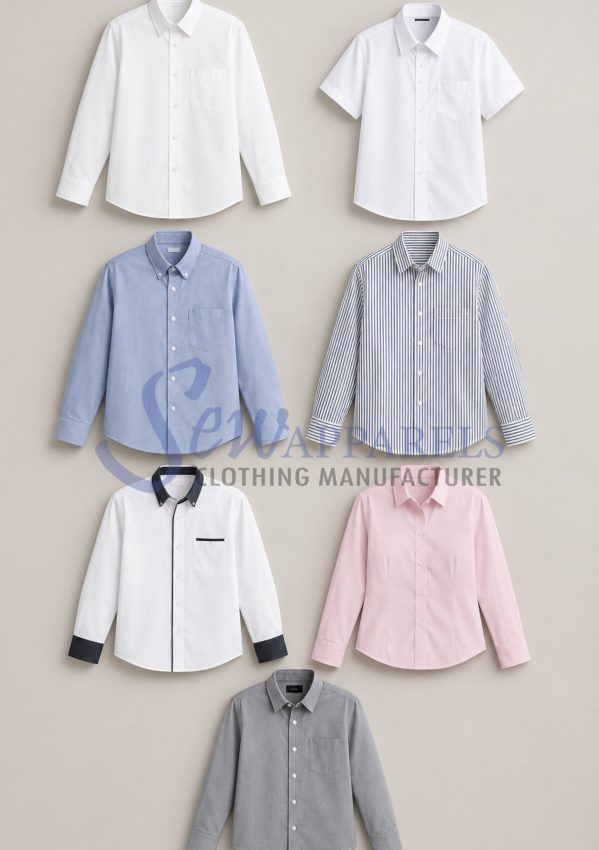
Existing Sew Apparels product-page illustration reused for style context. It does not verify fabric opacity, easy-iron performance, collar recovery or an approved school uniform specification. Compare the actual fabric, assembled sample and documented care conditions separately.
1. Review white school shirt fabric opacity
Compare weave density, finished fabric weight and underlayer visibility under consistent conditions. Follow the opacity guide to assess the sewn shirt as well as the swatch, then document the approved coverage reference.
Read the fabric opacity guide2. Develop collars that retain their intended shape
Connect interlining selection with stand geometry, point reinforcement and the intended care routine. Use the collar guide to record sample differences and approve the complete assembly across the planned size range.
Read the collar construction guideSleeve variant ordering: confirmed demand and size matrix
Separate confirmed orders from forecasts and map approved sizes to short- and long-sleeve options. Use five checks and a purchasing worksheet to compare supplier minimums, quotation assumptions and replenishment conditions.
Read the sleeve ordering guideEasy iron claims: care evidence and pressing comparison
Define the proposed benefit and compare the complete shirt under documented care conditions. Use five checks and a substantiation brief to align appearance observations, pressing effort and approved wording.
Read the easy iron evidence guideMultipack labels: bundle identity and packing proof
Confirm shirt counts, size identity and bundle identifiers before approving retail packing. Use five checks and a controlled proof sheet to reconcile garment information, artwork versions and the physical packed sample.
Read the multipack label guideSeam slippage: yarn movement and corrective sample evidence
Identify the opening beside the stitching and compare traceable fabric and seam controls. Use five checks and a diagnostic sheet to separate yarn movement from stitch breakage, brief the laboratory and approve a revised assembly.
Read the seam slippage reviewHow to Use These School Shirt Buying Guides
Begin with the schoolwear context: climate, age range, sleeve length and whether the shirt is worn open-necked or with a tie. Identify the required silhouette and any school-specific appearance rules. A uniform distributor may need several fit options, while an institution may prioritize consistency within a narrower assortment. Record those requirements before asking the sample team to select cloth or adjust the collar.
School shirt buying guides are most useful when each decision has a named owner and a visible approval reference. Keep the fabric code, measurement chart, collar drawing and artwork together. Separate confirmed requirements from proposals still being evaluated. This avoids a later sample combining an approved body fabric with an unapproved interlining or an earlier size chart.
Compare White Fabric Coverage and Construction
White shirting requires a consistent visual comparison. Record the backing, light, viewing direction and number of fabric layers. Check the intended undershirt as well as the single-layer body panel. A folded swatch or double-layer chest pocket can appear less transparent than the surrounding garment. These school shirt buying guides help structure that review without treating one fabric weight as a universal opacity guarantee.
The public scope of ASTM D3775 identifies warp-end and filling-pick count as measurements for woven fabrics. ASTM D3776/D3776M addresses fabric mass per unit area. These describe separate material properties; neither establishes a school-shirt coverage threshold. Agree the reporting units, finished material stage and acceptance reference with the supplier, then assess the actual shirt against the intended use.
Connect Collar Support with Comfort and Care
A school shirt collar specification should identify stand height, leaf shape, point length, neckline attachment and the selected internal support. Record the interlining supplier reference and attachment method. Compare an assembled collar before approving a substitution, because a heavier support material does not automatically correct an uneven pattern or sewing operation. Include the top-button position and any tie requirement in the drawing.
Use school shirt buying guides to keep appearance and comfort in the same approval discussion. Review the neckline in the intended wearing position and compare left and right collar points. After the agreed care sequence, note changes in roll, shape and surface appearance against the original sample. Keep the care conditions attached to the record so differences between trials can be interpreted accurately.
Build an Approval File for Repeat Schoolwear Orders
Check the base size and the ends of the planned size range. Record shoulder position, chest room, sleeve length, neck opening and tuck-in length using clearly defined measurement points. Confirm pocket and embroidery placement on the approved size set. A logo that looks balanced on the largest sample may need a documented placement rule for smaller garments rather than an informal adjustment on the sewing line.
These school shirt buying guides also support repeat-order continuity. Retain approved fabric, collar and decoration references with the final specification version. Confirm whether a new fabric lot, trim change or supplier substitution requires another trial. Include size assortment, individual packing and carton identification in the purchase specification so the production team receives one complete instruction set.
Low MOQ School Shirt Manufacturer: Define Your Opening Order
When evaluating a low MOQ school shirt manufacturer, request a minimum tied to the actual design, color and size assortment. The current Sew Apparels school-shirt service page lists an MOQ of 500 pieces; confirm how that minimum applies to each design, color and size assortment in the current quotation before planning a launch. Custom fabric, embroidery, labels and packaging can influence the order arrangement. School shirt buying guides help a new buyer narrow those choices and prepare a realistic opening range without assuming that every customization shares the same minimum.
Development Support for Startup Schoolwear Brands
Sew Apparels welcomes startup schoolwear brands and prioritizes clear development discussions for new uniform programs. Bring your customer profile, reference shirt, size range, budget and delivery window. A focused launch assortment can make fabric and fit decisions easier to review. Use these school shirt buying guides to prepare the first conversation, then confirm sample costs, revision scope, approval responsibilities and order terms in writing before production begins.
Turn your school shirt decisions into a production brief
Bring the fabric reference, collar drawing, measurement chart and size assortment together before requesting development support. Our school shirt team can review the manufacturing requirements with you. Keep these school shirt buying guides beside the approved sample so your next order follows a clear, traceable specification.
Explore school shirt manufacturing