
School shirt multipack label planning should begin with the shirts inside the pack, not the artwork on its front. A neat sleeve or bag can still describe the wrong size, omit a component, or hide information that a shopper needs. Before retail packing approval, buyers should reconcile the bundle definition, shirt identifiers, label accessibility, artwork version and a physical packed reference.
This guide to school shirt multipack label planning provides five practical checks and a proof-sheet structure for school-uniform buyers. It addresses packing information rather than fabric performance or fit approval. Keep those decisions in their own approved specifications, then connect them to the correct pack. A label proof is useful only when its descriptions match the garments that production will actually place together.
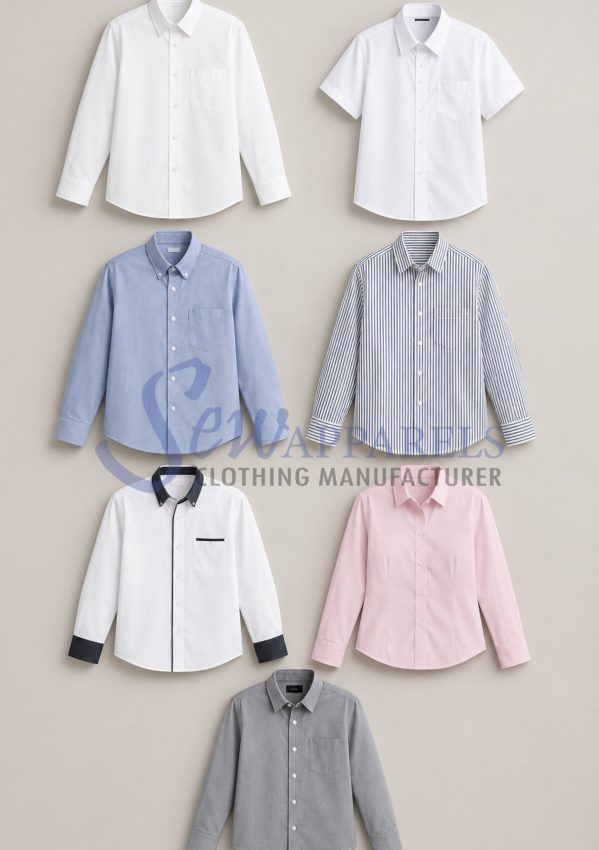
1. School Shirt Multipack Label Planning: Define the Contents
Start school shirt multipack label planning with a written bundle definition. State whether the selling unit contains two shirts, three shirts or another agreed quantity. Record each component’s style, colour, sleeve length and size. Do not use a generic description such as “school shirt set” when the order contains several combinations that packing staff must distinguish.
A twin pack of identical white short-sleeve shirts is different from a white-and-blue bundle or a pack containing different sleeve lengths. Even when the outer size designation is the same, those combinations need separate, controlled instructions. The buyer should also confirm whether the size refers to an age designation, a measurement-based size or a retailer’s own system.
For the school uniform shirt multipack size label, check the printed designation against both garment labels and the approved size master. A correct pack label cannot repair a wrong shirt inside the pack. Have the packing team compare the visible designation on each component before sealing the bundle, and define what happens when a component label is missing or ambiguous.
Include a field named “school shirts retail twin pack size identity” in the proof sheet if that wording helps your team find the record. Its useful content is the actual size system, designation and component agreement. For example, the sheet can show that two specified shirt styles use the same approved size code without suggesting that different styles necessarily have identical measurements.
Make the school shirts shirt bundle count check a physical count at the agreed control point. A printed numeral on packaging is a customer-facing description, not evidence that the bundle contains that quantity. Retain a packed reference that shows how folded components can be identified and counted without confusing one fold with a second shirt.
2. Map bundle identifiers to the component shirts
School shirt twin pack identifiers should connect the retail selling unit to its precise composition. Keep the bundle identifier separate from internal component codes, artwork references and carton identifiers. They serve different tasks. A packing operator needs an unambiguous component list; a retailer may need a standardized trade-item identifier and its associated product data.
The GS1 predefined-assortment guidance explains that a fixed assortment sold as one physical trade item needs a new GTIN when its defined composition changes through addition, replacement or removal of an item. Use this as a change-control reference where the assortment rules apply. Confirm identifier allocation and retailer acceptance with the responsible trading partners; a barcode printed on a proof does not demonstrate either.
Within school shirt retail bundle records, show which component version belongs to each bundle version. Record the identifier owner and the person who authorizes changes. If a blue shirt replaces a white shirt, do not allow the packing list to change silently while the front description, retail data and identifier decision remain on the previous composition.
The “school shirts component shirt identifier” field can contain the approved internal style-and-version code. It need not imply that every garment has a separately allocated retail GTIN. Identify that distinction in the sheet so staff do not treat an internal production code as a customer-facing barcode or overwrite an approved bundle identifier with a component code.
Maintain a school shirts bundle composition change record for substitutions, quantity changes and revised combinations. Include the old definition, proposed definition, affected packaging and decision owner. Stop the affected pack version from release until the identifier decision and artwork changes are resolved. This prevents a seemingly small purchasing substitution from creating conflicting selling-unit information.
3. Check fibre and care information accessibility
School shirt multipack label planning must consider what the customer can read before opening the pack and what remains with the garment afterwards. Inspect the finished folding position, inserts, bands and opaque areas. A garment label may be present but unreadable through a transparent bag because it faces inward or sits behind another shirt.
For US-market orders, the FTC textile-labeling guidance describes information requirements for packaged textiles and an exception when required garment-label information is readable through transparent packaging without opening it. It also distinguishes other sets and labeling situations. Care labeling follows a separate rule. Buyers should have the applicable arrangement reviewed for the actual product and destination rather than treating an outer label as a universal replacement for garment information.
Verify school shirt pack fibre information against the approved material specification for every included component. If the two shirts have different compositions, do not approve a statement that suggests one blend applies to both. Route disputed wording to the responsible compliance reviewer before printing; packing staff should not choose a fibre description from an old artwork file.
Use the “school shirts multipack fibre statement access” field to record where the information appears and whether the shopper can read it in the finished pack. Record an actual observation, such as the label being visible through a specified panel. Do not mark accessibility as passed merely because the packaging material is clear when supplied flat.
Review school shirts shirt pack care information separately. Packaging descriptions should agree with the approved garment care instructions, and the packing arrangement should preserve required garment labeling. If different components need different care, flag the difference instead of simplifying the whole bundle to whichever instruction fits the available space.
A school shirts garment versus pack labels comparison is a useful final cross-check. Compare product description, fibre statements, origin and responsible-business information where applicable, plus any repeated care wording. This article’s packing controls do not determine legal compliance in every market. The buyer’s destination-specific review should identify which information belongs on each surface and approve the final wording.
4. Reconcile white, coloured and artwork versions
White and coloured school shirts can share a packaging layout while needing different approved content. Keep a version matrix for school shirts white coloured pack versions. Link each combination to its component list, colour names, size range and artwork. Similar-looking files are a common source of packing mistakes when several retail variants use the same dieline.
In school shirt multipack label planning, distinguish artwork design approval from data approval. A designer can confirm placement and readability while the product team checks whether the descriptions are true. Printing approval should require both decisions. Leave a clear revision identifier on the controlled proof so production can recognize the accepted file.
The “school shirts school shirt artwork proof” record should identify the final file, revision, approval date and intended pack version. Check the actual-size proof for text clipping, size designation, quantity wording and identifier placement. Where a machine-readable symbol is required, arrange the appropriate verification process; a screen image that looks sharp is not a verified printed symbol.
Collect school shirts retailer pack data requirements before creating the final proof. Ask which selling-unit fields the retailer requires, who supplies identifiers and which packaging or data approvals are needed. Keep retailer instructions separate from general industry guidance. Neither a factory preference nor a generic template proves acceptance by a particular retail channel.
Also control the transition from old to new artwork. Specify whether existing packaging may be used, must be segregated or is excluded from the revised order. Mark the decision against the affected version. Otherwise the correct new proof can coexist with old packing materials that continue to describe the previous bundle.
5. Approve a physical packed sample
Finish school shirt multipack label planning by comparing a physical selling unit with the product master and approved proof. Inspect it in the intended folded, sealed and displayed condition. Open a sample to confirm the components, then check an intact reference for exterior information and accessibility. Agree how the reference will be retained and identified.
The school shirts approved packed shirt reference should connect to the same bundle version used in the order and packing instructions. Record the reviewer, observed issues and accepted corrections. If the reference was assembled with provisional packaging, label it as provisional; do not let it become the production standard by accident.
Check that sealing, folding and inserts do not obscure agreed information or damage garment labels. Observe the front and back rather than relying on the most attractive presentation side. A sample approval should identify unresolved issues explicitly and assign ownership. Conditional approval is not permission to release a pack whose identifier or component information is still uncertain.
A practical school shirt multipack label planning proof sheet
School shirt multipack label planning needs one controlled sheet per bundle version. A concise table can connect decisions that otherwise live in disconnected emails:
| Proof field | Record to reconcile |
|---|---|
| Bundle definition: | quantity, component styles, colours, sleeve versions and size system. |
| Identifiers: | bundle code, component references, identifier owner and retailer confirmation. |
| Information access: | approved garment statements, packaging statements and finished-pack observations. |
| Artwork control: | file revision, variant mapping, approval owners and transition instructions. |
| Packed reference: | sample version, component verification, review outcome and retained location. |
For school shirt multipack label planning, every failed or unresolved field should have a named decision owner. Avoid a single “approved” stamp that hides an outstanding change. When composition or labeling changes after approval, reopen the affected fields and replace the reference as necessary. Keep the superseded record traceable so staff can distinguish it from the current instruction.
Prepare your supplier brief
For custom school shirt manufacturing, send the proposed pack definition, garment specifications, destination and retailer instructions together. Request review of the packing arrangement and required approvals before committing to printed materials. This gives the manufacturer a clear information problem to resolve rather than an artwork file with hidden assumptions.
For private label school shirt production, include the responsible owners for branding, product data and label wording. State which information is already approved and which remains open. School shirt multipack label planning works best when the supplier and buyer can identify the same selling unit from one controlled record.
Continue with the School Shirt Buying Guides for related fabric, construction and ordering decisions. Keep the multipack approval connected to those specifications while giving packing its own evidence: the correct components, accurate information, controlled identifiers and an agreed physical reference.
Use the sleeve variant ordering review to confirm which shirt versions belong in the approved pack. A balanced order total does not establish correct bundle contents.