
School sweater snag versus pilling assessment starts by describing the surface symptom before assigning a cause. A pulled loop, a group of small pills and a worn area are different observations. Buyers need clear sample records, exposure context and suitable technical follow-up to determine which question should be investigated.
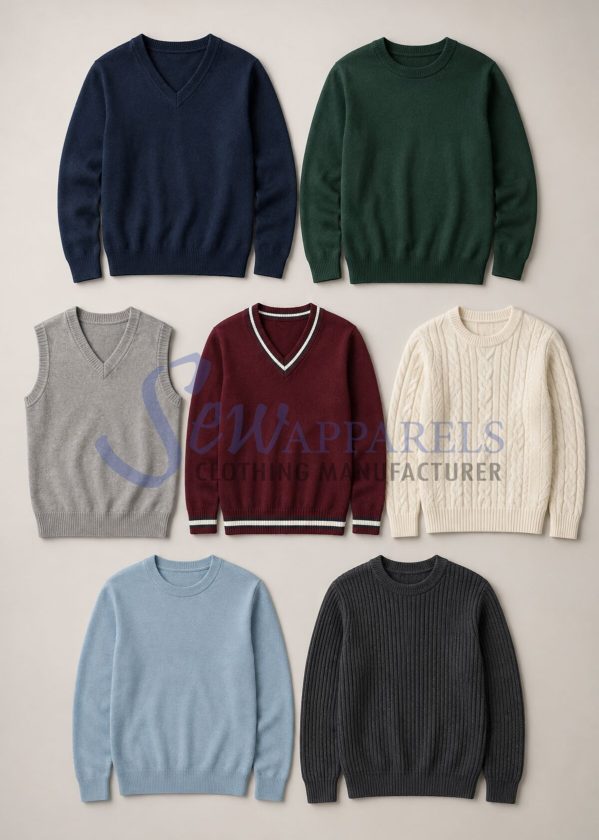
This guide uses five critical evidence checks and a surface-damage review table. It separates complaint classification from a final diagnosis and keeps laboratory methods within their stated scope. Neither a pilling result nor an abrasion result alone establishes snag resistance, and surface damage does not automatically prove a production defect.
Keep school sweater snag versus pilling assessment separate from school sweater elbow durability design. Mapping an affected elbow can help an investigation, but choosing a patch or another construction change requires its own sample evidence. Begin with the actual garment and the observed symptom rather than a predetermined solution.
1. Record the damage under consistent conditions
Identify the sweater style, size, colour, material reference and development or production version. Retain the affected item where practical and record its condition when received. Include care and handling history available to the reviewer, marking missing information as unknown rather than replacing it with an assumption.
School sweater wearer complaint evidence should include photographs that locate the affected area on the garment and show the symptom clearly. Use consistent lighting, orientation and distance for comparisons. Preserve the original files and annotate copies so that later reviewers can distinguish the evidence from an interpretation.
Surface appearance observation should record what can actually be seen: a projecting loop, clustered surface balls, raised fibre, thinning or another visible change. Describe location and extent without using a general label such as bad fabric. A complaint photograph can document appearance, but it does not independently establish the mechanism.
School sweater pulled loop inspection should preserve the observed condition before any repair or manipulation. Record whether the loop is isolated, whether surrounding stitches appear displaced and whether similar symptoms occur elsewhere. Do not recommend cutting or pulling the loop as part of this evidence-gathering guide.
For school sweater snag versus pilling assessment, separate the wearer’s description from the inspector’s observation. A reported snagging incident and a photographed loop have related but different evidential roles. Retain both with their source and date rather than converting a reported event into a verified technical cause.
2. Separate pulled loops, pills and worn areas
School sweater surface damage classification should use practical observation categories. Mark an isolated extended loop separately from clustered small surface balls and from a broad worn area. These categories help frame the investigation; they are not a substitute for a specialist’s examination of the material and construction.
When reviewing school knitwear snagging versus pilling, compare the shape and distribution of the symptoms. Record where they occur and whether several types are present on the same item. One garment can show more than one symptom, so forcing the entire complaint into one category may hide relevant evidence.
Isolated pulled loop diagnosis requires more than noting that a loop exists. Ask the technical reviewer which material, stitch and exposure evidence supports the explanation. The visible symptom can guide a snag-related question, but it should not automatically be treated as proof that the yarn or knitting process is defective.
Compare pills versus worn fibre as separate observations. Clustered surface balls, general fuzzing and a visibly thinned area should be recorded distinctly where the reviewer can identify them. If the photograph does not provide enough detail, mark the category provisional and request examination of the actual sample.
School knitwear surface symptoms may be altered by laundering, cleaning or attempts to remove pills. Record any such handling already performed. Preserve the available sample rather than assuming that its current appearance represents the condition at the first complaint.
School sweater snag versus pilling assessment should avoid appearance-based performance claims. An attractive unused sample does not establish resistance to every wear exposure. Likewise, one affected item does not establish the behavior of every garment made with the same broad fibre description.
3. Map damage zones and exposure context
Sweater damage zone mapping should show the location of each symptom, including whether it appears at one point or across repeated areas. Mark sleeves, cuffs, body panels and other affected regions as appropriate. Keep the map tied to the actual item rather than transferring locations from an unrelated complaint.
Wear exposure complaint context can include the reported activity, contact surfaces, garments worn with the sweater and available care history. Ask neutral questions and distinguish known facts from possible exposures. Do not infer blame from an affected zone or claim that every repeated location has one inevitable cause.
Compare the affected item with an identified retained sample or another relevant reference. Record differences in material, construction, size, finishing and care condition. A similar-looking sweater from a different programme can provide background but is not an equivalent control for the actual complaint.
School sweater complaint classification should retain the number of items examined and the scope of the records. A few submitted examples may identify a useful question without representing the whole order. Avoid inventing a failure rate when the total supplied, used and inspected quantities have not been established.
For school sweater snag versus pilling assessment, connect each zone with the relevant observation and exposure question. If several symptoms overlap, use separate entries. A localized loop and surrounding pills may require different technical questions even when they appear in the same photograph.
4. Request an evaluation that answers the right question
A laboratory damage review brief should identify the actual material, complete sample references, observed symptoms and questions to be answered. Ask the laboratory which method is suitable, what specimen preparation is required and how its results relate to the proposed garment. Agree the evaluation scope before interpreting a report.
The public description of ISO 12945-2:2020 modified Martindale assessment covers fabric propensity to pilling, fuzzing and matting. Pilling method scope limits matter: a result under this method should be read for those properties, with the actual report details retained. It should not be relabeled as a snag-resistance result.
The public scope of ISO 12947-2:2016 Martindale abrasion testing concerns specimen breakdown and excludes coated fabrics, including laminated fabrics. It also excludes fabrics specified as having a low abrasion wear life. Confirm applicability with the laboratory for the actual material. An abrasion result is a different evidence item from a pilling result and does not by itself establish resistance to pulled loops.
A snag testing evidence request should explicitly ask whether an appropriate snag-related evaluation is needed for the observed problem. Do not assume that a supplier’s existing pilling or abrasion report answers that question. Identify the method, specimen, conditions and result actually supplied before making a performance statement.
Keep laboratory conditions and acceptance criteria traceable. A method name alone is not the complete report, and a test result alone does not reproduce every school wear exposure. Ask the qualified reviewer to explain what the evidence supports and which limitations remain.
School sweater snag versus pilling assessment should connect laboratory findings with the complaint observations without claiming an unsupported causal match. The reviewer may identify a plausible explanation or recommend further comparison. Record that level of certainty rather than presenting every follow-up result as a final diagnosis.
5. Compare corrective options using sample evidence
Yarn damage corrective options should answer the documented problem. A proposed material, stitch, finishing or construction revision needs an identified specification and a reason for the change. Confirm supplier feasibility and avoid describing a proposed option as a currently offered service without evidence.
Where feasible, compare controlled samples that make the revision understandable. Changing several undocumented variables at once can hide which change affected the result. Retain the original reference, identify the revised version and repeat the observations or suitable evaluations agreed for the development question.
Check the complete revised sweater as well as relevant material evidence. A fabric or component report can help assess a property, but garment construction and use may introduce other relationships. Do not generalize one satisfactory test into a guarantee that the finished sweater cannot snag, pill or wear.
School sweater snag versus pilling assessment should close with a buyer decision tied to the reviewed scope. Record the accepted sample, evaluated properties, remaining questions and any further monitoring agreed. Distinguish development approval from a decision about affected stock or the quality of an entire shipment.
School sweater snag versus pilling assessment: evidence table
A surface-damage diagnostic table can organize the complaint without pretending to diagnose it automatically. Use one row per observed symptom and sample zone. The fields below are a suggested internal record rather than a standardized test method or an independent certification.
| Field | Information required | Actual observation / source | Hypothesis / open question | Owner / date / decision |
|---|---|---|---|---|
| Sample identity | style, material, size, colour, version and current condition. | — | — | — |
| Observed symptom | projecting loop, clustered pills, fuzzing, thinning or another recorded change. | — | — | — |
| Location | garment zone, extent and supporting photograph reference. | — | — | — |
| Exposure question | reported activity or care, known information and unanswered details. | — | — | — |
| Needed evidence | retained comparison, physical inspection or suitable laboratory evaluation. | — | — | — |
| Technical follow-up | reviewer, method scope, explanation and limitations. | — | — | — |
| Revision and decision | proposed correction, complete sample evidence and buyer approval. | — | — | — |
Separate observations, hypotheses and decisions in the working sheet. For example, an extended loop on a sleeve is an observation; an explanation about a particular contact is a hypothesis until supported. This structure helps the supplier investigate without making the complaint record a source of unverified production rules.
Buyer questions before approving a correction
Does a good pilling result prove snag resistance?
No. Read the report for the property and method actually evaluated. If the complaint concerns pulled loops, ask a qualified reviewer whether a separate evaluation is appropriate. Keep evidence for pilling, abrasion and snag-related questions distinct.
Does visible surface damage prove a production defect?
No automatic conclusion is established by appearance alone. Review the actual sample, material, construction, exposure context and supporting evidence. A documented defect may be identified through investigation, but the complaint should not start with that conclusion already assumed.
Can a photograph alone support a final diagnosis?
It can locate and document a symptom, but its detail and context may be limited. School sweater snag versus pilling assessment may require physical inspection, a retained comparison and suitable laboratory evidence before the technical cause can be stated reliably.
Prepare a focused supplier review
For custom school sweater manufacturing, share anonymized complaint observations, garment zones, actual yarn specifications and available sample records. Use the school sweater manufacturing page for the commercial or technical enquiry, with a clear question about the observed symptom and the evidence available.
For private label school sweater production, include the proposed revision, evaluation scope and complete resample references. The school sweater buying guides connect this review with the wider product plan. Complete school sweater snag versus pilling assessment with a traceable decision supported by the actual records and accurately scoped test evidence.