
School sweatshirt embroidery packing marks deserve a separate approval decision because an attractive raised badge can contact another garment surface when the sweatshirt is folded. A review of school sweatshirt embroidery packing marks needs a clear record: where the badge sat, what it touched, how the package was handled and what the garment looked like before packing. Buyers can then compare arrangements using actual samples rather than assume every impression has the same cause.
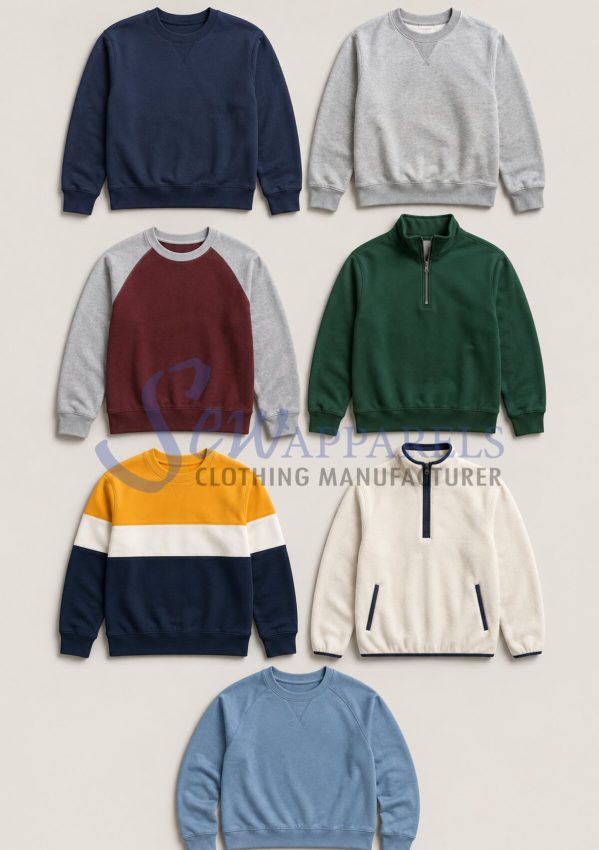
This guide uses five critical presentation checks and an embroidery contact packing map. It addresses the relationship between decoration, fold and adjacent fabric. It does not prescribe a universal packing pressure, storage period, protective material or treatment for removing marks. Each proposed arrangement needs review against the actual sweatshirt, decoration and intended presentation requirement.
Keep school sweatshirt embroidery packing marks separate from school sweatshirts rib shade coordination. A shade comparison concerns colour appearance; this review concerns contact and surface presentation during packing. Both decisions belong in the same approved garment package, but passing one does not demonstrate that the other has been resolved.
1. Map the raised badge within the proposed fold
Start with the actual embroidered sweatshirt, identified by style, size, colour and sample version. Record the badge location and dimensions, backing arrangement and finished surface profile as observed on the sample. Include the condition of the body fabric before folding. A photograph or written description should distinguish the raised decoration from the surrounding garment without substituting an assumed embroidery specification for the approved construction.
A school sweatshirt raised embroidery fold review should show the garment flat, each folding step and the final packed position. Identify whether the badge ends up inside a fold, between body layers or next to a sleeve. Record which face of the badge contacts which part of the garment. A simple diagram prepared by the buyer or supplier can make this relationship easier to repeat than a general instruction to fold neatly.
School sweatshirt folding badge position needs checking across relevant sizes. A fold that places the badge clear of a sensitive presentation area in one size may position it differently in another. Use representative size samples selected for the actual programme. Record any size-specific instructions instead of assuming that the same folding distance suits every garment.
Create a school sweatshirt fold reference with a version, date and responsible approver. This reference should describe the finished arrangement sufficiently for another packer to reproduce it. If the embroidery changes, compare its new position and profile with the existing fold before treating the earlier packing approval as current.
2. Compare contact between the badge and body fabric
The school sweatshirt embroidery contact map should connect the badge face, adjacent surface and direction of contact. Note whether the decoration touches the outer body, an inside layer, a sleeve or another garment in a stack. Describe the fabric condition and appearance in that zone before the trial. This creates an observation baseline for deciding whether a visible change appeared during the recorded packing sequence.
For a school sweatshirt badge fabric indentation review, record the shape and location of any impression rather than immediately call it permanent damage. Identify whether the observed pattern corresponds to the badge, a seam, a bag crease or another item. If the source is unclear, keep that uncertainty in the record and arrange a controlled comparison. Similar-looking marks do not establish an identical cause.
Compare feasible arrangements using equivalent garment references. One trial might relocate the badge within the fold; another might reduce direct contact by changing the arrangement of garment layers. These are development options subject to supplier feasibility and buyer approval, not claims that a particular packing solution is currently supplied. Change one defined feature at a time where practical so the results remain interpretable.
A school sweatshirt badge interleaf review also needs material-specific evidence. If an interleaf is proposed, identify its material, dimensions, position and intended removal stage. Inspect its own edges, folds and contact with the garment. Do not assume that adding a sheet automatically prevents impressions, avoids transfer or satisfies another requirement. The complete proposed package must be evaluated.
3. Record trial packing and storage conditions
A school sweatshirt embroidered pack trial should document the garment preparation, folding sequence, bag or wrap, quantity per arrangement and carton position where relevant. Record whether samples were individually packed or stacked and identify the surfaces above and below the sweatshirt. Make the trial conditions explicit enough for the team to distinguish the approved arrangement from an informal presentation sample.
School sweatshirt pack pressure marks cannot be assessed reliably from an unexplained observation. Describe the actual stack, carton fill and handling conditions used in the trial. If a measured load is part of a separately agreed evaluation, record the method and result. Otherwise, state what was physically arranged without inventing a pressure value or presenting a visual impression as a measurement.
Identify the recorded duration and available environmental information for a school sweatshirt stored packing sample. Use the actual trial dates and circumstances. A short review provides evidence for its own conditions; it does not establish performance for every warehouse, route or storage period. Where the intended distribution conditions differ, agree what further evidence is needed before extending the approval.
For school sweatshirt embroidery packing marks, retain a comparable unpacked reference where practical. Label the packed and reference samples so they cannot be mixed. Note any differences in garment preparation or handling that might affect the comparison. This helps the reviewer separate observations made during the trial from assumptions about the entire delivery route.
4. Inspect the garment after unpacking
Record school sweatshirt unpacked appearance before adding an unapproved pressing, steaming or washing step. Note the time of unpacking, observation conditions and presentation area being examined. Consistent lighting, orientation and viewing distance help a team compare samples without confusing a change in the inspection setup with a change in the garment.
A school sweatshirt badge packing impression record should locate the mark on the garment and describe its boundary, pattern and visibility. Keep original photographs where available and link them to the sample identity. Record unaffected areas too. A local contact impression, general fold line and colour change should not be grouped under one unexplained label.
Agree whether later observations form part of the evaluation. If the garment is allowed to rest or undergo another approved step, record the conditions and compare the same zone again. Describe the observed result without promising that every mark will disappear. A treatment that changes the evidence should never be introduced silently into the packing approval record.
A school sweatshirt presentation comparison should place trial and reference garments in equivalent conditions. Ask whether the result meets the buyer’s stated requirement for unpacking, display or delivery. That requirement needs to be agreed for the programme; there is no acceptance limit supplied by this article. Preserve both the observed result and the decision made from it.
5. Approve a fold against the presentation requirement
School sweatshirt retail fold approval should identify the exact garment reference and packing arrangement accepted. Include the badge position, surfaces in contact, relevant size coverage and recorded trial conditions. If the buyer accepts a defined presentation change, describe it explicitly. Avoid turning a limited sample decision into an unrestricted claim about all quantities or future decoration versions.
The school sweatshirt embroidery packing specification should connect drawings or folding instructions with sample photographs, materials, pack quantities and approval records. A packer needs to know which version applies and what must be checked before closing the package. Keep product identification and presentation instructions aligned so a correct-looking fold does not accompany the wrong school, colour or size.
Use school sweatshirt pack mark revision records when an arrangement fails the agreed requirement. State the observed issue, proposed change and evidence needed to reassess it. Repack a representative revised sample and compare it with the same reference. A discussion about a possible improvement is not equivalent to approval of the finished revised package.
School sweatshirt embroidery packing marks should remain a defined checkpoint when the badge construction, fabric, fold or package changes. Review whether the existing evidence still covers the new arrangement. If it does not, agree a focused new comparison rather than carry forward the previous sign-off without a basis.
School sweatshirt embroidery packing marks: the contact map
Use this original working map to connect each packing decision with an actual observation. Add programme-specific references and conditions; the rows organize evidence rather than prescribe passing results. Give every trial a unique reference so a later revision remains traceable to the sample reviewed.
| Checkpoint | Information required | Actual observation / evidence | Outcome / limitation | Next action | Owner / date |
|---|---|---|---|---|---|
| Fold and badge location | record the folding sequence, finished position, size reference and badge face orientation. | — | — | — | — |
| Adjacent surface | identify the garment layer or other item in contact and its baseline appearance. | — | — | — | — |
| Trial arrangement | record wrap, quantity, stack or carton position, dates and known handling conditions. | — | — | — | — |
| Observed mark | locate the change, describe its pattern and retain the associated sample or photographs. | — | — | — | — |
| Approved arrangement | link the accepted version, presentation requirement, approver and any limits of the evidence. | — | — | — | — |
For school sweatshirt embroidery packing marks, a useful record also distinguishes not observed, not evaluated and not accepted. These describe different outcomes. A trial without a particular condition cannot demonstrate performance under that condition, and missing information should not be filled with an assumed favourable result.
School sweatshirt embroidery packing marks and product information
The GS1 GTIN Management Standard provides a framework for consistent trade-item identification decisions. Keep the relevant product and pack identities connected to the trial record. This reference does not define an embroidery impression test or a passing packing arrangement; identification and surface presentation are separate decisions.
The FTC care-labeling guidance explains the need for reliable support for care instructions and consideration of the complete garment. For a US-market programme, confirm applicable requirements separately. A packing impression is not a basis for inventing a recovery treatment or changing the approved care instruction without suitable evidence.
Retain accessible product and care information in the proposed presentation arrangement. Check how labels, tags and any packaging information are viewed during the buyer’s actual review. This practical check should accompany the contact map rather than be treated as proof that the embroidery and fabric will perform under unspecified conditions.
School sweatshirt embroidery packing marks in the development brief
For custom school sweatshirt manufacturing, share the garment reference, raised badge construction, proposed fold and recorded presentation issue. Add the buyer’s intended unpacking requirement and available trial evidence. Confirm feasible arrangements and quotation inputs directly rather than assume a packing option, minimum or charge.
Private label school sweatshirt production should carry the accepted contact map into its controlled approval package. Startup brands can keep the first review focused on a defined garment and decoration combination, then assess extensions as actual variables change. Maintain the approved reference beside the folding instruction so later teams can see the same decision.
Use the school sweatshirt buying guides to connect this packing decision with related product-development checks. Complete the school sweatshirt embroidery packing marks review using the real sample, recorded conditions and explicit presentation requirement before releasing that packing arrangement.