
School sweater yarn minimum order planning connects the requested garment quantities with the raw material that a supplier must purchase. A finished-sweater minimum and a yarn purchase minimum describe different transactions. Buyers need both before deciding whether a proposed school uniform order is commercially workable.
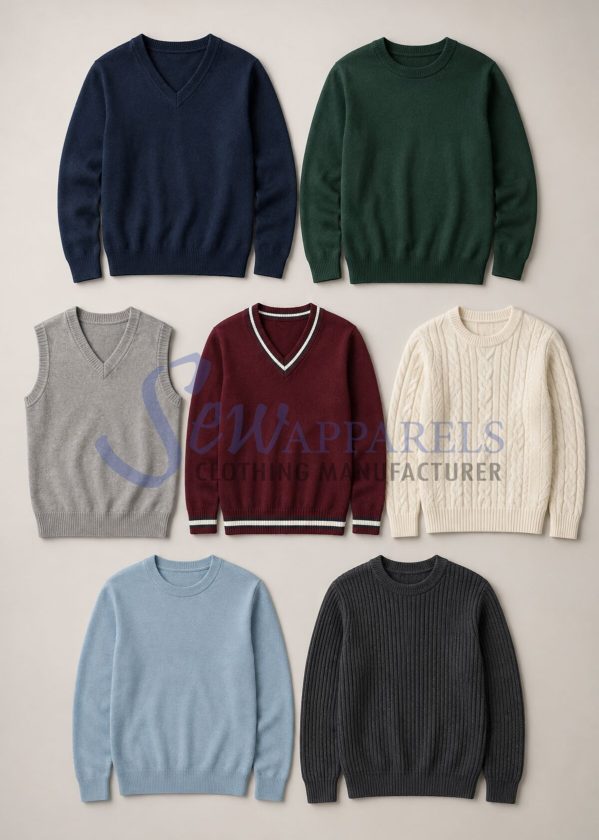
This guide sets out five critical checks and a yarn buying worksheet. It uses actual quotations, approved specifications and the confirmed size mix rather than invented consumption figures. The purpose is to identify a defensible purchasing decision, including who pays for and owns any surplus yarn.
Keep school sweater yarn minimum order planning separate from school sweater knit gauge selection. Gauge and construction influence the approved product, but a purchasing decision also depends on shade-level quantities, supplier conditions and the treatment of unused material. A lower garment quantity does not automatically reduce the required yarn purchase.
1. Separate garment minimums from yarn minimums
Ask the garment supplier to state its finished-sweater minimum in writing, with any conditions by style, colour and size. Then ask how the yarn purchase is arranged. The yarn supplier may quote a separate minimum, purchase increment or shade requirement. Record the exact basis rather than assuming one number covers the whole order.
A school sweater yarn colour minimum belongs to a particular quotation and material specification. Identify the supplier, shade reference, yarn reference, quantity unit, price basis, validity and any rounding condition. If the answer is provisional, mark it provisional. The worksheet should not convert an estimate into a confirmed commitment.
Review yarn purchase versus garment minimum for school sweaters as two linked rows. One row describes the sweaters to be delivered; the other describes material to be bought. Both can affect the commercial offer, but they should remain visible so the buyer can see why a quotation changes.
For school sweater yarn minimum order planning, confirm whether sampling material, bulk material and later replenishment are quoted on the same terms. Do not assume a sample quantity can be purchased repeatedly at a bulk price or that a future shade will have the same minimum. The quotation needs its own date and scope.
2. Calculate material need from the actual size mix
Request consumption estimates for the approved sweater construction and sizes. Identify the development version and the basis of each estimate. A garment weight, an initial knitting trial and a production purchasing estimate are not interchangeable records. Ask the supplier which allowances are included before using the figures.
Size mix yarn consumption should connect each confirmed size quantity with its corresponding approved consumption estimate. Where the estimate differs by style or component, keep those distinctions. A single average can conceal the effect of a changed size distribution and make later comparisons misleading.
Use a consistent unit throughout the calculation. For each approved material and shade, multiply the quantity of garments in each size by the supplier’s stated consumption basis, then total the relevant rows. Record any separately quoted additions without counting an allowance twice. Keep the calculation and the supplier’s purchase recommendation side by side.
Calculated knitwear material demand is a planning input, not a promise that every gram will become a saleable sweater. Ask the supplier to explain the purchasing basis and what happens when actual use differs. Do not add an arbitrary waste percentage simply because it appears in an unrelated order.
School knitwear yarn purchase quantity should be compared with the supplier’s stated minimum and permitted purchase increments. If the calculated need is below that minimum, the difference needs a commercial decision. If it is above it, confirm how the final buy quantity is rounded and quoted.
During school sweater yarn minimum order planning, preserve the approved size mix as a versioned record. A buyer who later changes quantities should be able to see which material calculation was revised. This prevents a stale yarn estimate from being attached to a new garment order.
3. Validate any proposed yarn sharing
A school sweater shared yarn order may be worth discussing where several approved styles genuinely use the same material. Sharing is a development and purchasing scenario, not an automatic service. Ask the supplier to confirm compatibility and whether its quotation allows the quantities to be combined.
Yarn sharing specification match should cover the actual yarn identity, composition, count or other agreed specification, shade, finishing requirements and approved sample relationship. Similar colour names are not enough. Neither is a broad description such as cotton blend, because it does not identify the complete material being purchased.
For US-market product information, consult the FTC textile and wool labeling guidance when reviewing declared composition and other required disclosures. Supplier material records need to support the intended product information. A purchasing substitution should not silently create a mismatch between the approved garment and its claims.
Shared approved yarn scenarios can include several compatible styles within a confirmed programme, but the quantities must still be traceable. List which style consumes which material and how much is allocated. Exclude an unapproved style or speculative future order from the committed requirement until it is actually authorized.
School knitwear shade quantity should remain separate for each confirmed shade unless the supplier explicitly explains a permitted combination. Combining different shades into one total can hide a shortfall against a shade-specific minimum. Likewise, matching a shade name does not establish that different lots will meet the buyer’s approved appearance requirements.
School sweater yarn minimum order planning should identify who approves any sharing proposal. The buyer needs a visible specification decision as well as a commercial one. A cheaper material arrangement is not an accepted substitute merely because it reduces the quantity purchased.
4. Compare surplus and order scenarios transparently
Build a base scenario using the requested finished-sweater quantities and the supplier’s actual yarn quotation. Show calculated need, proposed buy quantity and the difference. Label that difference as projected surplus on the stated planning basis, rather than assuming it will all remain usable after production.
School sweater yarn surplus costing should identify which costs are included in the offer. Ask whether unused material is charged separately, incorporated into the sweater price or covered by another agreed arrangement. Keep yarn cost separate from knitting, making, trims, packing and other quoted items when the supplier provides that breakdown.
A yarn surplus stock decision should compare confirmed options: purchasing the required minimum, revising authorized garment quantities, using compatible approved demand, or declining the proposed buy. Increasing the sweater order creates additional finished stock and should not be treated as a free way to solve a material minimum.
Keep school sweater yarn quote basis consistent across scenarios. Record currency, quantity unit, quotation date, material reference and inclusions. Where a supplier revises the price for another quantity, use that actual revised offer. Do not calculate a price discount that the supplier has not agreed to provide.
Product identity also needs attention if a scenario changes the garment being supplied. The GS1 GTIN Management Standard provides a framework for decisions about trade-item identification. Where a buyer uses GTINs, review the applicable rules for the actual change; a material purchasing total does not replace finished-product identification.
For school sweater yarn minimum order planning, present both the immediate cash commitment and the inventory consequences. A lower apparent price per sweater may come with a larger purchase or surplus obligation. The preferred scenario depends on confirmed demand and written terms, not on a general rule that more material is always better value.
5. Agree ownership, custody and continuity
Unused yarn ownership terms should name the owner and the quantities covered by the arrangement. Clarify when ownership is established, who holds the material, and how the remaining quantity will be recorded after production. Do not assume that payment for sweaters automatically transfers ownership of every unused yarn cone.
Confirm any proposed storage separately. Record the location, responsibility, access or release process and agreed commercial conditions. Storage duration, charges, material condition and later use require supplier confirmation. This guide does not claim that Sew Apparels or any yarn supplier offers a particular surplus-storage service.
Supplier yarn continuity questions should cover whether a repeat order can use the same approved material, how a new lot or shade will be reviewed, and what happens if the original reference is unavailable. Retaining leftover yarn does not guarantee that enough compatible material will be available for a future full programme.
Agree how unused material will be reconciled with production records. Distinguish purchased quantity, recorded consumption, material returned or retained, and any disposition agreed by the buyer. If the supplier reports different quantities from the plan, request an explanation and retain the revised record.
Close school sweater yarn minimum order planning with a named buyer decision and the accepted quotation version. Record which scenario is authorized, what remains conditional and whether a revised sample is required. An enquiry or a worksheet alone should not be treated as approval to purchase material.
School sweater yarn minimum order planning: buying worksheet
A sweater material buying worksheet can keep the commercial discussion focused. Use one record for each material and shade combination, with links in the buyer’s own records to the relevant quotation and approved sample. The following fields are a suggested planning structure rather than an industry-mandated form.
| Information required | Material / shade A | Material / shade B |
|---|---|---|
| Material / shade record | Material / shade A — not approved | Material / shade B — not approved |
| Approved identity style, sample version, yarn specification and shade reference. | — | — |
| Garment demand confirmed size mix, quantities and the related order version. | — | — |
| Consumption basis actual supplier estimates, units and stated inclusions. | — | — |
| Purchase conditions minimum, increments, quotation validity and price basis. | — | — |
| Permitted sharing compatible approved styles, allocation and supplier confirmation. | — | — |
| Projected difference calculated need, proposed purchase and surplus treatment. | — | — |
| Decision ownership, custody, continuity conditions and buyer authorization. | — | — |
Keep confirmed facts, provisional estimates and open questions visually distinct in the working record. When a figure changes, update its source and version. This makes it possible to explain a quotation without recreating the calculation from memory or mixing offers from different dates.
Questions to resolve before ordering
Can several shades be added together to meet one minimum?
Only use the combination the supplier confirms for the actual quotation. A minimum may be defined by shade or another purchasing condition. Record the permitted basis explicitly instead of assuming that a total across all school colours meets every requirement.
Does leftover yarn guarantee a cheaper repeat order?
No. The repeat depends on usable quantity, material identity, condition, ownership, compatibility and the new supplier offer. Account for retained yarn where authorized, but request a current quotation and approval basis for the future order.
Should garment quantities be increased to avoid surplus?
For school sweater yarn minimum order planning, compare the full commercial and stock consequences first. Additional sweaters need confirmed demand, size allocation and buyer authorization. A larger garment order may be reasonable in a particular programme, but it is not automatically the most efficient purchasing decision.
Prepare a product-specific enquiry
For custom school sweater manufacturing, share the confirmed size mix, shade quantities, approved construction and available yarn quotations. Use the school sweater manufacturing page for the commercial enquiry and ask the supplier to identify the actual purchasing conditions relevant to the brief.
For private label school sweater production, include the selected scenario, material specification, ownership terms and remaining approval questions. The school sweater buying guides connect this decision with the broader product plan. Finish school sweater yarn minimum order planning with documented quantities and conditions rather than an assumed minimum or a promise of future use.