
Scrub jacket pilling and snagging evaluation should answer two separate purchasing questions: how does the proposed fabric’s surface change under repeated contact, and how does it respond when threads are caught or pulled? A fuzzy sample and a sample with a long yarn pull do not demonstrate the same problem. Buyers need a comparison that preserves these differences instead of turning every visible defect into one durability score.
This guide provides a two-axis review sheet for ordinary apparel development. It connects material identity, method, preparation history and observed damage to a buyer’s decision. Scrub jacket pilling and snagging evaluation does not predict a universal service life or establish protective performance. The buyer and laboratory should agree on current applicable methods and material-specific criteria, with limitations retained in the approval file.
1. Define the contact scenarios that matter for the jacket
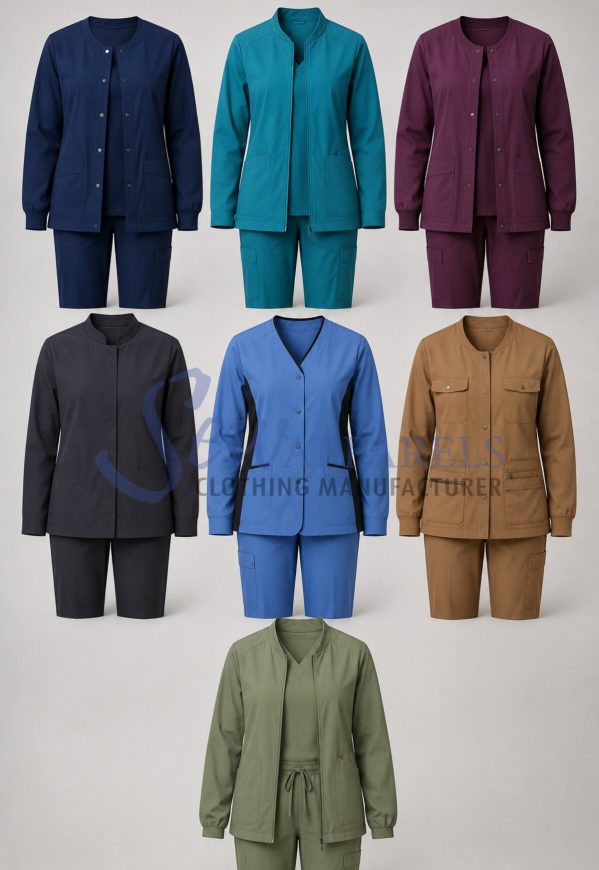
Begin with the intended jacket construction and use. Identify surface contact around cuffs, underarms, pockets, the front opening and areas that may rub against another garment. Separately note exposed hardware or rough surfaces that might catch the material. These are development observations, not a substitute for a laboratory method. Their purpose is to explain which questions the test brief must address.
A scrub jacket repeated contact evaluation should identify the sample, garment area and relevant contact scenario. Avoid combining unrelated observations into a conclusion that the whole jacket is durable. For example, a cuff-area appearance concern may require a different follow-up from a pulled yarn near a fastening. Give each observation its own reference and action owner.
Keep the approved fit and layering specification available, because a tightly stretched area can change the way a defect is noticed. This article does not redesign layering ease; it records the material surface question. If a sample’s fit differs from the approved style, flag that difference before attributing every visible problem to the fabric alone.
Scrub jacket pilling and snagging evaluation becomes more useful when buyers identify what would make a sample unacceptable: a prominent yarn pull, an uneven fuzzy appearance or another clearly described defect. Write the concern in observable terms before choosing a test or requesting a quotation. A broad request for better quality leaves too much room for incompatible evidence.
2. Keep fuzzing, pills and pulled threads distinct
For scrub jacket fuzzing versus pilling, keep the original appearance and the changed surface visible in the review record. Describe whether the concern is a generally raised fibre surface or visible small accumulations on the fabric. Do not rely on a verbal label alone. Consistent photographs and retained specimens help the reviewer understand which appearance is being discussed.
A scrub jacket pulled thread inspection records the affected location, appearance and any surrounding distortion. Keep that observation separate from a pilling assessment. Avoid cutting or trimming a pulled thread before documenting the sample; doing so can remove the evidence the reviewer needs. Any repair or further investigation should follow the agreed sample-handling process.
Organize scrub jacket surface appearance grading so the observer knows which endpoint is being assessed. A pilling rating should not quietly become a snag rating. Record the chosen procedure, visual reference and relevant report description. When a laboratory uses a scale, retain its meaning rather than assuming every method’s numbers can be interpreted identically.
Scrub jacket pilling and snagging evaluation should allow a material to show different results on the two axes. One sample may look comparatively smooth while still raising a snag concern; another may have an appearance issue without the same kind of yarn pull. The buyer’s comparison sheet should preserve that distinction even when a final sourcing decision is required.
3. Match the laboratory request to material structure
A scrub jacket material structure testing brief identifies whether each proposed fabric is knitted or woven and records its construction and finish references. Have the laboratory assess method applicability. A material description such as stretch or premium does not establish the correct apparatus, specimen preparation or assessment conditions.
ASTM D3512/D3512M’s public pilling-method overview concerns random-tumble pilling and related surface changes. It also cautions about poor between-laboratory precision when used for acceptance testing. This makes the report context important: a method name should not be treated as an automatic commercial acceptance rule. Obtain the applicable method and agree its role with the laboratory and buyer.
For scrub jacket knit woven snag comparison, check that the selected method is suitable for each submitted structure. ASTM D3939/D3939M’s public snagging-method overview identifies applicability limitations, including some open, very stiff or heavy structures and nonwoven or tufted materials. It also warns about between-laboratory precision for shipment acceptance. Ask the laboratory to resolve applicability rather than treating all jacket fabrics as interchangeable.
A scrub jacket lab test request brief should therefore state both evidence questions, the exact material references and the buyer’s intended decision. Ask for method/version, sample preparation, reported endpoints and any deviations. Scrub jacket pilling and snagging evaluation should not invent standard cycles, loads or universal passing grades from a public overview.
4. Compare like-for-like reports and identified samples
A scrub jacket fabric pilling report needs a traceable specimen reference. Connect it to the supplier lot, fabric revision, colourway and finish. If the tested specimen is not the material currently offered, keep the report as historical information until the connection is established. An old report bearing a familiar fabric name is not enough to approve a changed material.
Likewise, scrub jacket snag resistance evidence should show what was tested and how. A report’s headline conclusion may conceal a different method, preparation history or assessment endpoint from the report used for comparison. Request the missing details before deciding that one material performs better. Do not infer a performance ranking from unmatched numbers.
Record scrub jacket care history test specimens in a preparation field: as received, conditioned, or subjected to an identified care sequence. Show actual documented conditions rather than guessing. If two candidates have different preparation histories, the comparison needs an explanation or additional matched evidence. The same principle applies when a finished sample and loose fabric are compared.
A scrub jacket sample conditioning record gives the reviewer a way to confirm that assessment took place under the chosen procedure. Let the laboratory specify and report the required conditioning. This development worksheet does not supply an improvised temperature or humidity setting. Preserve deviations where they exist so the buyer can judge the limits of the comparison.
For scrub jacket report method comparison, place the method name/version, preparation and endpoints beside each result. Group directly comparable records together. Keep unmatched evidence in a separate field until its significance is resolved. Scrub jacket pilling and snagging evaluation works best when the difference between missing evidence and poor performance remains visible.
5. Approve material-specific limits and control changes
Ask what supports a scrub jacket supplier surface durability claim. A description such as anti-pilling may be a sales phrase unless it is connected to an identified material, procedure and result. Request the evidence and avoid expanding the claim into promises about every wearer, care process or production lot. An unresolved claim should not be repeated as an established fact.
A scrub jacket pilling approval sample should connect the buyer’s appearance decision to the report and retained material. State the criteria the buyer actually approved, who made the decision and whether any limitation remains. Do not insert a passing threshold merely to complete the paperwork. Conditional approval should identify the outstanding action and responsible person.
Use a separate scrub jacket snag acceptance worksheet for the snag axis. The final sourcing decision may consider both axes, but the underlying criteria must remain distinct. Define how disagreements or inconsistent reports will be reviewed with the laboratory. The worksheet is a decision record, not an alternative standard or a guarantee of shipment acceptance.
| Comparison field | Pills and fuzz | Snags and pulls |
|---|---|---|
| Material identity | Fabric, lot and finish reference | Same identity or a clearly stated different specimen |
| Method and preparation | Version, care history and deviations | Version, structure applicability and deviations |
| Reported endpoint | Appearance result and visual reference | Snag result and observed defect description |
| Buyer decision | Agreed criterion and approval status | Separate criterion and approval status |
| Evidence gap | Missing connection or unresolved comparison | Missing connection or unresolved comparison |
Identify changes that require review, such as a new fabric construction, finish, component source or care specification. The responsible parties should decide the affected checks before carrying an earlier approval forward. Keep the revision date and evidence owner in the file. Scrub jacket pilling and snagging evaluation should describe the current approved material rather than an earlier candidate that is no longer being purchased.
Scrub jacket pilling and snagging evaluation: close the evidence file
Before releasing the material decision, reconcile the comparison sheet with the final jacket specification. Confirm that each approval refers to the actual proposed fabric and that the purchasing document preserves its limitations. Retain reports, sample identifiers, photographs and the decision log together. If evidence remains unmatched or missing, record the next required action instead of marking the review complete.
The Scrub Jackets Buying Guides connect this surface-damage review with established garment development decisions. A good layering fit and a controlled surface-evidence file address different questions, so neither should substitute for the other.
For custom scrub jacket manufacturing, share the proposed materials, intended care and identified comparison records for a focused development discussion. A private label scrub jacket production brief should preserve the same distinctions. Scrub jacket pilling and snagging evaluation delivers value when it helps the buyer choose and control a material using comparable evidence, without promising a universal service life.