
A scrub set quotation comparison checklist helps healthcare-uniform buyers compare proposals against the same purchasing brief. A low unit price is difficult to interpret when one quote covers a complete top-and-trouser set and another excludes decoration, packing or sample work. Start by defining the programme, then ask suppliers to identify their inclusions, assumptions and exclusions in writing.
This guide presents seven quotation inputs: intended use, style, material, colour, quantities, laundry conditions and decoration or packing scope. It also explains how to separate development charges from bulk supply. The checklist concerns ordinary uniforms. It does not establish barrier performance, sterility, infection prevention or suitability for a regulated protective use.
Why a scrub set quotation comparison checklist needs a fixed brief
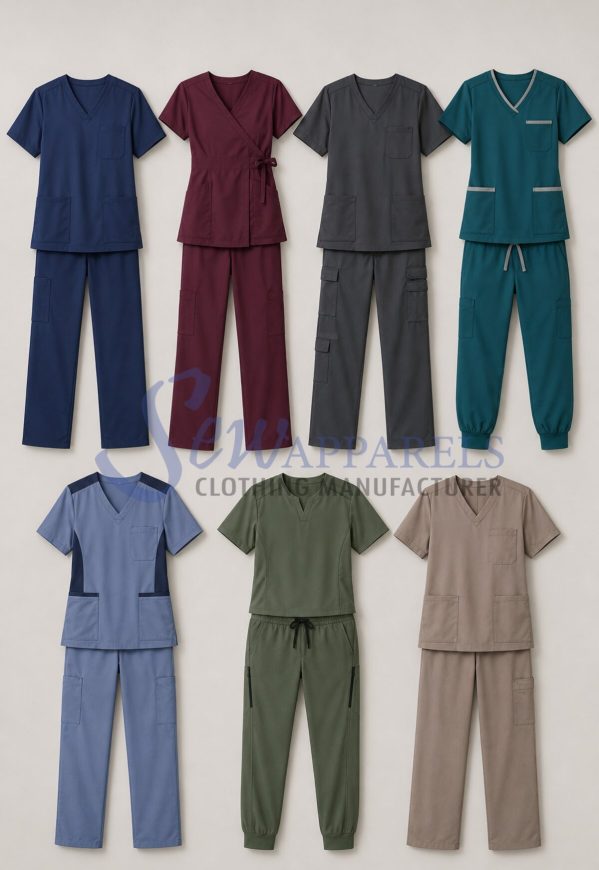
A scrub set quotation comparison checklist requires an identifiable garment and order scope. The scrub top trouser quotation identity should connect the two component styles, their approved revisions and the unit being priced. Do not assume that a collection name identifies the same pocket arrangement, waistband construction or sleeve option in every supplier’s response.
Freeze the scrub set approved specification version before circulating the request. If a fit or material decision remains open, label it as an option requiring separate costing. A provisional reference can support early discussions, but it cannot be compared fairly with a fully approved product without recording the difference.
Scrub uniform quote inclusions should describe what the price covers rather than relying on “standard quality” or “usual packing.” Ask whether each required component, operation and delivery-stage service is included. A supplier’s proposed alternative may be worth reviewing, but keep it separate from the response to the original brief.
1. Define ordinary uniform use and the purchasing entity
The first field in a scrub set quotation comparison checklist is the programme’s intended use. State that the request concerns ordinary staff uniforms where that is the actual scope. Describe the buying organisation, destination market and relevant facility requirements without sharing unnecessary employee information.
A scrub ordinary uniform RFQ scope should distinguish a general work uniform from protective apparel or other specialist garments. Do not add a sterile, barrier or infection-prevention claim because the garments will be worn in a healthcare setting. If the programme requires a regulated protective function, obtain an appropriate specification and assessment through the responsible team before sourcing on that basis.
Identify who will approve fit, materials, branding, quantity and commercial terms. Where purchasing and the facility’s uniform-management team are different functions, coordinate their inputs before the request is released. Conflicting instructions can produce apparently comparable prices for different operational requirements.
2. Identify the complete top and trouser styles
Provide a technical drawing and the current specification for both components. Relevant features may include neckline, sleeve, pocket positions, closures, waistband configuration, leg shape and finished measurements. Identify optional arrangements as development requests subject to supplier feasibility, rather than as confirmed features currently available.
Use the scrub set quotation comparison checklist to connect style options with their own quote lines. If the buyer is considering two trouser constructions, request separate responses against clearly named versions. Do not combine their prices into an average that hides which garment the supplier has actually offered.
Confirm whether the quotation concerns complete sets, separately sized paired components or independently stocked tops and trousers. A top in one labelled size and a trouser in another needs clear identification when mixed-size pairing is required. Supplier acceptance of the requested format should be explicit.
3. Specify the material without substituting a performance claim
The material input should identify the proposed fabric reference, composition, construction, finish and other approved attributes relevant to the product. Provide the retained sample or agreed evidence where the specification depends on a particular appearance or handle. A fibre-blend name alone does not identify every aspect of the garment fabric.
A scrub uniform evidence request should state which documents or samples are needed to support approval. Match the request to the intended use and buyer’s acceptance process. Do not assume that a generic certificate covers the exact fabric, finish, colour and product configuration being quoted.
Keep material alternatives in separate rows of the scrub set quotation comparison checklist. A substituted fabric may change the product being offered even if its composition sounds similar. Ask the supplier to identify the alternative clearly and explain which specification points differ. Review it through the buyer’s approval process before accepting it as equivalent.
Cotton Incorporated’s CottonWorks sourcing and manufacturing resources provide broader background on garment manufacturing and quality assurance. They do not confirm a particular supplier’s fabric availability, quotation or performance evidence. Use the actual material records and agreed product requirements for the commercial comparison.
4. Record colours and sizes in a controlled matrix
A scrub set colour size bid matrix should show the required colour codes, garment sizes and quantities for each order line. Identify the colour reference and the applicable size chart. Separate confirmed quantities from possible future demand so the supplier knows what belongs in the present quotation.
A hospital scrub quantity quotation matrix must also define the unit. “One hundred uniforms” could mean garments, paired sets or another issue format. State the number of tops and trousers where necessary, and reconcile their totals with the complete-set quantity. Do not assume that every size has equal component demand.
Include the proposed assortment in the scrub set quotation comparison checklist rather than asking for a price against a total alone. Suppliers may have different terms for a size or colour mix. Request their actual conditions, identifying any unresolved quantity restrictions; do not invent a universal minimum or surcharge.
Where several departments use different codes, keep those lines traceable without including staff names. The supplier generally needs aggregated garment quantities. Any individual allocation records should remain with the organisation and follow its information-handling rules.
5. Declare the actual laundering conditions
A scrub set laundry requirement RFQ should describe the buyer’s intended care route and the evidence required for approval. Obtain conditions from the facility or laundry provider rather than selecting a universal washing prescription from a general article. Identify which conditions are confirmed and which remain subject to review.
Scrub set laundry provider inputs may include the relevant process information and product restrictions needed by the garment-development team. The appropriate facility specialists should decide what must be supplied. Procurement should carry that agreed brief into the quotation rather than independently prescribing clinical laundry practices.
The CDC’s healthcare laundry guidance discusses facility policies and laundry services for uniforms and scrub suits. It provides context for coordinating the purchasing brief with the facility’s arrangements. It does not establish a garment price or guarantee that a proposed scrub fabric and construction will meet the buyer’s particular conditions.
Keep laundry-related sample or assessment work visible in the scrub set quotation comparison checklist. Confirm who will arrange it, what evidence is expected and whether the quoted development scope includes it. Do not infer acceptable performance simply because the supplier has offered a fabric for healthcare uniforms.
6. List identification, decoration and packing scope
Scrub set decoration cost inputs should identify the artwork version, technique requested, position, dimensions and colour requirements. Ask for confirmation of feasibility and the evidence needed for approval. A logo description without its actual file and placement can leave suppliers costing different operations.
State component labels, size identification and any agreed stock codes. Where tops and trousers are independently stocked, ensure the identification supports that arrangement. Distinguish the garment label brief from the supplier-facing order codes and carton records so each team knows which information belongs where.
Scrub set packing quote exclusions deserve their own field. Define whether the order is paired, component-packed, divided by size or allocated to delivery groups. Confirm the garment count per applicable packing unit and any specified packaging materials. If a supplier has omitted a requirement, record the omission rather than treating it as included.
Use a change log when artwork or packing changes after the first quotation. Ask which charges, sample approvals or order assumptions need revision. Do not present an earlier price as current after altering the specification it was based on.
7. Separate sampling, bulk supply and written exclusions
Scrub uniform sample charge scope should identify the development stage, specimen quantities and work included. Ask whether fit adjustments, material alternatives, decoration trials and required assessments are included or separately quoted. Record the supplier’s response without assuming a free sample, refund or transfer of charges into the bulk price.
Scrub set sample revision charges should be tied to a clear revision policy. Identify what constitutes an included correction and what triggers an additional quotation. This is especially important when the buyer changes the design or artwork after approval. Supplier-specific charges require written confirmation.
For scrub set supplier bid comparison, place comparable inclusions alongside explicit exclusions and unresolved assumptions. A quote may be commercially usable while still requiring clarification, but it should not be treated as a firm equivalent until the relevant differences are understood. Keep currencies, purchase units and delivery scope visible when comparing totals.
A seven-input quotation decision sheet
Build one scrub set quotation decision sheet with the fields below. This original worksheet structure supports the scrub set quotation comparison checklist; it does not replace the supplier’s proposal, purchase order or buyer approvals. Record a reference version and response date for each proposal.
| Input | Buyer requirement | Supplier A: inclusion or deviation | Supplier B: inclusion or deviation | Open question / owner |
|---|---|---|---|---|
| Use: | ordinary uniform purpose, purchasing entity, destination and responsible approval roles. | |||
| Style: | identified top and trouser specifications, versions and optional alternatives. | |||
| Material: | approved reference, proposed deviations and requested supporting evidence. | |||
| Colour: | confirmed codes and references, with alternatives separately identified. | |||
| Quantities: | component or set unit, size assortment and firm versus provisional demand. | |||
| Laundry: | buyer-confirmed conditions and the development evidence requested. | |||
| Decoration and packing: | artwork, labels, component identification, packing route and exclusions. |
Below those seven inputs, record sample scope, revision terms, bulk inclusions, quoted charges and open questions. Assign each clarification to a responsible role. The comparison becomes reviewable when another buyer can see which requirement each supplier has accepted, changed or excluded.
Frequently asked buying questions
Should the lowest unit price decide the supplier?
Compare the offered scope and evidence first. A price excluding required sample work, decoration or packing may not represent the same purchase. The buyer should assess confirmed terms and unresolved differences before making the commercial decision.
Can the same laundry instruction be used for every programme?
Use the actual facility or laundry-provider requirements and the approved garment specification. This checklist does not prescribe a universal process or prove compatibility. Confirm relevant conditions with the responsible teams.
Can a provisional quotation support budgeting?
Yes, when its assumptions and limitations are explicit. Identify open material, quantity or development decisions and request an updated quotation after they are resolved. Keep provisional budgeting separate from final order approval.
Request a quotation against one agreed programme
For custom scrub set manufacturing, send the versioned top-and-trouser brief with colours, quantity tables and confirmed scope. Buyers considering private label scrub set production should include label and artwork references and request direct confirmation of supplier feasibility, minimums, charges and schedule. Avoid treating optional proposals as already agreed services.
Discuss the brief through Sew Apparels’ scrub sets manufacturing page, and coordinate related decisions through the scrub buying guides. A scrub set quotation comparison checklist is ready for a buying decision when the seven inputs, development work, bulk inclusions and written exclusions have been reconciled.