
A scrub uniform reorder colour control process helps buyers replenish a department’s clothing without treating a colour name as a complete specification. Two deliveries described as navy can differ visibly, while a well-used garment may no longer represent its original shade. Start with an identified physical reference, connect it to the approved fabric and garment, and keep the reorder decision attached to the relevant production records.
This guide sets out six critical checks for ordinary scrub uniforms. It explains reference ownership, retained samples, component and material lots, comparison conditions, laundry history and written release decisions. The aim is a traceable purchasing decision rather than a promise that new and worn clothing will look identical. Colour approval also does not establish protective performance, infection prevention or suitability for a regulated clinical application.
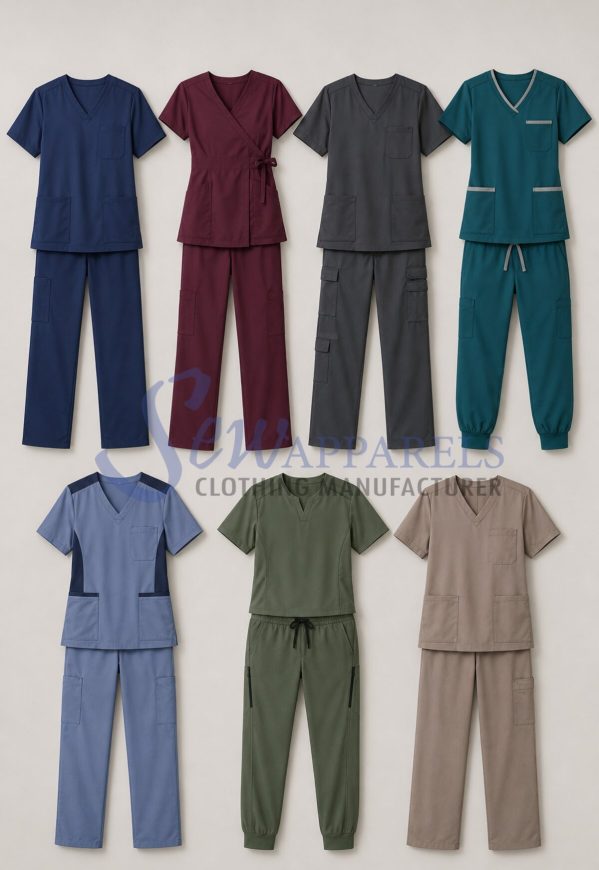
Why scrub uniform reorder colour control needs more than a colour name
A department might call its uniform teal, attach a digital colour code and send a photograph of an existing top. Those are useful identifiers, but each has limitations. A photograph depends on lighting and display settings; a code needs a defined physical reference; and a worn top has its own care history. Agree which reference controls the new order before requesting a match.
Separate shade governance from garment design. Contrast-panel proportions, piping positions and seam alignment concern the placement of components. Replenishment colour control concerns which shade reference is accepted, how new material is evaluated and who can release a variation. Keeping these decisions distinct avoids reopening the whole style when only a material lot needs review.
1. Define department colour codes and reference ownership
Begin scrub uniform reorder colour control with a department scrub colour code register. Give each active colour an unambiguous internal code and connect it to the relevant department or uniform programme. Include the style family, approved fabric specification and reference revision. A descriptive name can sit beside that code, but it should not replace the controlling record.
For example, a buyer could use the illustrative code D-TEAL-01 for one department and specify that master revision B controls the next purchase. The code is an administrative label, not a universal colour standard. Confirm whether the programme requires consistent colour across several styles, whether trousers use the same material as tops, and whether trim has its own reference.
Document scrub colour master ownership. Name the organisation or role that maintains the reference and the person authorised to approve a replacement. Record where the master is kept and who receives working copies. If a distributor, institution and manufacturer each hold a sample, establish which version takes precedence when they disagree.
2. Retain physical standards and identified bulk samples
The second scrub uniform reorder colour control check is to distinguish a master standard from a sample of what was delivered. A hospital uniform colour master sample identifies the intended appearance. An approved bulk swatch or garment records a particular production result. Label both, because one can help define the target while the other supports a delivery investigation.
A scrub retained physical shade standard should have a reference ID, approval date, material identity and revision. Protect it from unnecessary exposure and handling according to an agreed storage arrangement. Keep a working comparison sample where practical, and document replacement rather than silently exchanging the master for a newer or cleaner piece.
Create a scrub bulk shade archive only to the extent the supplier can support it. Ask what fabric and garment samples can be retained, how they are identified, how long they are kept and how they can be retrieved. Record the agreed responsibilities. Do not describe an archive or traceability service as available before the factory confirms the arrangement.
3. Track top and trouser lots through replenishment
Scrub uniform reorder colour control should connect the order to the actual materials used. Scrub uniform dye lot reorder records can identify the supplier’s fabric reference, colour approval, lot or batch designation and the delivery concerned. Ask which identifiers remain accessible after cutting and whether finished garments can be connected to those records.
Review scrub top trouser replenishment colour at component level. A coordinated set may use one approved material, but tops and trousers can still come from different deliveries or production allocations. Document how the supplier proposes to manage that relationship. A common style name does not demonstrate that two components were cut from the same material lot.
For a scrub reorder top trouser dye lot review, list the proposed top allocation beside the trouser allocation and their reference samples. Identify substitutions, split lots or additional shade approvals before production release. Confirm any segregation and packing instructions with the supplier; the buyer should not assume that an internal lot code automatically appears on every garment.
4. Compare fresh material under agreed viewing conditions
Consistent scrub uniform reorder colour control requires repeatable scrub shade viewing conditions. Agree the reference, specimen state, viewing environment, comparison method and decision maker. Fresh fabric should be compared with an appropriate fresh standard when that is the approval question. Comparing an unwashed swatch with a repeatedly laundered garment answers a different question.
Present specimens consistently and keep unrelated factors visible. Material construction, surface texture, finishes and the direction of a sample can affect the visual comparison. Specify whether fabric, completed garments or both require review. If instrumental measurements or formal laboratory assessment are needed, agree the method and acceptance criteria with the supplier and a competent testing provider.
CottonWorks explains colourfastness and care-related appearance testing, including the distinction between changes in colour and transfer to adjacent materials. That background helps buyers frame evidence requests. It does not provide a universal pass limit for matching a particular department’s scrub shade, so the programme’s acceptance requirements still need written agreement.
5. Review the institution’s laundry route and worn garments
Include care history in scrub uniform reorder colour control without using it to excuse an unexplained delivery difference. Scrub uniform fresh worn colour comparison should identify whether the existing garment is unused, recently issued or repeatedly processed. Record known laundry conditions and the limits of the available history. An unknown number of cycles should remain unknown.
For scrub repeat dye evidence, distinguish a supplier’s fresh shade submission from evidence of appearance after the agreed care route. Ask which specimens, processing conditions and results belong to each report. Keep the reference and test identifiers together. A successful comparison under one set of conditions should not be presented as proof of performance under every institutional laundry process.
CDC guidance discusses healthcare laundry and bedding practices. Use the institution’s applicable policies and its laundry provider’s requirements when defining the uniform programme. This article does not prescribe a universal washing temperature or chemical process, and colour similarity is not evidence of hygienic processing or infection-control performance.
Where new and worn clothing will be used together, ask the buyer to decide which appearance difference is acceptable and how the decision will be communicated. Replacing an entire allocation, separating deliveries or accepting an identified variation may have different operational implications. Record the chosen approach rather than promising a perfect match with aged stock.
6. Approve reorder shade decisions and permitted deviations
Close scrub uniform reorder colour control with a written scrub set repeat order shade approval. Identify the approved submission, master revision, order scope, review conditions and responsible approver. State whether approval covers fabric, the complete top-and-trouser set or particular components. A general “colour approved” message can leave those boundaries unclear.
Scrub replenishment colour variation approval should describe the actual decision. If a proposed variation is accepted, connect it to the specific lot and order rather than changing the programme’s master by implication. Where it is rejected or needs further evidence, record the next action and withhold the affected release until the required review is complete.
The final scrub reorder shade release should connect the approved reference to purchasing and production documents. Verify that the supplier received the same revision and accepted the agreed controls. Confirm any commercial effects of additional submissions, testing, segregation or revised materials before they become part of an order commitment.
A department shade register for scrub uniform reorder colour control
Use one register to organise scrub department shade identification. The fields below are a proposed buyer tool, not a claim about a manufacturer’s existing systems. Adjust them to the records the parties can maintain and the programme’s actual approval needs.
| Record | Required information | Top reference / evidence | Trouser reference / evidence | Responsible role / open action |
|---|---|---|---|---|
| Programme identity: | department colour code, style family and reorder or purchase reference. | |||
| Controlling standard: | master sample ID, fabric specification, revision, owner and storage location. | |||
| Previous delivery: | approved bulk sample ID, material lot, top and trouser allocation, and any known care history. | |||
| New submission: | specimen ID, proposed lot, supplier reference, comparison conditions and supporting evidence. | |||
| Decision: | approver, date, accepted scope, permitted variation, unresolved actions and release reference. |
In a simple example, the programme master remains revision B while a new submission receives its own ID, S-04. The buyer compares S-04 under the agreed conditions and records its acceptance for the identified reorder. That decision does not automatically replace revision B or approve another lot. A separate top submission should be distinguishable from a trouser submission when both require review.
This record is especially helpful when one team places the order and another receives the uniforms. They can check whether the delivery corresponds to the released references, rather than relying on an email attachment with no version. Ask the supplier to confirm any record-retention and retrieval requirements before relying on them for future replenishment.
Plan a traceable scrub replenishment enquiry
When discussing custom scrub set manufacturing, share the department register, controlling samples, garment specification, quantities and existing stock situation. Explain which shade decisions remain open and what evidence the buyer requires. Obtain the supplier’s confirmation of feasible traceability, sample retention and approval arrangements, together with the applicable quotation and schedule.
For private label scrub set production, keep brand presentation and garment colour requirements connected but distinct. Labels, decoration and packaging may have their own colour references. Identify those requirements separately so approval of the body fabric is not mistaken for approval of every visible component in the set.
Share your department colour references and existing scrub samples through the Sew Apparels custom scrub sets service to discuss a traceable reorder review. Use the related scrub buying guides for fabric, panel, print, quantity and quotation decisions. Bring the relevant conclusions into one approved product record before releasing the next order.