
Sports visor wind retention evaluation helps a buyer determine whether a sample stays in its intended position during a defined outdoor-use trial. A visor that feels secure while standing still may lift at the brim, rotate around the head or require repeated adjustment when airflow and movement are introduced. For visor retention in outdoor airflow, the useful question is not simply whether it stayed on once, but under what starting fit, exposure and wearer conditions it remained usable.
This sports visor wind retention evaluation guide sets out six development checks: define the use scenario, record the starting fit, control the airflow comparison, distinguish movement types, balance retention with comfort, and approve the evidence scope. These are practical sample-planning recommendations, not a certified wind-rating method. Any numerical performance claim needs evidence that supports the specific wording and conditions.
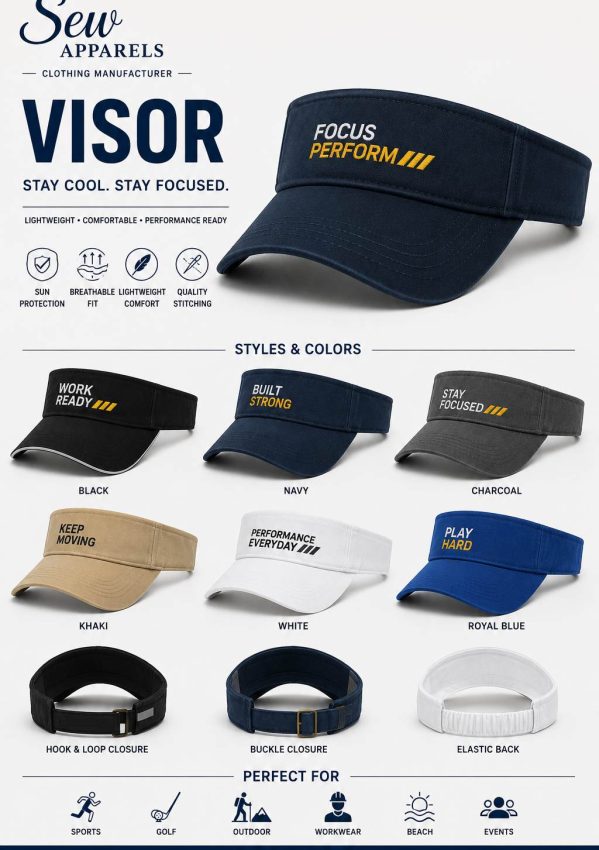
Sports visor wind retention evaluation: six sample checks
1. Define the intended use before choosing a trial
Start with the activity, intended wearer and reason retention matters. A walking visor, a running accessory and a golf visor may encounter different movement patterns and adjustment expectations. Specify whether the buyer wants to compare competing constructions, investigate a reported problem or support a proposed marketing statement. Those purposes call for different levels of evidence and should not be combined into one vague approval.
For sports visor wind retention evaluation, identify the construction being reviewed: brim dimensions, band shape, closure type, elastic sections and contact materials. Keep the sample revision and artwork identity visible in the trial record. A new decoration, changed brim insert or different band material can alter the finished sample, so the approval must describe the actual version rather than just the product name.
Agree the decision criteria before viewing the results. Examples include visible lift, rotation, sliding or the need to readjust during the specified sequence. Define how these observations will be recorded and who makes the decision. Avoid inventing an acceptable wind speed after a sample has already performed well at that speed. A planned sports visor wind lift trial is more useful than a favourable demonstration selected afterwards.
2. Record the starting fit and wearer coverage
Retention depends partly on how the visor is fitted. Use the open-crown band construction checks to define the fit arrangement. Record visor wind trial starting fit, including size designation, adjustment position and intended band placement before exposure. Ask the wearer to achieve the normal fit described in the brief, then photograph the starting position. Do not secretly tighten the closure for the wind trial and present the result as representative of everyday wearing comfort.
Define visor retention wearer size coverage in the sample plan. A visor trial on one wearer cannot establish consistent retention across every head size or shape. Record which wearers or headform arrangements were used and what they represent. For wearer trials, collect only the information needed for the product decision and avoid placing identifiable personal details in public marketing evidence.
A sports visor wind retention evaluation should also note hair position and any relevant interaction with other equipment. A repeatable comparison requires similar starting conditions. If a visor is repositioned between exposures, document the change. Keep the original fit record so a later reviewer can see whether an apparent improvement resulted from construction or a different adjustment.
3. Make airflow conditions comparable
The sports visor airflow test conditions record should describe the airflow source, sample position, direction, exposure duration and any measurement arrangement. A visor front and side wind exposure comparison can reveal different displacement behaviour. Record the order of the exposures and whether the wearer or support remained stationary. Do not assume that an indoor fan arrangement reproduces every gust, outdoor obstruction or movement encountered during real use.
If air speed is measured, identify the instrument, calibration status, measurement location and relevant limitations. A value at the fan outlet is not automatically the value at the visor. The NIST introduction to measurement uncertainty explains why a measurement result involves more than a displayed number. This is general measurement guidance, not a NIST visor test or product endorsement.
For sports visor controlled wind evaluation, keep the measurement and observation record connected. Label each run with the sample identity and the conditions actually used. If the setup cannot provide a meaningful measured air speed, describe the comparison honestly without giving it an unsupported numerical rating. A consistent qualitative trial can guide development while remaining limited in scope.
4. Distinguish lifting, rotation and sliding
Each sports visor displacement observation can indicate different development priorities. For visor lifting versus rotation assessment, brim lift describes an upward movement at the front; rotation changes the visor’s orientation around the head; sliding changes its position along the head. Record these separately instead of placing every event under “loose fit.” The distinction helps the supplier decide whether to review brim geometry, band contact, adjustment or another construction detail.
Use consistent reference points and observation views. A side view can help show brim movement, while a front view may reveal rotation. Record when the movement begins and whether it persists or recovers. If video is used internally, label the run and keep the camera position comparable. A short selected clip can hide repeated readjustment and should not replace the full observation record.
Plan a sports visor head movement wind trial only within a safe and suitable trial arrangement. Turning, looking down or changing posture may form part of the intended use scenario, but the exact sequence must be documented. Avoid risky outdoor locations or improvised exposure that puts participants in danger. Product development does not require testing people in hazardous wind conditions.
5. Balance retention with wearing comfort
Tightening the band may change retention, but that does not automatically make the sample better. Record sports visor tightening comfort feedback on pressure, contact points and the need to adjust. A design that remains in place only at an uncomfortable setting may not meet the intended use brief. Review the sports visor adjustment retention balance using comfort feedback and observed movement rather than treating the two assessments as unrelated.
Sports visor wind retention evaluation should preserve the normal starting fit for the main comparison. If a tighter setting is explored as a development option, identify it as a separate trial. Show both the retention result and the wearer’s response. This makes it possible to discuss the trade-off openly instead of hiding the adjustment behind a single pass statement.
When the supplier proposes a revised band, closure or brim, request a new sample and repeat the relevant comparison. Change one important feature at a time where practical. A modification that reduces sliding may introduce pressure or affect adjustment usability. Record the reason for the revision and evaluate the complete visor before incorporating the change into the production specification.
6. Approve the evidence and its limits
The sports visor retention approval record should include construction details, starting fit, represented sizes, exposure sequence, observations and the approval decision. Preserve the approved physical sample and relevant comparison samples. State visor wind rating evidence limits, including what was not tested. A limited trial can justify a development choice without proving universal retention in all outdoor conditions.
Keep advertising wording within the evidence available. The FTC advertising substantiation policy addresses the need for a reasonable basis for objective claims before they are advertised in the United States. A buyer considering phrases such as “windproof” or a specific wind-speed rating should obtain appropriate substantiation for the intended market and claim rather than rely on an informal sample demonstration.
For sports visor wind retention evaluation, separate a factory development record from an independent laboratory report. Name the method and limitations accurately. Do not imply certification, laboratory accreditation or endorsement that the evidence does not establish. If a formal rating is part of the commercial brief, agree the required evaluation with a qualified test provider before approving the public claim.
Sports visor wind retention evaluation buyer checklist
- Identify the actual visor revision, brim construction, band and closure.
- Define the intended activity and the purpose of the comparison.
- Record normal starting fit, adjustment position and represented wearer sizes.
- Describe airflow direction, duration, setup and any measurement limitations.
- Observe lift, rotation, sliding and readjustment separately.
- Review comfort at the same setting used for the retention comparison.
- Approve the sample and record the specific scope of the evidence.
How to handle an inconsistent sample result
If apparently identical runs produce different outcomes, investigate the setup before selecting a favourable result. Check starting placement, adjustment, exposure position and observation timing. Preserve all runs and record any identified inconsistency. Repeating a poorly controlled demonstration many times does not make its conclusions more representative.
Use a visor wind stability sample comparison against the same baseline where possible. For example, if a different closure is proposed, keep the remaining sample specification unchanged and record any unavoidable differences. The buyer can then assess whether the revision addresses the observed displacement. If several construction details change together, describe the result as a comparison between complete designs rather than claiming one feature caused the improvement.
Frequently asked questions
Can one successful trial establish a wind rating?
No. One trial supports only a narrow observation under its recorded conditions. A rating or broad claim requires an appropriate method, adequate coverage and evidence that matches the advertised wording.
Is a tighter visor always the best solution?
No. Retention and comfort need to be considered together. A tighter adjustment should be reviewed as a separate condition, with wearer feedback and any usability concerns recorded.
Should every size be represented?
The trial plan should justify how it covers the intended size and wearer range. A single sample on one wearer leaves other combinations unverified. Agree suitable coverage with the supplier or test provider before approving a broad conclusion.
Prepare a practical sourcing brief
Use the visor buying guides to connect the retention review with band construction, brim curvature and sample preparation. Keep each technical decision in the same development file so the approved fit and construction remain recognizable when the supplier prepares the next revision.
For custom visor manufacturing or private label visor production, send your intended activity, size range, closure preference and trial expectations to the Sew Apparels visor manufacturing team. Startup brands can discuss a focused sample scope and quotation requirements before committing to production. A documented sports visor wind retention evaluation gives the buyer a clearer basis for selecting a sample and deciding which performance statements still need stronger evidence.
Low MOQ sample planning for startup brands
A startup brand should begin with a specific use scenario and a small, clearly labelled comparison set. Discuss low MOQ production options separately from the number of samples needed to evaluate fit and retention. The sports visor wind retention evaluation record should explain which size, closure and brim combinations were represented, rather than treating a first sample as approval of every future variant.
Ask who will retain the normal-fit reference and review a revised sample. If the proposed visor changes after quotation, update the trial brief before repeating the comparison. Keep production quantities, development charges and any formal performance claim as separate decisions. This helps a new brand choose a workable development scope while keeping public wording within the actual evidence.