
Visor hair snagging at closures is a sample-development issue that should be reviewed before the fastening arrangement is approved. A visor may fit correctly and still catch hair when the back strap is opened, adjusted or removed. Buyers need to inspect the complete contact area, including exposed hooks, cut edges, stitching and nearby trim, rather than judge the closure from a front photograph.
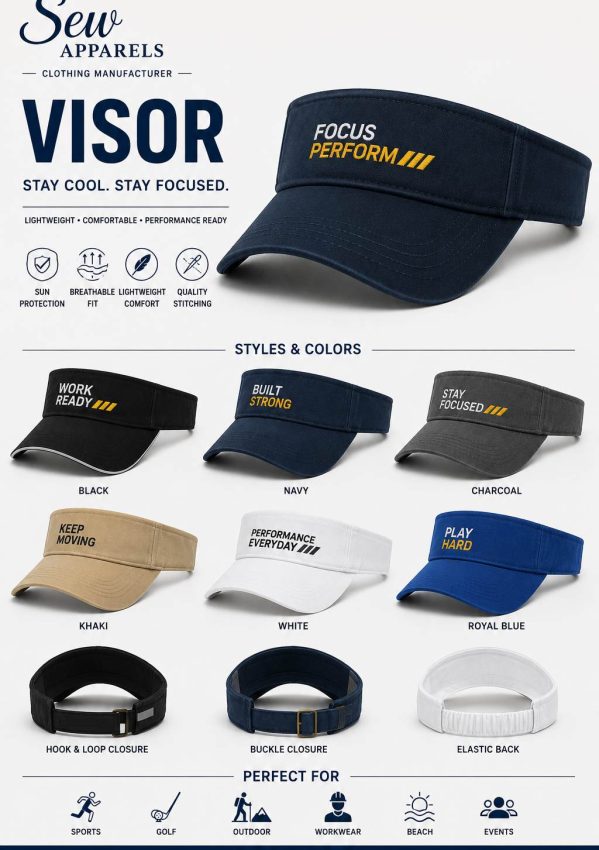
This visor hair snagging at closures guide explains six practical checks: map possible contact points, review the adjustment range, assess edge finishing, observe normal putting-on and removal, compare revised closure options, and preserve the approval record. A successful trial on one arrangement does not establish that every wearer or hairstyle will experience the same result.
Visor hair snagging at closures: six sample checks
1. Map the closure area before a wearer trial
Start with a drawing or close-up photograph of the back fastening area. Identify the hook face and loop face where a hook-and-loop closure is specified, the strap end, any buckle, seam ends and labels. Record visor hook face hair exposure and other surfaces that can face the hair when the visor is closed and which become exposed while it is opened. An exposure that occurs only during removal can be missed by inspecting a fully fastened sample.
For visor hair snagging at closures, inspect the actual assembled sample rather than only a fastening tape swatch. The way the tape is cut, sewn and positioned can change the contact area. A soft component description cannot confirm that the finished strap has no rough edge or protruding stitch. Keep the sample revision, fastener product identity and attachment drawing linked in the development file.
Describe visor closure hair catching precisely. “Hair caught at the exposed hook corner during opening” is more useful than “bad closure.” Mark the location on a photograph and note the operation being performed. Use the visor retention evaluation for the separate airflow question. Separate hair contact from skin pressure, loose stitching and closure retention, even when these concerns occur in the same part of the visor.
2. Review exposure across the adjustment range
Close the visor at the intended tight, middle and loose settings. Check whether a hook section extends beyond its mating surface and whether the strap end sits where hair may pass. The permitted adjustment range should be defined in the specification. A closure that looks neatly covered at one setting may expose a different area at the other end of the range.
Consider the intended size coverage and band placement. Do not shorten the usable adjustment range solely to make a demonstration sample look tidy without checking fit. Record any overlap requirement and discuss it with the fastening supplier and visor manufacturer. The sample should show that the intended closure arrangement can be used at the settings the buyer expects to offer.
A visor hair snagging at closures review should include the open position as well. Observe where the loose strap moves when the closure is separated. Use a visor closure cover assessment to compare whether a cover, revised orientation or different fastening geometry could reduce unnecessary contact. Treat these as options requiring samples, not automatic solutions.
3. Inspect cut edges, stitching and nearby trim
Begin the visor rough seam end review by inspecting strap corners, fastening tape edges and seam ends under suitable lighting. Look for protruding threads, uneven attachment, hard cut ends or a raised edge in the contact area. Record the condition without assuming that every visible feature will cause snagging. The next step is to determine whether the feature contacts hair during the agreed use sequence.
The VELCRO Brand commercial attachment guidance describes different fastening attachment approaches. Use the relevant component supplier’s instructions when specifying an attachment method. Sewing, bonding or welding choices need to suit the selected components and assembly; a general fastening article does not approve the finished visor or its hair-contact behaviour.
Check visor closure edge finishing on both the inner and outer strap faces. A neatly finished outer surface can conceal an uneven inner seam, label corner or reinforcement end. Include the adjacent band and sweatband junction in the open crown visor hair contact inspection. If the manufacturer proposes trimming or covering a concern, review the revised sample for attachment integrity and adjustment usability as well as the contact finish.
4. Observe normal putting-on, adjustment and removal
Visor hair snagging at closures should be assessed during the operations in which the wearer actually encounters the fastening area. For the visor removal hair snag trial, agree a normal sequence for putting on the visor, setting the fit, reopening it and removing it. Record the starting fit and how the closure is handled. Do not create a favourable result by using an unusual removal technique that the intended wearer would not reasonably follow.
Define hair arrangement visor usability coverage in a proportionate sample plan. A visor ponytail contact assessment differs from a loose-hair trial because hair can pass through different parts of the open crown, but a small trial does not represent every hairstyle or hair texture. Record the coverage and limitations clearly. Use voluntary wearer feedback and stop an observation if hair catches; do not pull through a snag to make the trial appear complete.
In the visor donning removal observation record, note the location, operation and whether assistance was needed to release contact. Preserve observations of both successful use and difficulties. A visor hair snag complaint record is easier to investigate when it identifies the strap setting and closure state. Avoid collecting unnecessary personal information. Internal sample notes can describe the relevant product interaction without publishing identifiable wearer details.
5. Compare revised fastening options on the complete visor
For a snag prone visor component, a different hook profile, fastening orientation, covered end or closure type may be worth sampling. Ask the component supplier for the actual product specification and the manufacturer for the assembly changes. A revision should be assessed against the same brief as the original sample, including fit range, ease of adjustment, retention and finishing. Improving one contact point should not conceal a new limitation elsewhere.
The VELCRO Brand Sleek and Thin product information describes a low-profile fastening option intended for applications close to the skin. That is a component-selection reference, not proof that a particular visor is hair-snag-free. Request the relevant sample and evaluate the finished contact arrangement before adopting any performance wording.
For visor hair snagging at closures, compare one important revision at a time where practical. Label the trial samples and retain the original baseline. If several details change together, describe the result as a comparison between complete fastening arrangements rather than attributing an improvement to one feature. Record any cost, material minimum or assembly implications separately from the usability decision.
6. Recheck after the specified care and use sequence
Review the closure after the care route and repeated opening sequence specified in the development brief. Inspect visor trim edge after care for changes in finish, attachment, strap shape or exposed surfaces. Use the relevant component instructions and intended visor care method. Do not apply an unsuitable wash simply to generate a durability statement, and do not extrapolate a limited sample observation into lifetime performance.
Keep visor hair snagging at closures observations connected to the actual sequence used. Record the number of operations, care procedure and inspection conditions. If an edge becomes raised or a seam end changes, photograph the location and request a construction review. A result from a new sample and a result after care should be identified separately in the approval record.
Ask what changes require renewed evaluation. A replacement fastener, different tape width, revised sewing route or altered strap material may affect contact behaviour. The supplier should identify such changes before reorders proceed. Preserve the hair contact finish approval sample and fastening identity so the buyer can compare a future production sample with the approved arrangement.
Visor hair snagging at closures approval checklist
- Identify the sample revision, fastening product and strap construction.
- Map exposed surfaces in closed, partly open and fully open positions.
- Check the specified adjustment range and relevant wearer coverage.
- Inspect tape edges, strap corners, stitch ends and nearby labels.
- Observe normal putting-on, adjustment and removal without forcing a snag.
- Compare revised arrangements for contact finish, fit and usability.
- Record any care or repeated-operation review and its limits.
- Approve the actual assembled sample and define reorder change controls.
What to include in a supplier correction request
A correction request should show the contact point, the operation in which it appeared and the sample identity. Add the starting adjustment position and relevant photographs. State the required outcome in practical terms, such as reducing exposed fastening contact while preserving the agreed fit range. Avoid demanding an unsupported universal “no snag” guarantee based on a single informal observation.
Review the new sample before approving bulk production. If visor closure user guidance is proposed, check whether it is clear and realistic. Instructions can support correct use, but they should not be used to dismiss a repeatable construction concern that appears during normal handling.
Frequently asked questions
Does soft fastening tape guarantee no hair catching?
No. Component softness does not confirm the behaviour of every assembled closure. Exposure, tape edges, strap orientation and the way the visor is opened still need review on the finished sample.
Can the manufacturer cover every exposed hook surface?
A cover or revised overlap may be an option, but it can affect adjustment and fastening operation. Request a complete revised sample and review it across the intended fit range before deciding.
Should the same check be repeated on replacement trims?
Yes, when the replacement changes the relevant contact arrangement or component characteristics. Keep the original approval identity and compare the proposed substitution before accepting it for a reorder.
Prepare the next visor development brief
Use the visor buying guides to coordinate fastening contact with the band, brim and wider sample decisions. Keep the approval notes in the same current specification so a closure correction is reviewed alongside its effect on the complete product.
For custom visor manufacturing or private label visor production, share your intended fit range, closure preference and sample concerns with the Sew Apparels visor team. Startup brands can discuss a focused development scope and quotation requirements before committing. A clear visor hair snagging at closures record helps both parties evaluate the actual sample and maintain the approved fastening arrangement on later orders.
Startup brands and low MOQ closure trials
Discuss low MOQ options against the actual tape, strap fabric and production route rather than assuming that every closure is available in any quantity. Visor hair snagging at closures should remain part of sample approval even when the first commercial order is small.
Retain one accepted assembled reference with the fastening product and edge-finishing method recorded. If a supplier proposes a replacement trim to meet a quantity or price requirement, review its contact arrangement before authorising the change. Keep usability approval separate from the quotation decision: a less expensive component still needs to suit the agreed adjustment range and normal removal sequence. This gives the new brand a clear basis for its first release and subsequent reorder.