
Underscrub top colourway minimum order planning separates the range a buyer wants from the material and sewing commitments a supplier can actually quote. Three colours in one garment order may involve three different fabric decisions. Before agreeing quantities, map the proposed fabric quality, shade references, sizes and style variants. Ask for each constraint in writing so an attractive garment price does not conceal unused material or an unconfirmed custom-dye requirement.
The underscrub tops buying guides support related fabric and layering decisions. This article owns commercial colourway constraints. Its six critical checks and blank order worksheet help a startup or established brand discuss a lean range without claiming that stock colours, a numerical low minimum or a particular lead time are currently available.
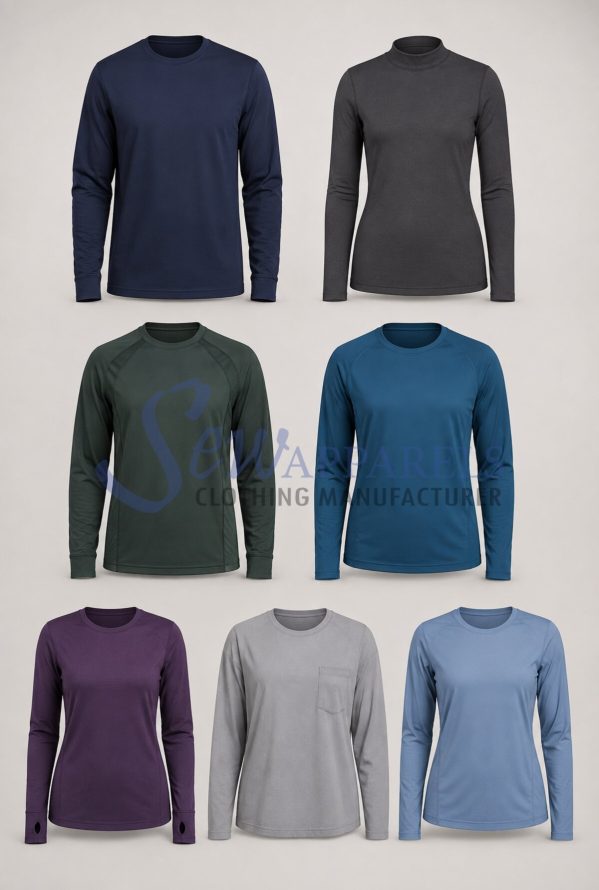
1. Map underscrub top colourway minimum order planning inputs
Build an underscrub size colour quantity matrix before asking for a quote. Give each proposed shade a clear reference, then list the buyer’s requested quantities by size. Distinguish actual committed demand from an internal forecast. If the figures are provisional, label them as such so the supplier does not interpret the worksheet as a released purchase order.
Use the stretch-knit fabric selection review to identify the exact fabric quality, composition declaration, finished weight, width and relevant stretch requirements. Keep sleeve or body-length variants visible because they may affect consumption. A range described only as “small quantities in navy and black” leaves too many material and construction assumptions for a reliable comparison.
Underscrub bulk order colour allocation should reconcile the individual size lines with each colour total and the overall order. Check that a revised assortment does not leave an old total in another file. Use one controlled revision of the worksheet for the quotation, and retain a separate history of changes.
Underscrub top colourway minimum order planning also needs an owner for material approval and an owner for commercial decisions. These may be different people. A designer’s approval of a shade does not authorize the purchase of a minimum dye lot, while a purchasing approval does not establish that the sample meets the fabric specification.
2. Separate fabric minimums from garment quantities
Underscrub fabric versus garment minimum review asks what each quoted minimum applies to. A material constraint may be expressed in kilograms, metres, dye lots or another supplier-defined basis. A sewing constraint may apply by style, colour, order or production arrangement. Record the stated unit and scope before comparing quantities.
An underscrub fabric colour MOQ enquiry should ask whether the proposed quality and shade have a confirmed material minimum, whether colour development is separate and how usable fabric quantity is calculated. Avoid treating a total garment minimum as evidence that every colour can be ordered in any quantity. The supplier should explain any pooling option rather than the buyer assuming one.
Underscrub small batch material commitment includes more than fabric physically cut into the tops. Ask who purchases the required material, who owns any balance and whether a reserve or deposit is involved. Keep those terms visible beside the sewing quantity. A smaller garment order can still carry a larger material commitment if that is the confirmed sourcing route.
The underscrub top colourway minimum order planning record should preserve unknown minimums as unknown. Do not enter a plausible number to complete a template. Ask the supplier for the actual current constraint and its validity period, and make the quote conditional where information remains unresolved.
3. Compare stock shades with custom-dye options
An underscrub stock shade order option starts with current confirmation of the material reference, available quantity, lot identity and reservation terms. A familiar colour name does not establish that the correct quality is available. Ask for the actual shade sample and confirm whether the quoted stock is allocated, merely offered or already committed elsewhere.
Underscrub custom dye minimum inputs include the colour standard, intended substrate, proposed fabric quantity and required approval route. Clarify whether the quote includes lab dips, additional iterations and bulk shade review. Keep these development items separate from the final sewing price so the buyer can compare routes fairly.
CottonWorks’ lab dip process guidance describes colour development as beginning with a specified shade and substrate. Its example uses cotton interlock and notes that processes vary with other fibres or dye types. This supports supplying a precise colour reference; it does not establish a minimum dye quantity or an available underscrub fabric.
Review underscrub startup range material options through confirmed alternatives. A buyer might ask to compare fewer colours, an approved available shade or a custom-dye route. Each alternative still needs technical and commercial approval. Do not substitute a different material solely to make the minimum smaller without checking what changes in stretch, care, appearance and labelling.
Underscrub top colourway minimum order planning should record why one route is preferred. Stock may reduce one development step while leaving availability and repeat-order questions open. Custom dye may support a specified shade while introducing material and approval commitments. Neither route is universally cheaper or faster.
4. Model usable balances and carryover responsibilities
An underscrub leftover fabric allowance should distinguish expected usable carryover from material that may not be available for another order. Ask the supplier to explain consumption assumptions, cutting allowance, defects and any unusable balance. A gross purchased quantity minus an estimated cutting quantity is not automatically an approved reorder reserve.
Review the material estimate with the proposed size ratio and pattern route. Changes to sleeve length, fabric width or the assortment may change the quantity required. Have the supplier confirm the working consumption basis instead of applying one remembered fabric-per-garment figure to every variant. Keep provisional estimates clearly identified.
Underscrub dye lot reservation terms should cover ownership, identification, storage, reservation duration and any charges. Ask what happens when the reserve period ends or the buyer changes the style. A note reading “fabric kept for later” leaves important responsibilities unclear. Confirm whether the reserved balance is sufficient and suitable for the intended future quantity.
An underscrub colourway consolidation plan may reduce the number of material commitments by narrowing the initial assortment. Treat consolidation as a buyer decision supported by demand and quotation evidence. It should not silently remove a required colour or force additional garments into sizes the buyer does not need.
The underscrub top colourway minimum order planning worksheet should separate material carryover from finished-garment inventory. Buying extra tops and holding fabric create different commitments. Compare them with the buyer’s actual distribution and reorder plan rather than presenting either as an automatic saving.
5. Request a quotation with constraints visible
Underscrub lean assortment cost scope should identify the fabric route, colour development, samples, sewing, trims, labelling and packing included in the quotation. Ask for the basis of each minimum and any price conditions. Keep payment, delivery and validity terms with the quote. Do not describe the garment unit price as the whole project cost if separate commitments remain.
An underscrub top small range quotation should state which assortment revision the supplier priced. If two quotes use different colours, size ratios or materials, reconcile those differences before comparing them. A lower headline price may describe a different product or omit a cost included elsewhere.
For a U.S.-bound range, the FTC’s textile and wool labelling guidance explains that most covered products identify fibre content, origin and the responsible business; care labels are addressed by a separate rule. Use the applicable destination requirements when scoping labels. A smaller order is not a reason to omit the buyer’s labelling review.
Keep material substitutions connected to that review. If a proposed alternative has a different composition, the approved label and product information may need reassessment. Ask the buyer’s responsible reviewer to confirm the destination-specific requirements. This purchasing worksheet is not a complete legal compliance checklist.
6. Approve the assortment and reorder assumptions
An underscrub minimum order comparison sheet can use the structure below. The supplier-confirmed minimum and sewing fields are intentionally blank: this is a planning template, not a statement of available quantities. Populate them only after a current quotation is received.
On smaller screens, each proposed colour-and-size line stacks with its field labels; unconfirmed quantities remain blank.
| Proposed colour and size | Buyer demand | Confirmed fabric minimum and unit | Confirmed sewing quantity | Carryover and open terms |
|---|---|---|---|---|
| Colour A / buyer size S | Buyer to enter | Ownership and usable balance to confirm | ||
| Colour A / buyer size M | Buyer to enter | Shared material allocation to confirm | ||
| Colour B / buyer size S | Buyer to enter | Stock or custom-dye route to confirm |
Underscrub reorder colour availability should be confirmed independently of the first order. Ask whether future supply uses reserved material or a newly sourced lot, and what shade approval would be required. Do not promise that a colour will remain available or identical because it was available for the initial quotation.
Approve the final range with its quotation, shade reference, material specification, size allocation and carryover terms connected. Identify which open assumptions prevent release. Underscrub top colourway minimum order planning is complete when the buyer understands the confirmed commitment and accepts the remaining conditions, not when every proposed colour has been placed in a table.
Prepare a lean range enquiry
For custom underscrub top manufacturing, send the planned colours, sizes and quantities with the fabric brief. Request supplier-confirmed material and garment minimums, available alternatives and the associated commercial terms. Confirm actual capability, stock, price and lead time directly; this article offers no numerical minimum or inventory promise.
Startup brands considering private label underscrub top production can begin with a controlled assortment and compare its confirmed material routes. Keep the desired range and the supplier’s constraints separate until the buyer approves a workable plan. Underscrub top colourway minimum order planning helps expose the decisions that belong in that approval.
Frequently asked questions
Does one garment minimum cover every colour?
Only if the supplier confirms that scope. Fabric colours and sewing arrangements can have different constraints, so ask for each basis explicitly.
Can leftover fabric automatically cover a reorder?
No. Confirm its usable quantity, identity, ownership and reservation terms, then compare it with the future order requirements.
What belongs in the final approval?
The underscrub top colourway minimum order planning record should connect the assortment, confirmed quote, material route, shade approval and carryover responsibilities. Keep unknowns unresolved until the responsible party confirms them.