
UNDERSCRUB TOPS PRODUCT DEVELOPMENT
Underscrub Tops Buying Guides
Use this technical hub to turn underscrub top ideas into measurable layering, sleeve fit, knit stretch, recovery, seam comfort, care and quality requirements. Each guide supports a distinct product-development decision while keeping sampling, approval and production evidence connected. Start with the related articles below, then use the product page when your brand is ready to prepare a focused manufacturing enquiry.
Review the Underscrub Tops product pageHow to use these underscrub tops buying guides
An underscrub top is worn close to the body beneath a scrub top, so the brief must start with the intended outer layer, working environment, shift length and laundering routine. Define sleeve length, neckline coverage, body fit, fabric weight and whether the style will be unisex or shaped. Measure the base layer together with the scrub top to find bunching at the armhole, cuff and hem.
Translate comfort expectations into fabric tests, pattern measurements and seam requirements. Record the fit-model profile, approved base size and representative graded sizes. Describe the garment as apparel and substantiate any specialized performance claim with relevant testing rather than implying a medical or protective function without evidence.
Layering sleeve fit and movement
Sleeve fit determines whether an underscrub top layers smoothly under a scrub top. Specify shoulder position, upper-arm ease, elbow width, cuff circumference and sleeve length on a finished-garment chart. Compare the underscrub sleeve with the outer scrub sleeve through reaching, lifting and bending.
A tight lower layer can pull the outer garment, while excessive fabric can bunch at the elbow or cuff. If the sleeve is intended to show beyond the scrub top, define the visible extension and shade relationship. Trial representative sizes and check the same movements after laundering. Record any sleeve twist, hem creep or restriction as a pattern issue to resolve before approval.
Fabric stretch, recovery and hand feel
Choose an underscrub knit by measurable composition, weight, stretch in each direction, recovery, opacity, dimensional stability and hand feel against skin. Assess warmth and breathability for the expected workplace rather than using a single fabric claim for every environment. Fabric should recover after movement and retain its intended fit after repeated care.
Test seams and cuffs with the production-intent knit because different stretch and recovery can change pressure at the wrist and underarm. Confirm colourfastness where the base layer may be visible at the neck or sleeve. Keep a sealed fabric standard with wash results and shade references so bulk sourcing can match the approved sample.
Armhole, sleeve and body balance
Evaluate underscrub top fit as a base layer, not in isolation. Check neckline coverage, shoulder alignment, chest and waist ease, body length, armhole balance and hem position beneath the approved scrub top. Use movement trials that represent reaching, crossing the arms, sitting and bending during a shift. The lower layer should not pull the outer top off the shoulder or ride above the waistband.
Grade rules should preserve layering ease through the full size range instead of copying one adjustment to every point. Measure selected small, middle and large sizes before and after laundering, and photograph the same views for each sample revision. This creates a repeatable production specification rather than a subjective fit approval.
Cuff construction and seam comfort
Cuff and seam construction affect comfort where an underscrub top touches skin for long periods. Specify the cuff finish, recovery, finished opening and acceptable pressure; inspect whether the cuff rolls or creeps under an outer sleeve. Map seams away from repeated friction points where practical, and define stitch type, seam allowance, thread and stretch compatibility.
Check underarm and side seams through movement and laundering for chafing, grin, puckering or broken stitches. If a flat or reduced-bulk seam is requested, document the exact construction on the technical drawing and approve a production-intent sample. Bulk inspection should use the same measurement points and visual standards established during development.
Laundering, stability and quality control
Confirm the actual wash temperature, drying method and cycle count expected for the underscrub top before sealing the sample. Measure shrinkage, twist, sleeve recovery, cuff shape, seam condition, shade and label legibility before and after care. Test the base layer together with its intended outer scrub top to identify colour transfer, differential shrinkage or new bunching.
Build a quality plan around measurable points and functional checks instead of a broad instruction to match the sample. Retain approved pre-production and washed garments, fabric reports, shade references and defect limits. Traceable evidence allows the factory to correct a recurring cause before bulk cutting and supports consistent repeat orders.
Low MOQ underscrub tops manufacturer support for startup brands
A low MOQ underscrub tops manufacturer can help a startup brand validate layering fit, knit fabric, sleeve length, cuffs and branding before a larger programme. Small MOQ development still needs a controlled technical pack, approved materials, size set, care route, inspection plan and sealed sample. Startup brands receive a practical route when the brief limits variables and defines clear approval stages.
Begin with one base silhouette and one fabric, then record measurable differences between long-sleeve and short-sleeve variants. Confirm the current commercial minimum, material availability and development schedule for the chosen style directly with the manufacturer. Treat the first order as a disciplined validation stage that produces evidence for repeat production.
Documentation and approval route
The final underscrub top package should connect a technical drawing, measurement chart, grade rules, fabric and trim specifications, colour references, labels, packaging, care method and quality plan. Include the approved outer scrub top as a layering reference and record the fit model and movement checks. Give every file a version and date, and identify the person who approves each sample stage.
Use change logs to show what moved, why it moved and which sample replaced the previous reference. Costing should reflect the confirmed knit, seam and cuff construction. Before production, reconcile the purchase order with the sealed sample and technical pack so quantity, size ratio, colour, labelling and delivery terms point to one controlled product definition.
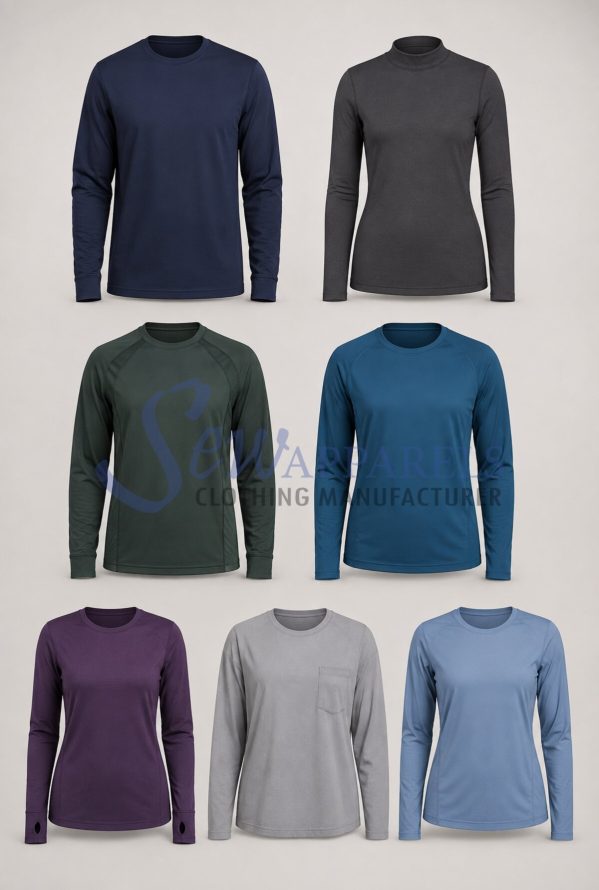
GUIDE 01
Layering Sleeve Fit: Underscrub Tops
Define underscrub sleeve length, upper-arm ease, cuff fit and movement checks against the intended outer scrub top.
Read the layering sleeve fit guideGUIDE 02
Stretch Knit Fabric Selection: Underscrub Tops
Compare knit composition, stretch direction, recovery, opacity and laundering stability before sealing the underscrub fabric standard.
Read the stretch knit fabric guideFEATURED BUYER GUIDE
Colourway Minimum Order Planning: Underscrub Tops
Plan underscrub top colour quantities through six critical checks for fabric MOQ, sewing minimums, stock shades, custom dyeing and carryover ownership. Use a blank colour-by-size worksheet to clarify quotation and reorder terms without assuming available stock or promising unconfirmed minimums.
Read the colourway minimum order planning guideFEATURED BUYER GUIDE
Antimicrobial Claim Review: Underscrub Tops
Review proposed underscrub antimicrobial wording through six critical checks for treatment identity, product-specific reports, care history and approval. Use a claim worksheet to separate textile preservation, odour outcomes and health implications without promising infection protection or unconfirmed treatment availability.
Read the antimicrobial claim review guideFEATURED BUYER GUIDE
Hospital Uniform Policy Review: Underscrub Tops
Turn written hospital uniform requirements into an underscrub sample brief through six critical checks for policy version, roles, sleeves, coverage and authorized variants. Use an approval matrix to separate institutional sign-off from garment fit review without deciding clinical practice or individual accommodations.
Read the hospital uniform policy review guideTechnical references for underscrub top development
Use ISO 8559-1:2017 for consistent anthropometric definitions that support clothing size and shape profiles, and ISO 18890:2018 for principal garment measurement points and agreed additional measurements. These references support clear base-layer fit and graded-size evidence. They do not replace product-specific layering trials, laundering validation, sealed samples or buyer acceptance limits.
ISO anthropometric measurement definitions ISO garment measurement methodTurn your underscrub top decision into a product brief
Use the guides above to prepare an underscrub top brief covering knit fabric, sleeve and cuff fit, layering trials, seam comfort, care evidence, branding and quantity route. Send the confirmed brief for focused costing and sample development. Keep each approval measurable so production can be inspected against the same sealed standard.
Review custom Underscrub Tops manufacturing