
Underscrub top hospital uniform policy review turns an employer’s written requirements into a controlled purchasing brief before fabric or sleeve variants are ordered. A buyer should not choose a layer solely because it looks appropriate beneath a scrub top. The intended institution, staff role and use setting may affect what is permitted. Obtain the current policy and its authorized interpretation rather than asking a garment supplier to decide clinical practice.
The underscrub tops buying guides support related fabric and physical layering decisions. Review underscrub stretch knit fabric selection separately from institutional permission. This article provides six critical checks and a policy-to-specification matrix. It establishes a documentation route for approved garment requirements; it does not authorize hospital use, decide individual accommodations or certify a protective function.
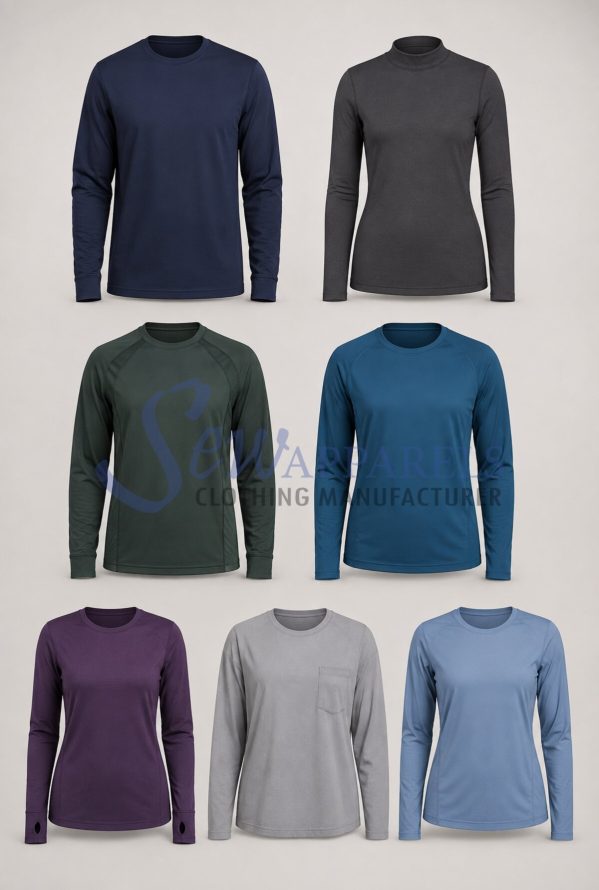
1. Identify the underscrub top hospital uniform policy review owner
Begin with the employer’s name, relevant location and current policy owner. Ask purchasing to obtain the applicable document, its effective date and any role-specific instructions. Keep the institution’s authorization route visible in the brief so a supplier question reaches the person responsible for the policy instead of being answered informally by a colleague.
The underscrub uniform policy version should be recorded alongside the specification revision. A document downloaded months earlier may have been replaced, supplemented or interpreted differently for a particular service. Confirm that the supplied version is current for the intended order and identify who will notify purchasing if the requirements change.
Underscrub local dress code verification should resolve gaps through the employer. If the policy describes outer uniforms but says little about base layers, request written clarification. Silence is not a manufacturing approval. Record the question, response, authorizing owner and any restrictions so the sampling team works from the same instruction.
Underscrub top hospital uniform policy review also needs a clear scope. State whether the order serves one institution or several employers. Requirements accepted by one organization must not automatically be applied to another. Separate their approvals before combining quantities, colours or sample variants in a shared sourcing programme.
2. Map roles and approved use settings
Build an underscrub clinical nonclinical role matrix using the institution’s own descriptions. Ask which staff groups and use settings the proposed layer is intended for, and which policy requirements apply to each. A job title alone may not describe all activities undertaken during a shift. The employer should confirm the relevant distinctions.
Underscrub staff role order specification should connect each authorized use group with its approved garment variant. Keep a code for the variant and a separate reference for the institution’s approval. This avoids a vague purchase order stating “all staff” when the design was only reviewed for a narrower setting.
NHS England’s uniforms and workwear guidance for NHS employers is an identified example from England. The guidance places local dress-code development with individual organizations and discusses inclusive policies and direct patient care. It is not a worldwide underscrub specification or permission to use a particular sleeve design. Obtain the intended employer’s current requirements and qualified input.
When staff move between settings, ask the institution how its requirements should be reflected in the procurement brief. Do not create your own clinical exceptions or instructions for switching garments. The buyer needs an authorized design requirement that sampling can implement, not a manufacturer’s interpretation of working practice.
Underscrub top hospital uniform policy review should flag unresolved role assignments before bulk quantities are released. A material commitment can be difficult to reverse after cutting. Keep the affected variant on hold until the buyer’s responsible owner clarifies its permitted use and confirms the order allocation.
3. Collect approved sleeve and coverage requirements
Underscrub sleeve policy procurement starts with the employer’s written sleeve requirements for the intended activities. Collect the authorized sleeve length or configuration and any relevant operational constraints. Do not assume that a long sleeve permitted in one situation is acceptable in every setting, or that a short sleeve resolves every institutional requirement.
NHS England’s standard infection control precautions chapter addresses forearm exposure before hand hygiene and refers readers to its uniforms guidance for longer-sleeve and over-sleeve matters. This is a jurisdictional reference for the institution’s qualified team to consider. A sourcing article must not replace current local infection-control directions.
Underscrub approved garment coverage should identify the institution-approved neckline, body and sleeve requirements that the buyer wants translated into the sample. Use a technical drawing and agreed measurement points. If the policy wording is qualitative, ask the authorized owner to confirm how the proposed garment meets it before treating measurements as approved.
Record underscrub institution approved colour options separately from fabric availability. The policy may require a specified appearance, while the supplier still needs to confirm the actual quality and shade. A commercially convenient stock colour should not replace an approved institutional colour without buyer authorization.
Underscrub top hospital uniform policy review should preserve the distinction between requirements and implementation. An approved coverage statement is a design input. The sample must still show whether the selected knit, pattern and cuff construction deliver that input across the requested sizes and intended outer layer.
4. Route accommodation requests through the institution
Underscrub wearer accommodation request process should follow the employer’s established confidential route. Purchasing and manufacturing should receive the authorized garment requirements needed to develop the variant, rather than personal medical, religious or other sensitive details that are unnecessary for production.
Do not approve or reject an individual request within a supplier worksheet. The institution’s responsible teams determine the appropriate process, applicable requirements and authorized outcome. A factory can explain construction options and prepare samples against an approved brief; it cannot decide a staff member’s rights or clinical suitability.
Underscrub top hospital uniform policy review keeps each approved variant identified by its technical requirements and order code. If access to the underlying approval is restricted, record the authorized contact and the non-sensitive specification reference. Do not place private explanations on garment labels, public product pages or files shared widely with production staff.
Where a requested construction conflicts with the current brief, return the question to the institution. Avoid solving the conflict by quietly changing sleeve length or substituting a cuff. Record the approved response and issue a new specification revision before sampling proceeds. Informal agreement should not overwrite the controlled requirement.
Underscrub top hospital uniform policy review should treat accommodations as an authorization dependency, not an excuse to make unsupported product claims. An approved design variation remains an ordinary garment specification unless separate evidence and approval establish another function. Do not describe it as protective or universally suitable for healthcare use.
5. Translate requirements into traceable samples
Underscrub employer sampling requirements should connect the signed policy inputs with the proposed fabric, pattern, sleeve variant, neckline and colour reference. Prepare the sample request using one revision of those inputs. Mark unresolved items clearly so they are not mistaken for permission to choose whichever option is easiest to sew.
The underscrub sleeve variant approval record should identify the technical drawing, sample code, size, outer scrub reference and reviewing owner. If two variants are requested, keep their drawings and approval records separate. A sample representing one sleeve route does not establish approval of another route simply because the fabric is shared.
Use the underscrub institution requirement checklist to reconcile the sample against the authorized brief. Review measurements, visible coverage, intended layering, shade and labelling. Record discrepancies as technical issues, then ask the relevant owner whether a change requires policy clarification as well as a pattern revision.
Include the buyer’s approved laundering requirements in sample development. Check whether the garment maintains its specified dimensions and appearance after the agreed care route. This is a garment-quality review; it is not an infection-control validation. Do not invent a universal cleaning temperature or declare a fabric clinically suitable from a fit sample.
Underscrub top hospital uniform policy review should keep revisions traceable when a sample changes. Retain the previous version and describe what changed, why it changed and which approval now applies. Replacing the drawing without updating the approval matrix can leave purchasing and production using different product definitions.
6. Separate policy sign-off from garment approval
Underscrub garment fit versus policy approval should be recorded as two decisions. A fit reviewer can assess measurements and physical layering. The institution’s authorized owner confirms whether the specified variant satisfies its approved requirements. Neither decision automatically substitutes for the other.
The matrix below is a blank purchasing structure. Its role and variant rows are placeholders, not recommendations for clinical practice. Obtain the employer’s actual requirements before completing the fields, and keep release status pending until the required approvals exist.
On narrow screens, each proposed variant appears as a separate card with labelled policy and approval fields.
| Employer and policy version | Role and use setting | Signed sleeve and coverage requirement | Sample revision | Authorizing owner | Release status |
|---|---|---|---|---|---|
| Buyer to enter | Institution to define | Written confirmation required | Variant A / to assign | Institution to identify | Pending |
| Buyer to enter | Institution to define | Written confirmation required | Variant B / to assign | Institution to identify | Pending |
Underscrub hospital buyer signoff should reconcile the approved variant codes, size allocation, colours, specification revision and commercial quotation before order release. Confirm which records purchasing must retain. If any authorization is conditional, carry that condition into the release checklist rather than hiding it in an old email.
Underscrub hospital dress code approval should remain attached to the relevant institution and product revision. Do not reuse an approval for another employer, another sleeve arrangement or a changed material without checking its scope. Keep the approval reference available to the people responsible for order control.
Underscrub policy change reorder control asks whether the current requirements still match the original sealed sample. Check with the employer before repeating an older order. If the policy or authorized interpretation has changed, identify affected variants and request revised approval before committing to material or finished quantities.
Prepare an institution-approved sample enquiry
For custom underscrub top manufacturing, send the non-sensitive, institution-approved garment requirements with the requested sample variants, fabric brief and quantities. Ask the supplier to confirm actual construction capability, material availability and quotation conditions. No capability, minimum, price or lead-time promise is made in this guide.
Startup brands considering private label underscrub top production can use the same approval matrix for a focused initial range. Underscrub top hospital uniform policy review provides a disciplined route from the buyer’s written requirements to sampling, while the institution retains responsibility for clinical policy and individual authorization.
Frequently asked questions
Can the supplier decide which sleeve is permitted?
The supplier can explain construction options, but the institution’s authorized owner must confirm its applicable requirements. Do not treat a manufacturing suggestion as policy approval.
Does NHS England guidance apply to every hospital?
No. It is an identified England-specific example. Obtain the intended employer’s current policy and appropriate qualified input for the actual setting.
What closes the approval record?
Underscrub top hospital uniform policy review should connect current institutional requirements, authorized variant, sample revision and release decision. Record garment fit approval separately and resolve open questions before ordering.