
Work shorts fabric snag evaluation should connect visible yarn damage with the identified material, the garment location and the contact that may have caused it. A pulled loop on the pocket area is not the same observation as a worn patch on the seat. Buyers need a clear description before asking a laboratory or supplier to investigate, otherwise an impressive test result may answer the wrong question.
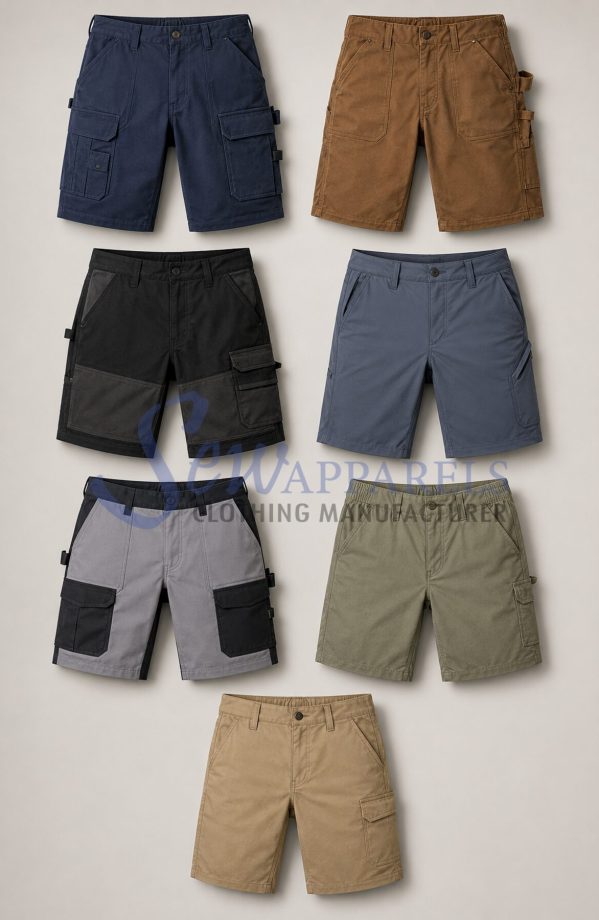
This guide sets out an evidence process for ordinary work shorts. It helps distinguish surface complaints, plan relevant testing and review a controlled garment pilot. It does not prescribe a universal pass grade, claim that a fabric cannot snag or replace a workplace assessment of garment suitability.
1. Start work shorts fabric snag evaluation with identified damage
Begin work shorts fabric snag evaluation by opening a work shorts pulled yarn damage record for each reported garment. Include the style, fabric reference, colour, size, lot where known, issue date and care history. Photograph the whole garment to show the location, then record the local damage with a scale and consistent lighting. Keep the item available for review rather than immediately repairing or discarding the evidence.
A work shorts fabric loop pulling complaint should describe what can be seen: a protruding yarn, a distorted line, a hole, a broken yarn or a roughened patch. Avoid using “snagged” as a complete diagnosis. Record whether the observation appeared suddenly after a known incident or developed gradually during use. If the history is uncertain, mark it as unknown instead of assigning a cause.
Note the work shorts snag damage location precisely. Separate pocket mouths, thigh panels, seat, hems and areas near fasteners. Similar marks in different positions can have different contact histories. Also check whether the visible change lies in the main fabric, a pocket bag, a trim or a seam. A construction problem should not automatically become a fabric-wide rejection.
For uniform shorts surface loop catching, retain a reference to the garment condition before use when available. An already protruding loop in the supplied sample may differ from a loop pulled during wear. A baseline photograph and inspection note help establish what changed; they do not by themselves prove the mechanism of the change.
2. Separate snagging from rubbing and other damage
Work shorts fabric snag evaluation becomes more useful when the buyer distinguishes a catching event from repeated rubbing. Describe both the appearance and the suspected contact. A damaged area can include several effects, so the review should allow a mixed explanation rather than force every complaint into a single label.
A work shorts snag versus abrasion comparison should begin with the question being asked. Snagging concerns yarn catching, pulling or distortion; an abrasion investigation examines damage associated with rubbing under its defined conditions. A favourable abrasion result does not automatically establish resistance to a hook or projecting surface. Likewise, a snag result does not quantify every form of wear.
Keep work shorts snagging versus abrasion evidence in separate report sections. Identify which observation each test addresses, the sample used and any unresolved differences from the garment complaint. Surface fuzz, pilling, seam failure and tearing may need their own review. Do not turn one test name into a blanket claim that the shorts are suitable for all demanding work.
A work short fabric contact assessment can include an inspection of the relevant garment and reported contact surface by authorised staff. The aim is to document a plausible interaction, not deliberately reproduce a hazardous incident. If equipment catching presents an operational safety issue, escalate it through the workplace’s established process before arranging any wear trial.
3. Map the work setting before requesting a test
For work shorts fabric snag evaluation, prepare a work shorts rough surface contact map. Record the task, movement, garment area and accessible surface reported by the wearer. Note whether shorts contacted a seat edge, rough bench, fastening component or other object. Avoid assuming that every garment used in the same job has the same exposure.
A work shorts equipment catching observation should name the event and its source. Separate a directly witnessed contact from a wearer’s recollection or a proposed explanation. Check whether the garment fit, pocket position or attached item changed the contact opportunity. Those details can guide product review without claiming that changing fabric alone will solve the problem.
Review work shorts work setting garment suitability independently of surface appearance. Shorts may be inappropriate for an identified task regardless of their snag performance. The buyer should confirm the permitted use through the relevant workplace assessment. This article concerns ordinary uniform development and does not claim compliance with a protective clothing standard.
Build a work shorts candidate fabric snag review from that contact map and the material identities. Compare candidates against the same intended garment brief. Record construction, weight, finish and care route where relevant. A change that improves one observation may change handle, movement or another requirement, so the whole product decision still needs approval.
4. Choose a suitable laboratory method and report scope
A work shorts fabric snag evaluation test request should identify the decision the result will support: comparing candidate fabrics, investigating a complaint or checking an agreed specification. Give the laboratory the fabric description and observed damage. Ask it to confirm method suitability and limitations before treating a named standard as automatically appropriate.
The public ASTM D3939/D3939M-26 Mace method page describes fabric snagging evaluation and construction-related exclusions. It also cautions against using that method for commercial shipment acceptance because of between-laboratory precision. Ask the laboratory how those limitations affect your proposed use; a method name alone is not an acceptance plan.
The public ASTM D5362-26 Bean Bag method page describes another snagging method with its own suitability limits. Its acceptance-testing statement differs from the Mace method. These methods should not be treated as interchangeable scores. Have the laboratory explain which method fits the offered material and how the report will be interpreted.
A work shorts appropriate fabric test request should specify sample identity, material state, relevant care condition, method edition and agreed reporting requirements. The full authorised procedure belongs with the laboratory; this guide does not reproduce apparatus settings or grading instructions. Agree product-specific acceptance criteria through the responsible buyer and technical team rather than invent a universal score.
Where care is relevant, distinguish unwashed and cared samples in the request and report. Keep the care route identifiable and compare equivalent states. If an existing report uses another fabric lot or care history, discuss whether fresh evidence is needed. Do not relabel that result as a test of the current bulk material.
5. Run a documented garment pilot without overclaiming
Work shorts fabric snag evaluation can combine suitable laboratory evidence with an authorised garment pilot. The pilot addresses how the approved garment behaves in its intended permitted setting. It is a structured observation exercise, not a substitute for a standard laboratory method or proof that every future wearer will have the same result.
Plan a work short snag damage pilot with identified garments, wearer roles, approved tasks, observation intervals and a consistent reporting form. Record issue condition, wearing periods and care events. Follow the site’s normal safe working arrangements; do not introduce sharp objects, unsafe contact or unusual tasks to provoke damage.
For the work shorts wear pilot, keep candidate allocation and comparison conditions understandable. If one fabric is used at a different site or for a different duty, record that difference before drawing a conclusion. A pilot with uncontrolled exposure may reveal concerns, but it cannot cleanly rank fabrics as though conditions were equal.
As a hypothetical example, one wearer reports a pulled yarn beside a pocket after contact with a damaged seat edge, while another reports a broadly rubbed seat panel. Keep two observation records and review the surface and garment histories separately. This illustration is not a Sew Apparels trial result or a claim that either fabric failed a laboratory requirement.
Review a work shorts surface damage comparison using the same location photographs and descriptions. Include unchanged reference garments where useful. A summary such as “candidate B looks better” should be supported by the documented conditions and visible observations. State what the pilot can show and what remains uncertain before using it to approve a material change.
6. Close work shorts fabric snag evaluation with a traceable decision
Bring the complaint record, contact map, laboratory advice, report and pilot observations into one decision file. Identify whether the action concerns fabric, construction, fit, an external contact surface or further investigation. Keep the scope proportionate to the evidence: a local event does not automatically prove a problem across every lot.
When discussing custom work shorts manufacturing, provide the material reference and damage evidence with the product brief. The team can review the development question without this article promising a snag-proof fabric or a confirmed test grade. Startup buyers can begin with a focused specification and documented sample review before widening the range.
For private label work shorts production, make any approved revision visible in the material specification, sample reference and bulk control notes. Repeat relevant checks after a changed fabric or construction rather than carry over an old approval automatically. Retain previous evidence so the reason for the revision can be understood later.
If catching occurs near an accessory attachment, use the work shorts belt loop reinforcement review to record the local construction and attachment requirements separately. A main-fabric snag report does not establish loop strength or approve carrying loads. Use the Work Shorts Buying Guides to connect surface performance review with fit and construction decisions. Work shorts fabric snag evaluation is complete for a defined decision when the sample identity, evidence limits, agreed action and approval owner are clear, even if a separate operational issue requires its own process.
Does an abrasion pass prove snag resistance?
No. It supports the abrasion question covered by that report. Ask whether separate snagging evidence is appropriate for the observed catching or yarn-pulling concern.
Can results from different snag methods be combined?
Do not assume they are equivalent. Confirm the methods, sample states and interpretation with the laboratory before comparing the results. Keep unlike reports separately identified.
What should be retained after approval?
Retain the identified sample, material reference, damage record, contact history, laboratory report and approved revision. Work shorts fabric snag evaluation should leave a decision that can be reviewed when the material, care route or intended use changes.