
Work shorts stock fabric quotation requests should identify the actual available material before comparing a price with a custom fabric route. A supplier may offer an existing colour and limited quantity, but those details alone do not establish composition, usable width, condition or suitability for the approved shorts. A useful quotation names what is being priced, what quantity is available and which assumptions require confirmation.
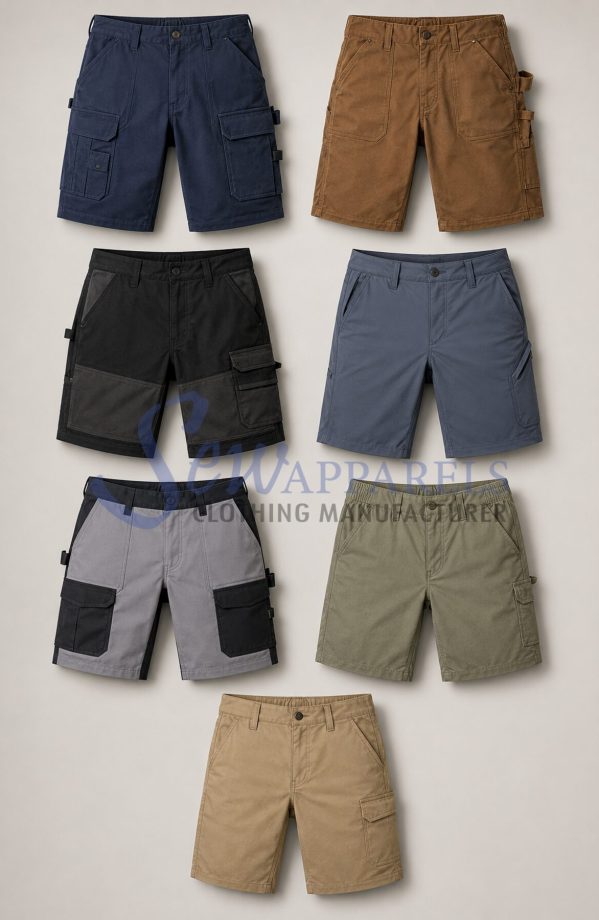
This guide helps buyers evaluate a stock option for ordinary work shorts without confusing fabric availability with finished garment approval. It provides commercial questions and a comparison method, not a current stock listing, guaranteed minimum order or price promise. Workplace suitability and any protective requirements still need their own product assessment.
1. Define the work shorts stock fabric quotation material
Begin with a fabric reference, supplier identity and dated availability statement. Record declared fibre composition, construction, finished weight, usable width, colour reference and finish. Ask whether the offer concerns one identified lot, several lots or a fabric that can be replenished to a controlled specification. A swatch marked “navy workwear” leaves too many variables open for a production decision.
The work shorts available fabric identity should connect the submitted swatch to the rolls that would be used. Keep roll or lot references, inspection records and any relevant test reports together. A report for a similar cloth is not automatically evidence for the offered stock. Check the material described in the report and discuss gaps before treating the quotation as technically comparable.
For a work shorts stock lot quotation, distinguish declared total length from usable quantity. Ask about roll lengths, defects, shade grouping and any restrictions on cutting. Several short pieces may require a different production plan from continuous rolls. Record who confirms the available quantity and whether inspection is complete, provisional or still required.
For a work shorts stock fabric quotation, keep a work shorts material availability record that includes the date, expiry of the offer, reservation conditions and the action needed to secure material. “Available when quoted” does not mean reserved for your order. Confirm what happens if the stock changes while sample approval or commercial review is taking place.
2. Separate fabric, garment and component minimums
A work shorts stock fabric quotation may remove the need to commission a new fabric colour, but other minimums can remain. Ask separately about cutting and sewing, each colour, each style, size distribution, labels, fasteners and packing. The finished garment minimum should be confirmed by the supplier for the proposed specification rather than inferred from the existence of a fabric roll.
When discussing stock fabric work shorts MOQ, request the basis of the answer. Does the stated quantity cover one style in one colour, or can approved variations share production? Are boundary sizes included? Are trims already available or ordered specifically? A low fabric commitment can still leave a separate label or hardware commitment that needs agreement.
For a custom colour work shorts minimum, distinguish dyeing or finishing requirements from the finished shorts quantity. Ask whether the custom route uses a different fabric construction or only a different colour on the same controlled base. A work shorts custom dye quote should specify the approval sequence, material quantity basis and how rejected or revised colour submissions affect the plan.
Keep work shorts garment fabric minimums in separate rows of the comparison. This avoids a common misunderstanding: a fabric minimum stated in metres or kilograms being interpreted as a garment minimum stated in pairs. Confirm units and conversions through the actual cutting plan; do not assume every metre produces the same number of shorts.
3. Verify usable yield and sample suitability
Review work shorts stock fabric quotation assumptions against the intended pattern and size mix. Usable width, directional appearance, shade grouping and defects can affect the amount needed. Ask the manufacturer to explain the consumption basis used for costing and identify whether it is preliminary or supported by an approved pattern layout.
A work shorts small order sample should use the proposed material or clearly identify any substitute. Review fit, movement, pocket handling, seam appearance and the agreed care outcome. A substitute sample can help discuss construction, but its approval should not silently approve an untested stock fabric. Retain the exact material reference beside the sample comments.
The CottonWorks garment quality control overview identifies fabric appearance, durability, defects and measured product performance as relevant quality considerations. That supports reviewing the offered cloth as well as the finished sample. It does not certify the stock, set your acceptance limits or replace product-specific evidence.
Work shorts small batch material options should therefore be compared against the same brief. If one option changes weight, stretch, handle or finish, record the change and review its implications. A lower price for a different material is an alternative proposal, not a like-for-like saving. Approve the revised specification explicitly before adopting it.
As an illustration, imagine two offers each list 300 metres. One is a single inspected lot with a confirmed usable width; the other combines uninspected short rolls from different lots. The identical headline length does not establish identical cutting capacity. This is a hypothetical comparison, not a description of Sew Apparels stock or a claim about any supplier.
4. Compare the full quotation scope
For work shorts stock fabric quotation comparisons, set one agreed product specification and size breakdown. Separate material, cutting and sewing, trims, branding, packing, inspection and delivery scope. Record currency, commercial terms, quotation validity and any exclusions. A unit price is useful only when the items included in that price are clear.
A small order work shorts fabric quote should explain whether unused fabric must be purchased, retained or returned, and who owns any balance. Clarify sampling material and development charges separately. These decisions can affect total commitment even when the quoted garment price appears attractive. Avoid assuming a fabric balance will be available for future orders without an agreement.
The work shorts quotation material basis should state the approved fabric reference and consumption assumption. If the supplier revises consumption after pattern or size approval, request the revised basis and commercial impact. Keep the old and new versions identifiable so the buyer can tell whether the change comes from the garment specification, material condition or a different quotation scope.
The Coats thread consumption guidance explains that thread consumption depends on factors including seam construction, material thickness and stitch density. That is a reminder to price the actual sewing specification. Its thread-focused guidance does not calculate the fabric yield or finished price of your work shorts.
Use work shorts limited quantity costing to identify the assumptions that do not scale simply with garment count. A supplier may need to discuss development, setup, material balances or component procurement. Ask for an explanation without inventing a universal small-order surcharge. Confirm the final scope in writing before comparing totals.
5. Check continuity before choosing the stock route
Work shorts stock fabric quotation decisions need a repeat-order question even when the first purchase is small. Can the same identified material be replenished, or is this a limited lot? If future material is only approximately similar, explain that limitation in the buying plan. A successful initial sample does not guarantee that the next lot will match it.
Discuss work shorts stock fabric continuity through construction, composition, colour and finish references. Ask what is controlled and what could change on reorder. If the first programme needs consistent uniforms across later recruitment, a finite stock lot may create a replacement planning issue. Compare that risk with the lead time and commitment of a controlled custom route.
Build a work shorts stock custom comparison around present need and likely repeat demand. Stock may be a practical option when the identified cloth meets the brief and available quantity covers the approved order. A custom route may be worth reviewing when a specific colour or repeatable material is essential. Neither route is universally cheaper, faster or better.
For startup brands, keep the first brief focused and the growth assumption realistic. One approved style and an identified fabric can make the discussion clearer. Ask whether the proposed initial material can support later colours or sizes, and keep any uncertain continuation separate from the confirmed first-order requirement.
6. Approve the work shorts stock fabric quotation with evidence
Prepare work shorts low volume supplier questions before the commercial review: which rolls are included, how the sample matches them, what quantity is usable, which minimums apply, what is reserved and what happens on reorder. Request a response to each unresolved point rather than approve an offer that depends on unstated assumptions.
For custom work shorts manufacturing, share the product specification, proposed material reference, size mix and required delivery arrangement for review. Sew Apparels can discuss the brief without this article promising current stock, a fixed MOQ or a confirmed production slot. Those details belong in the actual supplier response.
When planning private label work shorts production, approve material and branding together. Thread colour, labels and fasteners should fit the identified cloth and intended care arrangement. Keep changes visible if the material route is revised after the first sample. This prevents a commercial substitution from quietly becoming an uncontrolled product change.
Use the Work Shorts Buying Guides to coordinate construction and fit decisions with the material discussion. Release the order only after the approved sample, fabric reference, quotation version and size breakdown describe the same product. Work shorts stock fabric quotation approval should leave a clear record that another buyer can follow.
Does available fabric guarantee a lower minimum?
No. It may change the material sourcing requirement, while garment production, trims or branding have separate conditions. Ask for the actual minimums and their units for the proposed order.
Can a similar fabric be substituted later?
Only through a documented review and approval. Confirm the changed identity and repeat relevant sample or performance checks. Use the work shorts bulk order issue quantities worksheet approach to compare the usable material offer with the actual approved size-and-style demand; available metres do not determine how many pairs the programme needs. A similar colour name does not establish equivalent construction or care behaviour.
What makes the final offer ready to accept?
A work shorts stock fabric quotation is ready for a purchasing decision when the offered material, usable quantity, sample evidence, minimums, full cost scope and continuity limits are clear. Resolve the remaining assumptions before committing, and retain the agreed version with the order record.