
Work shorts shade lot segregation connects accepted fabric identity with cutting, finished garments, cartons and the people who receive them. A colour name alone cannot show whether two deliveries came from the same dye lot or whether visually different lots were approved for use together. Buyers need a practical record that follows the actual goods, particularly when a uniform order includes several sizes and delivery destinations.
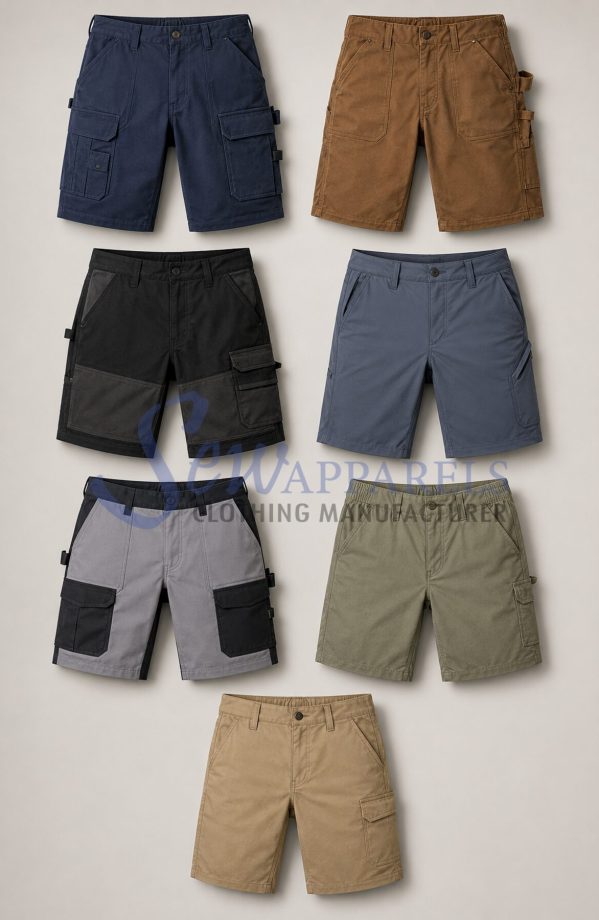
This guide explains six checks for planning that record without inventing a universal colour tolerance. For product development, review the custom work shorts manufacturing page. For related construction and sourcing decisions, use the Work Shorts Buying Guides. Agree the order-specific acceptance and packing rules before bulk production starts.
Why work shorts shade lot segregation needs two separate decisions
Lot traceability and visual shade acceptance answer different questions. Traceability identifies the material and production route used for a garment. Shade acceptance establishes whether its appearance meets the buyer’s agreed reference. A perfectly recorded lot can still fail the visual requirement, while two accepted lots may still need separate distribution because their appearance differs when worn together.
Uniform shorts lot traceability therefore should not be reduced to a colour description on a purchase order. Record the supplier’s lot identifier, the fabric delivery reference, the accepted sample reference and the decision owner. A renamed internal batch must retain a clear relationship to its original identity. Otherwise, later carton checks can confirm only an internal label rather than the source material.
Work shorts accepted lot identity also needs a defined status. Pending review, accepted, conditionally accepted and rejected material should be distinguishable in the records and physical storage. Conditional acceptance must explain the restriction, such as separate issue groups, rather than allowing the word accepted to conceal an unresolved distribution decision.
1. Establish the approved comparison and decision record
Begin work shorts shade lot segregation by agreeing the comparison reference and who can approve a difference. Specify the reference garment or fabric, the viewing arrangement, the people involved and how the decision will be documented. Keep the reference identifiable and protected against changes that would make later comparisons inconsistent. The buyer and production team should use the same version.
The public scope of AATCC EP9 for visual assessment of textile colour differences describes general principles and procedures for comparing textile specimens against a standard. That scope helps explain why a comparison needs a controlled reference; it does not supply a universal commercial acceptance limit for every work shorts order.
Set the actual approval conditions with the buyer. Avoid treating a photograph sent under unknown lighting as sufficient evidence for every decision. If images support communication, relate them to the physical reference and record their limitations. When a disputed batch requires further assessment, hold the affected material until the agreed decision is available.
For work shorts shade batch segregation, record both the assessment outcome and the distribution instruction. Two lots that pass individually might still be unsuitable for a single closely matched uniform issue. Conversely, a buyer may approve separate allocation to different locations. Record that choice explicitly instead of asking the packing team to infer it from sample approval.
2. Keep fabric identity connected to cutting and sewing
Work shorts shade lot segregation becomes difficult when material identity disappears between receipt and finished-garment inspection. Plan work shorts cutting lot linkage before fabric is released. The cutting record should identify the material lot and the bundles produced from it, with a practical way to keep the relationship visible as work moves through sewing.
The record does not need to be elaborate to be useful. It does need consistent identifiers and a defined handover. Decide who labels bundles, who checks labels after a transfer and how replacement labels are controlled. A loose ticket that can be detached without another reference creates an avoidable gap, particularly when several colours or similar fabric lots run together.
Work shorts garment batch mapping should also address components that affect visible appearance. If an order uses fabric from different deliveries for body panels, pocket faces or other visible parts, define which combinations are permitted. A completed garment should not hide an unapproved combination simply because every individual fabric delivery passed its own assessment.
When rework or replacement pieces enter the route, preserve the source relationship. Record the replacement material and the affected garments. Do not quietly substitute a visually close piece from another batch. The practical aim is a recoverable account of what happened, including exceptions, rather than a clean-looking worksheet that omits real production changes.
3. Allocate quantities before choosing carton combinations
Before packing, use work shorts shade lot segregation to reconcile the usable garments from each accepted lot with the size and destination requirements. Work shorts colour lot distribution can fail even when total order quantity is correct: one location may receive a mixed appearance because the allocation was made only after the cartons were nearly complete.
For example, imagine an order with 100 accepted garments: 40 from lot A and 60 from lot B. Those figures are a fictional planning example, not production data from Sew Apparels. If two receiving teams need matched sets, allocate their requirements against the size quantities available within each lot. A simple 40-plus-60 total does not prove that either team can receive its required size mix.
A work shorts issue group shade record can show the destination, lot, size quantities and any approved exception. Confirm whether the rule applies to a carton, an individual receiving site, a department or another defined group. The unit of allocation matters because a single-lot carton does not guarantee a single-lot delivery when several cartons reach the same team.
Keep a visible list of shortages and surplus by lot and size. Decide whether to adjust delivery allocation, request a buyer decision or plan additional production. Avoid solving a shortage by mixing lots without permission. A quantity problem and a shade approval problem need separate decisions, even when both affect the same delivery date.
4. Control partial cartons and approved mixed-lot exceptions
Use work shorts shade lot segregation to set the normal packing rule and its exception route. Work shorts dye lot packing may specify single-lot cartons, separated internal packs or another buyer-approved arrangement. The selected rule should be clear enough that a packer can apply it without deciding whether a visual difference is commercially acceptable.
A work shorts mixed lot carton needs a positive decision when the normal rule prohibits mixing. Record the proposed lots, quantities, sizes, destination and reason. Work shorts lot mixing approval should identify who authorised the exception and what the receiver must be told. An informal production conversation should not become the only evidence supporting a dispatch decision.
Partial cartons deserve the same attention as full cartons. Mark their remaining capacity and contents clearly while they wait for completion. If the next available garments come from another lot, follow the agreed exception process. A carton left open overnight or moved between stations should not lose its identity because its final packing label has not yet been printed.
Work shorts shade pack control should include a final content check against the packing record. If a carton is reopened, removed garments and replacements must be reflected in the record. Keep the internal separation practical for the receiver; a rule that depends on hidden production knowledge will not reliably survive unpacking at a distribution site.
5. Make the carton reference useful for receiving teams
Work shorts shade lot segregation needs a carton reference that connects the physical package to the allocation record. A work shorts carton lot reference can identify the carton and its associated lot details without crowding the outside with every production note. The receiver should be able to find the relevant information through the agreed packing documentation.
GS1’s traceability standards overview links tracking events, such as receiving, packing and shipping, with the data that describes those events. Applied here as a planning principle, the useful question is whether a recorded packing event can be connected to the actual garments and their destination. This is not a claim that every shorts carton requires a particular GS1 system.
Agree the identifier format and document ownership before dispatch. A buyer using its own receiving system may require a specific reference, while another buyer may use a simpler carton schedule. Avoid claiming compliance with an identification scheme that has not been implemented and verified. Consistency and recoverability are more useful than an impressive-looking code with no supporting record.
Include receiving instructions where separate issue groups matter. For example, the allocation schedule can explain that cartons belonging to different approved groups should remain separate during distribution. Make those instructions accessible to the receiving team rather than leaving them only in a factory file. The final handover is part of the control.
6. Reconcile the shipment and close exceptions
Finish work shorts shade lot segregation with work shorts shade batch reconciliation. Compare accepted finished quantities, packed quantities, held garments and the shipment schedule. Explain differences by lot and size. A signed total order quantity can conceal an unresolved lot shortage, so review the underlying allocation before releasing the goods.
A work shorts lot segregation worksheet should capture the order reference, fabric lot, acceptance reference, cutting or garment batch, size quantities, carton references, destination and exception status. Assign owners for updates and final review. Work shorts dye batch control depends on those records agreeing with the physical goods rather than on the number of columns in a spreadsheet.
For custom work shorts manufacturing and private label work shorts production, include the lot and allocation requirements in the product brief. Ask how the supplier will preserve identity through production and communicate approved exceptions. A startup brand can use a focused version of the same record; confirm feasible quantities and process requirements directly instead of assuming a universal minimum order.
After delivery, retain the shipment version of the records so a receiving query can be investigated. Record any reported mismatch against the carton and garment references, then check the actual route and approval history. Use the findings to improve the next order’s controls. Clear records support a useful investigation without automatically proving which party caused a problem.
Product brief checklist
A complete brief for work shorts shade lot segregation defines the visual reference, acceptance owner, lot identification route, allowed component combinations, allocation unit, carton rule and exception approval process. Add the receiving instructions and final reconciliation owner. These decisions make the packing requirements actionable before production rather than leaving a difficult judgement until dispatch.
Work shorts shade lot segregation works best when material acceptance, garment identity and distribution planning remain connected. Review the requirement with the supplier and buyer together, keep changes documented and ensure receiving teams can use the finished records. The objective is an approved, traceable delivery that fits the order’s uniform needs. Use the work shorts bulk order issue quantities review to connect approved lot allocations with wearer sizes and usable reserve stock; a correct shipment total alone does not resolve a size-specific shortfall.