
Work t shirt artwork change charges should reflect the work created by a specific revision, rather than an unexplained surcharge attached to a new file. A buyer replacing a logo before proof approval faces a different situation from a buyer changing the design after screens, transfers or decorated garments have been prepared. The commercial decision needs the old specification, the requested change and the current production stage.
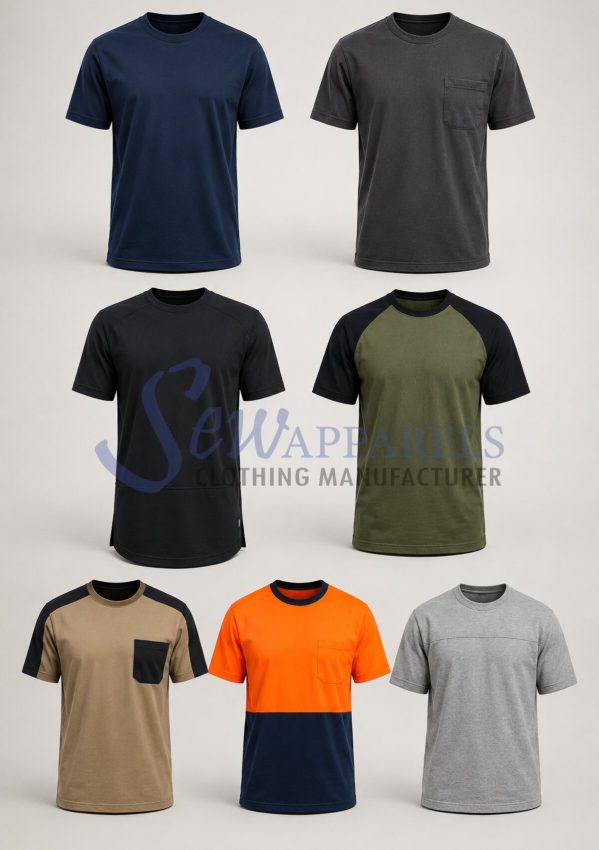
Use the custom work T-shirts manufacturing page to discuss the product brief, and the Work T-Shirts Buying Guides for related construction and branding decisions. This article explains six checks for a clear change quotation. It does not set Sew Apparels prices or promise that every revision can be accepted at every stage.
Why work t shirt artwork change charges need a defined baseline
A decoration quotation is tied to a particular design, method, position, dimensions and order scope. The baseline should identify the approved artwork and the services included in the original price. Without it, neither buyer nor supplier can reliably separate a correction within the agreed scope from new work requested later.
Work tee artwork revision cost should also distinguish commercial responsibility from physical work. A supplier may need to remake a setup, but the reason for doing so still matters. Correcting a supplier’s departure from an approved file is different from carrying out a buyer’s new design decision. Record the facts before deciding who pays under the agreed order terms.
A useful uniform tee artwork change order describes the requested difference and its consequences. Avoid messages such as “use the latest logo” without a named file and revision. Someone viewing an older attachment may honestly believe it is current. A controlled reference prevents the cost discussion from turning into a dispute about which instruction was received.
1. Identify exactly what changed
Start work t shirt artwork change charges with a comparison between the released artwork and the replacement. Record the design name, revision identifier, date and sender. Describe changed wording, symbols, colours, print dimensions, location or decoration method. If several changes arrive together, list each one so the quotation can address the full request.
A work tee old new artwork version record should preserve both references. Mark the previous version as superseded in the production instruction while retaining it for the commercial history. Do not let two files with similar names circulate as equally valid. The team preparing the decoration must know which version is authorised for which order.
For work tee changed print dimensions, state finished width and height and the intended position relative to agreed garment reference points. “Make it bigger” is not a measurable instruction. Check whether the requested size applies to every garment size or whether a controlled size-dependent arrangement is needed. Ask the supplier to confirm feasibility before the price is approved.
A work shirt print file replacement can be a technical correction or a design change. A higher-quality file representing the same approved artwork may need different work from a new graphic with additional elements. Ask what needs to be reprocessed, and identify the existing assets that can still be used. Avoid assuming that a new filename always means a completely new setup.
2. Confirm the production stage before discussing the charge
Assess work t shirt artwork change charges against the actual stage reached. Ask whether the supplier has only reviewed the artwork, completed a proof, prepared production assets, made a decorated sample or started bulk decoration. A stage label should be supported by a dated record; it should not be used as a vague reason for charging.
Work t shirt post approval artwork changes require an explicit replacement instruction. Identify the approved proof being withdrawn and the affected quantity. Confirm whether undecorated garments can be held separately from garments already decorated. A production hold needs a named owner and scope so that unaffected work does not stop accidentally.
If bulk decoration has started, request quantities completed, in process and still unstarted. Ask how each group will be handled. Possible options depend on the actual garment and method; do not assume an existing print can be removed successfully or that overprinting will produce an acceptable result. Any proposed recovery needs technical review and buyer acceptance.
Work tee revised decoration timing belongs in the same decision. A new proof, setup or sample can alter the release sequence even when the additional charge is modest. Ask for a revised milestone based on the confirmed tasks and approvals, rather than accepting a delivery date that ignores the requested revision.
3. Separate artwork work, setup work and garment consequences
A clear quotation for work t shirt artwork change charges separates the activities being priced. Artwork editing, production-file preparation, physical setup, sample making and additional garment work are different items. Request enough detail to understand the charge without demanding that the supplier disclose confidential internal costing.
ScreenPrinting.com’s process guide describes a screen-printing route from colour-separated artwork through film positives, screens, press registration and a test print. That sequence explains why a revised design can affect more than the digital file. The specific remake tasks still depend on the printer’s actual process and what has already been prepared.
A work tee revised setup charges breakdown should identify which assets must change and which remain usable. For example, a changed graphic might require new preparation, while an unchanged element might remain compatible with the revised job. Treat those possibilities as questions for the supplier, not automatic savings or automatic extra costs.
For a work tee setup rework quotation, keep one-time costs separate from per-garment costs. A new setup fee should not disappear into a unit rate without explanation, and a changed unit rate should state the quantity it covers. Include sample quantities and any separately priced dispatch if they are part of the proposed approval route.
4. Match the quotation to the decoration method
Work t shirt artwork change charges cannot be compared fairly without identifying the decoration method. Screen printing, transfers, direct printing and embroidery use different preparation routes. Ask the supplier to explain the actual change tasks for the selected method rather than applying one generic revision rule to all branded work T-shirts.
Printful’s embroidery digitization explanation describes converting artwork into a machine-readable stitch file. It states that meaningful design changes may require digitization again and identifies resizing, repositioning and changed elements as examples. This is a provider-specific example of preparation work, not a Sew Apparels fee schedule or a rule that every decoration supplier follows.
A work t shirt print change quotation should state the unchanged assumptions as well as the differences. If the garment fabric, base colour, location or intended care requirement also changes, the new quotation may cover more than artwork revision. Keep those changes visible so that the buyer does not compare two prices as if they describe the same product.
For a work tee decoration quote change, ask whether the revised design needs a new physical sample. A digital layout can show wording and placement, but it cannot establish every finished-garment result. Agree the evidence needed for the actual revision, especially when a new dimension, method or material combination affects the appearance.
5. Approve the revised proof and commercial record together
Before accepting work t shirt artwork change charges, connect the technical approval with the commercial approval. The revised proof should carry the same artwork identifier as the change quotation. Confirm the finished dimensions, position, colours and affected garment variants. Check wording carefully; a technically printable file can still contain the wrong company name or message.
Work t shirt proof revision approval should identify who can release the design. Collect comments into one controlled response where possible. Separate “approved as shown” from “approved after these changes”; the second instruction requires confirmation that the changes have actually been incorporated before production release.
A work tee art change commercial record should state the additional scope, charge basis, currency, affected quantity and revised timing. Include any credit for cancelled work only when agreed. Record the payment and approval conditions applicable to the change instead of assuming that the original purchase order automatically covers a new task.
For work t shirt change order charges, compare the total impact rather than one attractive line item. A quotation with a smaller setup charge may exclude a sample or replacement garments that another quotation includes. Ask for the missing scope to be clarified before deciding. The objective is a comparable decision, not simply the lowest visible revision fee.
6. Release one final version and close the change
Complete work t shirt artwork change charges with a controlled release to production. Work tee final artwork release should name the authorised file, proof, garment specification and order. Confirm that the previous instruction is withdrawn for the affected quantity and that the supplier has acknowledged the replacement. Approval should reach the people doing the work.
Keep a record of garments made under each authorised version if a split order is accepted. The buyer may deliberately retain an earlier design for part of the delivery, but those quantities and destinations must be clear. Packing documentation should distinguish the versions where the receiving team needs that information.
As a fictional planning example, consider 200 garments with 50 already decorated and 150 undecorated when a revision is requested. The buyer should obtain separate options for the completed and unstarted quantities. These figures are not Sew Apparels production data. The example shows why one undifferentiated “200-piece revision” quote may hide important scope differences.
For custom work t shirt manufacturing and private label work t shirt production, place the revision process in the initial brief. A startup brand can reduce avoidable changes by confirming one logo, one method and a measurable placement before expanding variants. Discuss feasible order quantities and approval costs directly; no universal minimum or free-revision entitlement should be assumed.
Questions to include in an artwork change request
When reviewing work t shirt artwork change charges, ask which approved reference is being replaced, what production stage has been reached, which assets need rework and which quantities are affected. Request the revised proof route, additional charge breakdown and updated release milestone. Include the decision owner and receiving requirements for any split-version delivery. These questions make the supplier’s response easier to evaluate.
Work t shirt artwork change charges are manageable when the buyer and supplier can trace the revision from a clear request to an approved proof and final production instruction. Preserve the commercial history, confirm the real tasks and check the finished result against the released reference. A documented change protects both the order budget and the intended branding. For a location or size revision, use the work T-shirts logo placement around layers review to check the artwork against the intended outer garments before approving a replacement proof.