
Work vest lining wash compatibility is the ability of the selected lining, shell and joining construction to remain acceptable together after the agreed care process. A lining swatch that looks stable on its own does not prove that the completed vest will retain its fit, drape and pocket access. Buyers should assess the assembled garment, record the actual materials and retain an unchanged reference before releasing a lined design.
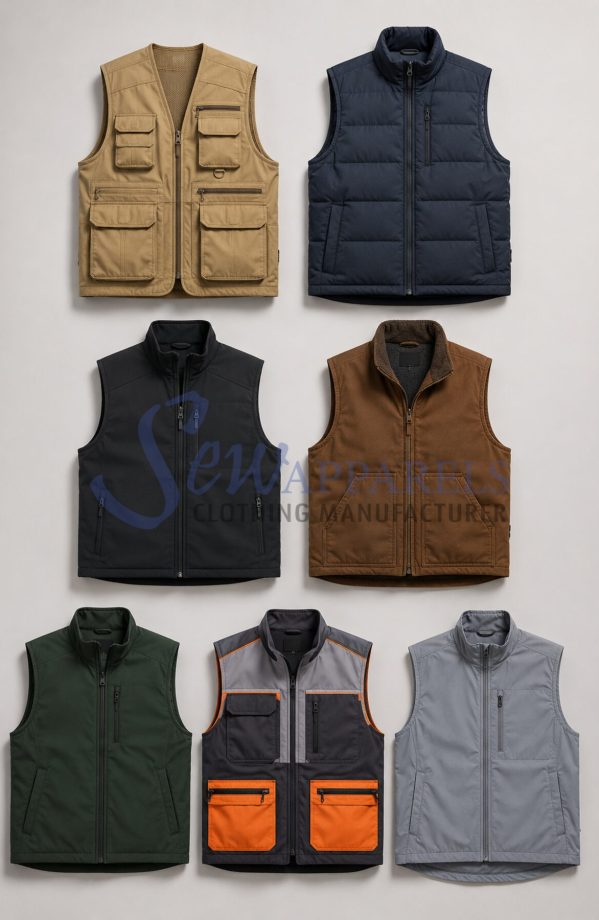
This checklist focuses on differential movement, visible distortion, care conditions and approval records. It helps purchasing teams turn a broad request for a washable lining into a testable brief. The acceptance criteria must reflect the intended garment and care route; there is no universal shrinkage figure, wash count or lining material that guarantees success for every work vest programme.
1. Identify the materials in the assembled vest
Start the work vest lining wash compatibility file with a complete material record. Identify shell and lining composition, construction, mass, finish and supplier reference. Include pocket bags, reinforcement, interfacing and relevant trims. A replacement lining that shares the same fibre description may still have a different construction or finishing history, so composition alone is insufficient for repeat-order control.
The work vests shell lining material pairing should be assessed as a relationship. Record how the lining connects at the armholes, shoulders, side seams and lower edge. Note whether it is fully attached, partly free or shaped with a separate pattern. These details influence how a change in one component appears in the finished vest and what the reviewer should inspect.
Prepare a lined work vest sample assessment sheet before testing. Give the sample a unique identity, record the pattern version and photograph the inside and outside. Mark any pre-existing puckering, hem roll or uneven lining length. Without that baseline, the team may blame care for a problem that was already present during sewing or finishing.
Include the actual pocket arrangement and intended layer combination. A lining can appear comfortable on an empty vest but pull differently when pockets are loaded or a jacket is worn beneath it. Record the initial movement and fit observations alongside the construction details, so the post-care review compares the same garment under the same practical conditions.
2. Select the correct care route
Work vest lining wash compatibility depends on the care process used. Define whether the programme involves domestic washing, a managed industrial laundry or another confirmed route. Washing and drying must be considered together. Do not assume that a successful home wash represents the chemicals, mechanical action and finishing conditions used by a particular commercial laundry.
ISO 6330 describes domestic washing and drying procedures for textile testing. Its public abstract covers fabrics, garments and other textile articles and notes that procedure parameters can affect results. Ask the laboratory to identify the selected procedure and report it clearly. A reference to the standard alone does not reveal which conditions were used or establish a pass limit.
For work vests industrial wash lining compatibility, ISO 15797 describes procedures for evaluating workwear intended for industrial laundering. Its public abstract distinguishes the test approach from operating instructions for laundries and notes that actual intended processes may need evaluation. Choose a relevant route with the laboratory and customer rather than treating all industrial care as interchangeable.
The work vests care route component comparison should identify any conflict between the shell, lining, decoration and trims. Confirm the proposed garment care instructions with the responsible suppliers and evaluator. If a component cannot tolerate the planned route, revise the material or construction before approval. A care label should express a supported garment process, not conceal an unresolved incompatibility.
3. Measure shell and lining change without losing the baseline
For work vest lining wash compatibility, retain a control and define consistent measurement locations. A work vests unwashed lined vest reference helps reviewers distinguish care-related changes from differences in pressing, posture or handling. Record the original dimensions and viewing conditions, then use the same points and method for later comparisons.
A utility vest lining shrinkage comparison should consider the directions and areas relevant to the garment. Check body length, width and the lining’s relationship to the hem and armholes. Ask the laboratory to use an appropriate measurement procedure where formal dimensional evidence is required. Do not stretch the garment to restore a convenient reading or compare unrelated measurement points.
Work vests lining shell differential change is often more informative than a single overall dimension. If the lining and shell move differently, record where the assembly pulls, hangs or twists. One component’s apparent stability does not cancel the effect of the other. Keep separate observations for fabric change and the visible consequence in the joined garment.
Use clear before-and-after photographs with a scale or marked reference where useful. Lay the vest consistently and inspect it on the same wearer or form. Record any pressing or finishing applied before measurement. A photograph taken after corrective pressing cannot be presented as the untreated post-care state without explaining that intervention.
4. Inspect distortion in the complete garment
A work vests whole garment lining test should include the interfaces where materials are joined. Examine the armholes, shoulder area, side seams, front opening and hem. Check whether the shell hangs naturally, the lining protrudes or the garment twists when closed. Review pocket access and closure operation as well as appearance.
Work vest lining shell distortion can appear as local pulling rather than a uniform reduction in size. Describe the affected area and the direction of movement. For a work vest lining pull after care observation, note whether the issue occurs while the garment is flat, worn, closed or loaded. These distinctions help the development team avoid a revision based on an incomplete diagnosis.
A work vests interior hem roll observation should identify both the inside and outside effect. Check whether the lining turns outward, creates a ridge or alters the lower edge. Compare the unchanged reference and construction drawing. Do not immediately lengthen the lining without checking material behaviour, joining points and the original pattern allowance.
Work vest lining wash compatibility also includes practical comfort. Repeat the intended layering and safe movement review with the cared sample. Ask whether the lining restricts reaching, catches on the shirt or changes how the vest sits when pockets are loaded. Document the result with the agreed load and companion garments, rather than replacing the original trial conditions.
5. Define appearance and functional acceptance
The work vests lining appearance approval should state what will be judged and who makes the decision. Separate dimensional results, seam appearance, colour change and handling observations. A result that meets one criterion does not automatically meet the others. Agree the evaluation stages and limits before the care trial so the decision is not rewritten to fit a disappointing sample.
For work vest lining wash compatibility, use a short review table with the sample reference, care route, observation, evidence and decision. Mark any area that was not evaluated. “Not checked” is different from “passed” and should stay visible until the required evidence is available. Record whether a change is cosmetic, functional or both.
- Material traceability: shell, lining, supporting components and supplier codes.
- Dimensional response: agreed measurement points and comparable results.
- Assembly appearance: pulling, twisting, protrusion and hem roll.
- Use after care: loaded fit, layering, pocket access and closures.
- Release status: accepted version, unresolved items and required revisions.
The work vest lining care test record should identify the actual evaluation conditions and the scope of any conclusion. Avoid converting a limited trial into a promise that the vest will last a particular number of years. Where laboratory evidence is used, retain the report and make sure the sample description matches the materials in the released specification.
Work vests mixed material vest care needs a whole-assembly decision. A compatible lining and shell are still not enough if a closure, label or decoration fails under the chosen route. Review affected components together and keep the final care instruction linked to the accepted construction. Where an identifier is removable, use the work vest detachable identification panel review to document whether the display stays attached during care and which replacement part belongs to the approved vest. Changes later in sourcing should trigger a relevant review.
6. Correct the cause and approve the revised version
A work vests lining distortion correction should begin with evidence. Compare the material records, pattern versions, joining points and care observations before deciding what to change. Possible development routes include a different material pairing or revised construction, but the appropriate choice depends on the actual diagnosis. Do not treat extra lining allowance as a universal repair.
When work vest lining wash compatibility is reviewed after a revision, give the new sample its own identity. Keep the previous version for comparison and describe the change. Repeat the relevant care and garment checks using compatible conditions. A revised sample that looks better before washing still needs the agreed post-care review.
For work vest lining wash compatibility, close the release file with the accepted lining and shell references, pattern version, joining details, care route and supporting evidence. State which substitutions require renewed approval. Keep the signed sample, photographs and results accessible to the next purchasing or quality team. That record prevents a repeat order from quietly returning to an earlier material or construction.
Preparing the manufacturing discussion
Bring the work vest lining wash compatibility brief to a custom work vest manufacturing discussion with the intended use, care route and material preferences. Confirm sampling scope, available fabrics, decoration and commercial terms for the specific programme. Buyers planning private label work vest production should coordinate the lining decision with the overall fit and brand presentation. Do not assume a development estimate guarantees stock, minimum quantities or delivery timing.
Use the work vest manufacturing page for the product discussion and Work Vests Buying Guides for related pocket, layering and component decisions. The target is a repeatable garment specification supported by a clear sample record.
Buyer questions
Is a lining swatch test sufficient?
No. Work vest lining wash compatibility also depends on the shell, joining construction and other components. Material testing can support the review, but the assembled garment needs the agreed evaluation before release.
Can domestic results prove industrial compatibility?
They do not automatically transfer. Define the intended route and choose relevant procedures with the evaluator. The actual laundry process may also require review before a final compatibility decision.
What should trigger another sample review?
A material substitution, altered finish, changed pattern allowance, different joining construction or revised care route. Assess the effect of the change and repeat the relevant checks rather than relying on an old approval.