
A woven boxer yarn dyed fabric quotation should separate the requested colour effect from the fabric commitment needed to produce it. A buyer may want a specific check or stripe, but the order discussion also needs to identify the material route, available stock, colour approvals and quantities confirmed by the supplier. A garment quantity alone does not describe every fabric purchasing condition.
This guide explains five checks for comparing a custom yarn-dyed programme with available alternatives. It does not assume that a custom route always costs more or that stock material always arrives sooner. Those decisions require quotations for identified fabrics, quantities and services. Pattern matching during garment cutting is a separate development topic.
For custom woven boxer shorts manufacturing, send the colour reference, intended cloth construction and planned size quantities together. A woven boxer yarn dyed fabric quotation can then show which material decisions are confirmed and which still depend on mill or supplier approval.
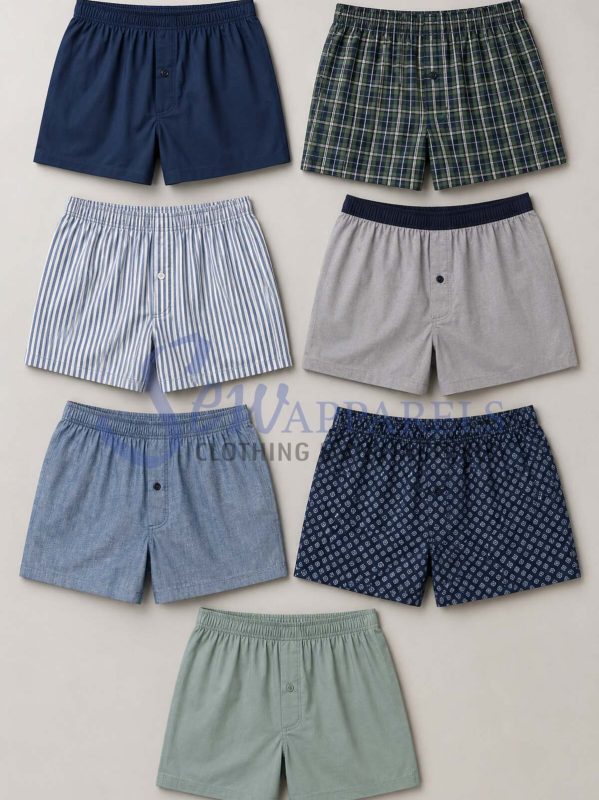
1. Define the effect in the woven boxer yarn dyed fabric quotation
Describe the intended check or stripe with a physical reference or clearly identified artwork. Show the colours, repeat and preferred appearance without treating a screen image as an approved shade standard. Identify whether the requirement is a woven colour effect, a solid alternative or another proposed route. The supplier needs to know which features are essential to the buyer’s product.
For woven boxer yarn dyed check fabric sourcing, record the fibre composition, weave, weight and finish alongside the visual reference. Two fabrics can have similar checks while differing in feel, construction or care behavior. A quotation comparison should make those differences visible rather than presenting them as identical materials.
CottonWorks’ Textile Dyeing booklet explains that coloration can occur at different textile stages and discusses yarn dyeing for stripes and plaids. It distinguishes that route from fabric or piece dyeing. These process distinctions explain why buyers should identify the requested colour effect before comparing prices; the booklet does not provide a current quotation or minimum for this boxer programme.
Specify woven boxer yarn dyed repeat fabric using an approved repeat reference and named colour sequence. Ask the supplier to confirm the proposed material route. Do not assume that a solid piece-dyed alternative reproduces a multicolour woven check; accepting a different appearance is a product decision that the buyer must make explicitly.
The woven boxer yarn dyed fabric quotation should state which appearance is being priced. If the supplier offers a similar available check, keep its reference separate from the custom design. Label both options so an attractive price for one cannot be mistaken for a commitment to produce the other.
2. Separate colour commitments from garment quantities
Make a boxer shorts yarn colour minimum enquiry before approving the custom programme. Ask what commitment applies to each proposed colour, the fabric design and the finished cloth order. Request the unit and scope of each condition. Minimums and commercial terms must come from the responsible supplier; there is no universal quantity suitable for every yarn-dyed fabric.
Discuss woven boxer yarn dyed order quantity with the garment breakdown available. Provide planned sizes, colourways and quantities, then ask the manufacturer to confirm the fabric purchasing basis. Keep the garment count and fabric quantity in their own units. Do not calculate a purchasing commitment from an assumed consumption figure without the relevant confirmed inputs.
Clarify woven boxer fabric mill commitment separately from the buyer’s finished-garment order. Ask who places the fabric order, which approvals authorize it and what happens to any agreed balance. If the supplier requires a larger commitment than the initial programme uses, request the ownership, storage and subsequent-use terms in writing.
For boxer short colour sequence purchasing, identify whether the proposed colours are used in one fabric design or across several colourways. Ask which commitments can be combined and which are separate. A shared colour name does not establish that orders can be pooled; the supplier must confirm the actual arrangement.
Add these answers to the woven boxer yarn dyed fabric quotation. Keep tentative conditions clearly marked. The buyer should be able to tell which quantity is an enquiry, which is an offer and which becomes binding only after an identified approval or order step.
3. Confirm availability and the meaning of booking
Review boxer shorts yarn dyed material stock by material code and current supplier confirmation. Ask whether the offered quantity is physically available, awaiting finishing or planned for future production. A catalogue swatch shows an option, but it does not by itself reserve material or establish that sufficient matching cloth is available.
For boxer short woven stripe fabric booking, request the offered quantity, lot information where relevant, reservation conditions and quotation validity. Clarify which action secures the cloth. Do not assume that receiving a sample holds the stock while design approval is pending.
Identify woven boxer fabric lead dependency as a sequence of confirmed steps. List colour approval, fabric development, availability confirmation, finishing, dispatch and garment sampling as applicable to the proposed route. Ask the supplier which steps depend on earlier decisions and when its timing estimate begins.
Compare stock and custom options using the same purchasing question. An available cloth may need suitability review or a confirmed reservation; a custom programme may depend on colour and fabric approvals. Request actual timing and exclusions for both instead of declaring that one route is always faster.
The woven boxer yarn dyed fabric quotation should show unresolved dependencies beside the offered schedule. If the colour reference changes, ask whether the quotation, approval sequence or availability remains valid. A timeline prepared for an earlier design should not silently become the promise for a revised one.
4. Compare route-specific samples and costs
Request a woven boxer piece dyed alternative quote when a solid option is commercially relevant. Identify the alternative’s construction, shade, finish and purchasing conditions. State which visual differences the buyer accepts. Price alone cannot establish equivalence between a solid cloth and a requested yarn-dyed check.
Define woven boxer custom check quotation scope around the actual services offered. Ask whether colour development, woven trials, sample cloth, finishing and material assessment are included or separately charged. Keep fabric development charges distinct from the bulk fabric price and garment manufacturing price.
Use woven boxer dye route cost comparison to organize the complete offers. Record price unit, quoted quantity, included services, exclusions, payment conditions and validity. Compare offers in the same currency and purchasing scope before reaching a conclusion. Avoid using a general dyeing-route description to predict the price difference for a specific order.
For boxer shorts yarn dyed swatch approval, ask what the sample represents. A colour sample, trial weave and finished fabric swatch may support different decisions. Record the sample’s material identity and revision, then distinguish appearance approval from approval of the final cloth’s performance.
CottonWorks’ quality testing overview explains the importance of product specifications, sampling and conditioning, and considers care and appearance assessment. These principles support requesting suitable evidence for the selected cloth. They do not establish that a particular fabric has passed a test or provide a certification for Sew Apparels.
Keep the woven boxer yarn dyed fabric quotation linked to the approved sample and agreed assessment scope. Ask which colourfastness, dimensional or other material checks are relevant to the intended use and care. Have the responsible laboratory or technical reviewer select the appropriate methods rather than promising performance from the phrase “yarn dyed.”
5. Approve the material and substitution rules
Agree boxer short yarn colour substitution rules before releasing the fabric programme. Define whether a proposed change requires a new sample, written buyer approval or a revised quotation. A similar-looking yarn shade should not replace an approved colour without the agreed review.
Record the selected fabric code, construction, finish, colour reference and sample version. Retain the commercial offer and any confirmed stock or mill conditions with those records. If the material route changes, ask which approvals and charges need updating rather than treating the new fabric as covered by the old acceptance.
A woven boxer fabric purchasing matrix can bring these decisions together. Give each proposed route a row and use columns for required colour effect, material identity, confirmed quantity conditions, sample scope, availability, charges and outstanding approvals. Leave unconfirmed fields visible instead of filling them with estimates presented as facts.
Use the matrix to explain the selected route in the woven boxer yarn dyed fabric quotation. Record why the buyer chose it: required appearance, confirmed terms, accepted alternative or another stated priority. This helps future reviewers understand the decision without relying on a recollection of the original conversation.
Buyer example: compare a custom check with an available cloth
Option A is the buyer’s custom check reference, subject to supplier confirmation of colour and fabric commitments. Option B is an identified available check with its own repeat and shades. Give each option a separate sample and quotation reference. Describe the differences before asking the buyer to select a route.
For Option A, request the development sequence, quantity conditions and included approvals. For Option B, confirm the actual quantity available and reservation terms. Then compare both against the intended material specification. Do not describe the available cloth as the custom design merely because both contain similar colours.
If the buyer accepts Option B, retain that approval and its sample code. If the buyer chooses Option A, keep unresolved supplier conditions visible until confirmed. Either decision should lead to one clear material identity, not a mixed set of colour artwork, stock samples and prices from different offers.
After selecting the material route, connect the approved cloth to woven boxer shorts seated ease development. Review the actual garment sample in the intended size and care condition. An accepted check and purchasing arrangement do not by themselves establish suitable fit or movement.
Questions before placing the fabric order
Is yarn-dyed fabric always more expensive?
A general process comparison cannot settle the total quotation for the proposed programme. Ask for route-specific prices and included services. Quantity, development scope, availability and the actual construction must be considered together.
Can a stock swatch guarantee a reorder?
A swatch does not establish future availability. Ask the supplier about the current quantity, repeat-order conditions and any commitments required. Retain the material reference and confirm availability again when planning a later order.
What should a startup brand provide?
Send the preferred check or stripe, acceptable alternatives, garment quantities and target material characteristics. Ask for confirmed conditions for each route. Minimums, charges and timing need specific confirmation; they should not be assumed from another brand’s order.
Build a clear fabric purchasing brief
For private label woven boxer shorts production, combine the colour reference, fabric matrix, sample approvals and quotation questions. Use the Woven Boxer Shorts Buying Guides to organize related garment-development decisions. A complete woven boxer yarn dyed fabric quotation brief helps the buyer select a material route with its appearance and commitments clearly understood.