
A woven boxer shorts fly closure brief defines how the front opening is constructed, operated and kept covered during wear. Buyers should identify the chosen fastening, overlap, opening dimensions and inside finish before approving a sample. A fly can match a flat drawing yet behave differently when the wearer sits or the fabric shifts.
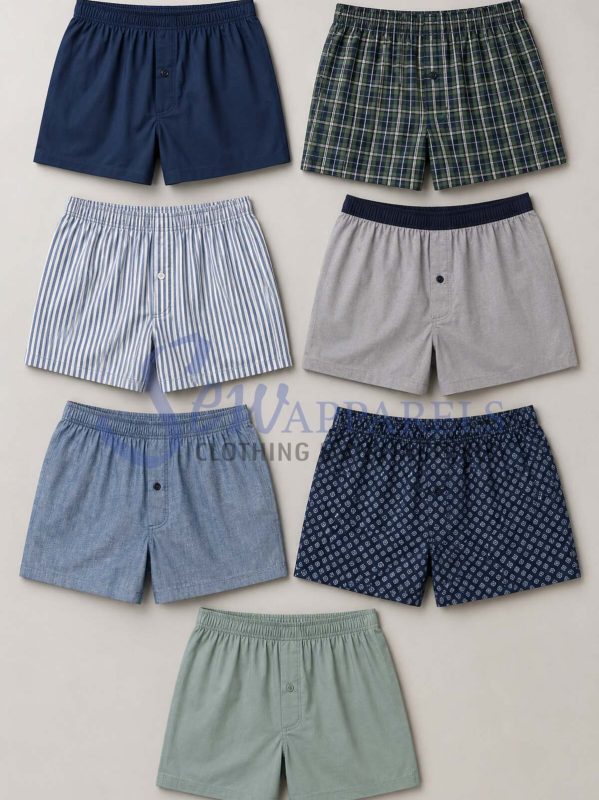
This guide explains six checks for the closure itself. Seat width, rise depth and side slits belong to the broader fit brief; here the focus is the fly mechanism and its relationship to the approved garment. The aim is a repeatable opening with documented coverage and operating observations, not a universal fly size or an assumed fastening strength.
For custom woven boxer shorts manufacturing, send the fly reference and intended fit together. A woven boxer shorts fly closure brief gives the sampling team a clear basis for comparing construction trials and recording the detail selected by the buyer.
1. Select the style in the woven boxer shorts fly closure brief
Identify whether the opening is intended to be functional and which fastening, if any, is proposed. Include front and inside drawings that show the opening and the parts that overlap. A photo can communicate appearance, but it may not show the internal structure or how the closure works.
For woven boxer button fly design, identify the button reference, hole arrangement and attachment location. State which part opens and which part remains joined. Avoid leaving the sampler to infer a functional opening from a decorative button visible in a reference image.
If woven boxer concealed fly fastening is proposed, show which layer covers the component and how the wearer reaches it. Check the component’s location relative to the overlap and the skin-facing surface. Concealment should be assessed together with access rather than treated as an appearance decision alone.
The woven boxer shorts fly closure brief should include the material and garment revision. A fastening that works with one cloth may produce a different result when weight, stiffness or finishing changes. Record the actual sample construction so observations can be traced to the version being approved.
2. Set overlap and opening references
Define boxer shorts fly overlap measurement with named points and a stated sample condition. Show where the measurement starts and ends and whether the sample is relaxed or arranged in another agreed way. Use a drawing that distinguishes the finished overlap from the cut allowance.
Specify woven boxer fly opening dimensions independently from the overlap. Identify the functional opening and the fixed attachment areas. A single length called “fly” can be interpreted as several different details, so label each dimension according to what the sampler and reviewer need to check.
Keep a woven boxer fly overlap reference on the approved drawing and sample. Record the side that lies over the other and the intended finished edge. If the drawing and sample differ, resolve the difference before using either as the production reference.
Agree measurement tolerances and size application with the buyer and manufacturer. Do not insert a standard overlap value that has not been assessed on the proposed fit. Review relevant size samples where the front geometry or opening position changes.
Add the accepted references to the woven boxer shorts fly closure brief. If coverage or access requires an adjustment, revise the drawing and sample identity together. Retain the reason for the change so a later sample does not return to the superseded arrangement.
3. Inspect the inside finish and fastening contact
Review woven boxer fly interior bulk in the assembled opening. Identify the layers of main cloth, facing, folded edges and fastening attachment. Check where those layers meet and whether a hard ridge, exposed allowance or uneven fold appears on the contact side.
Coats’ Seam Types bulletin distinguishes seam construction from stitch specification and discusses edge finishing. These distinctions help buyers describe the actual joined layers and their finished edges. They do not provide a universal seam choice for every boxer fly; the construction still needs to suit the proposed cloth and opening.
Inspect the woven boxer button contact surface with the component installed. Check its edges, attachment and position against the inside layer. Record the actual observation instead of assuming that a small button cannot affect comfort. Include any exposed thread ends or surrounding stiff area in the review.
Run a boxer short button comfort check in the intended worn position. Identify the sample size, fastening and wearer conditions used for the review. Check whether sitting or bending brings the component into an unwanted contact area. A flat inspection is useful, but it does not replace this assembly-level observation.
The woven boxer shorts fly closure brief should describe the selected inside finish and component reference. If a proposed correction changes the layer arrangement, reassess operation and coverage as well as touch. Reducing bulk should not leave an unfinished edge or remove an attachment the opening relies on.
4. Assess coverage while sitting and moving
Evaluate woven boxer fly seated coverage using an identified fit sample. Agree the positions to observe, such as standing, sitting and a relevant bend. Record whether the opening remains arranged as intended, shifts out of position or exposes an area the buyer expected to remain covered.
Keep these observations separate from the broader fit measurements. A fly issue may relate to its overlap or attachment, while tension elsewhere in the garment may require a fit review. Do not change the closure in isolation if the sample’s overall fit is not the approved basis for assessment.
Record the garment’s wearing position and fabric condition. A loose arrangement on a table can hide the way the front moves under normal wear. Review the actual material and intended layers instead of claiming coverage from a drawing alone.
If a change is needed, mark the location and describe the observed problem. Compare revised samples under the same agreed conditions so the buyer can tell what improved and what remains unresolved. Check access at the same time; a larger overlap is not automatically better if it makes the opening difficult to use.
Update the woven boxer shorts fly closure brief with the accepted movement observations. Identify which sample sizes were reviewed and whether any size-specific change was approved. Keep the conclusion within that scope rather than suggesting that one base-size trial proves every wearer outcome.
5. Review operation, attachment and care
Plan woven boxer closure repeated use around an agreed trial procedure. Describe the operating sequence and observations to record. Check the button and hole, concealed fastening or unfastened opening as applicable. Any cycle count or acceptance value should be agreed for the programme rather than invented as a universal industry requirement.
Request woven boxer fly attachment evidence appropriate to the component and construction. Identify the attachment method, specimen, review or test procedure and acceptance decision. If a laboratory assessment is required, ask the responsible technical reviewer to select the suitable method and interpretation.
For woven boxer fly after care review, apply the care route agreed for the actual garment and components. Recheck overlap, opening access, edge appearance and fastening operation. The result should identify the cared sample and procedure so it cannot be confused with an observation on a new garment.
CottonWorks’ quality testing overview discusses care and appearance assessment alongside the importance of proper sampling and conditioning. These general principles support keeping the trial conditions and material identity with the findings. They are not evidence that this particular closure has passed a test.
Inspect the attachment area after the agreed trial. Record looseness, damage, distortion or changed operation that needs investigation. Do not interpret a visually intact button as proof of a quantified attachment strength. Keep visual review and any measured assessment as separate evidence entries.
The woven boxer shorts fly closure brief should retain both the operating and care findings. If the component, thread, material or attachment changes, identify which checks must be repeated. An approval belongs to the assessed assembly, not merely to the name of the style.
6. Approve the drawing and reference sample together
Finalize a woven boxer closure drawing with the fly style, finished overlap, opening references, fastening identity, attachment and inside finish. Give it a revision that matches the accepted sample. Ensure the buyer and sampling team use the same measurement points and component description.
For woven boxer fly sample approval, attach the agreed measurements and observations to that sample identity. Record coverage, access, contact finish, operation and after-care review separately. Mark unresolved items for correction instead of hiding them under a general approval comment.
Complete a woven boxer fly release record with the reviewer, date, sample revision and production specification references. State which substitutions need review and who authorizes them. Keep the record available to the team responsible for reproducing the approved detail.
A practical fly approval worksheet
Use one worksheet with six rows: style and fastening, overlap, opening, inside finish, worn coverage and operation after care. Add columns for the drawing reference, sample observation, decision and action owner. This gives each concern a place without blending dimensions and subjective observations into one note.
For example, an overlap can meet its drawing while the lower opening shifts in the seated trial. Record the dimension as checked and the coverage observation as needing development. Ask for a revised sample and repeat the relevant review. The worksheet should reflect both findings accurately rather than choosing the more convenient one.
Retain the accepted worksheet with the woven boxer shorts fly closure brief. During a reorder, confirm that the fabric, component and approved references remain applicable. If they change, review the affected detail before treating the original closure as automatically approved.
Link the closure trial to woven boxer shorts seated ease development when tension elsewhere affects the front opening. Use the same identified fit sample so that a fly adjustment is assessed against the intended garment measurements and wearing position.
Questions before closure approval
Is a flat overlap measurement sufficient?
It establishes one construction reference. Coverage and access also require review on the intended garment under agreed wearing conditions. Keep those observations alongside the dimension.
Can the same button be substituted without a new trial?
Follow the approved substitution rules. A change in size, shape, material or attachment can affect the opening and contact surface. Request the relevant sample review before accepting the replacement.
What should a startup brand send?
Provide the desired fly reference, proposed fastening, fabric, fit and care brief. Identify the intended use and any existing sample. Minimum quantities, sample costs and testing availability need confirmation for the enquiry.
Send a complete fly development brief
For private label woven boxer shorts production, combine the drawing, component details and approval worksheet. Use the Woven Boxer Shorts Buying Guides to coordinate related fit and waistband decisions. A clear woven boxer shorts fly closure brief keeps the opening’s coverage and operation tied to the actual approved sample.