
A woven pajama gift box packing brief connects the actual garment set to the packaging that will present it. The box should fit the folded top and bottom, protect the intended arrangement and let the buyer identify the product without an awkward unpacking process. A handsome empty box cannot prove those things. Development needs a complete packed sample, including the garments, tissue, inserts and information that will accompany the sale.
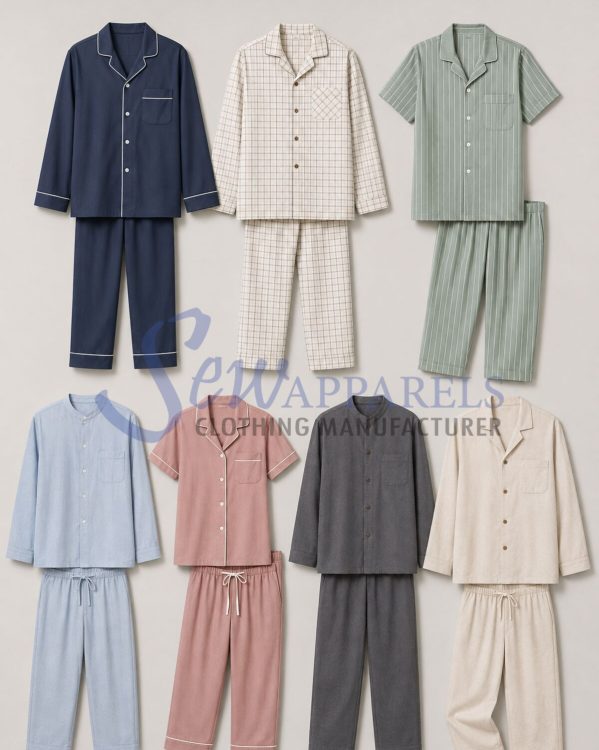
Use a woven pajama gift box packing brief before committing to printed packaging. This article covers practical sampling and procurement decisions, rather than a universal box size, transport test or guaranteed freight saving. Start with the complete size range and the real presentation concept. Then establish which observations need buyer approval and which packaging capabilities still require confirmation from the supplier.
For garment development, use our custom woven pajamas manufacturing page. Packaging requests should accompany the product brief, with the availability of each box, insert and packing operation confirmed for the project. Keep the garment construction reference separate from the gift-pack approval so a revised presentation does not silently alter an approved pajama.
1. Define the woven pajama gift box packing brief and presentation
Begin by describing what the recipient should see when the package opens. A top-and-bottom arrangement may show a collar, a fabric pattern or a neatly wrapped set. Decide whether the garment is visible immediately, partly covered by tissue or concealed until an inner wrap is removed. Record the opening direction and how the lid or closure is intended to operate with the filled box.
A woven pajama gift box packing brief should identify the proposed box construction without treating a visual concept as a confirmed supply option. Ask who will source it, who will assemble it and who will approve the print and physical sample. A fold-flat concept, a rigid presentation box and a sleeve around an inner tray involve different components and assembly decisions. Confirm the actual option before assigning procurement responsibility.
State whether the pack is intended for a retail shelf, a gift presentation or an order that will also need delivery packaging. Those uses may require different reviews. A presentation box is not automatically a protective shipping package. Keep the intended distribution route visible in the brief, and leave performance requirements to an agreed assessment of the assembled packing system.
2. Measure the complete folded set across sizes
Develop woven pajama gift box dimensions from the contents, rather than selecting dimensions solely from a packaging catalogue. Use the planned top and bottom, with the actual fabric, trims and labels. A fabric substitution, a different collar construction or a changed folding method can alter the space required. Record the garment version used for every pack trial so the measurement has an identifiable basis.
Document woven pajama folded set dimensions using a repeatable fold. Identify length, width and the occupied height of the combined set, together with the sequence in which the pieces are placed. Distinguish the usable internal space from outside box measurements. A nominal external size does not tell the packer how much room remains after walls, inserts or closure features are included.
Review woven pajama box fit across sizes using representative size extremes and any construction variation likely to change the packed shape. Do not assume the middle size establishes suitability for the whole order. A smaller set may move around while a larger one presses against the lid. Record pajama gift packaging size variation as a trial result, with the affected sizes and the proposed response.
Use the woven pajama gift box packing brief to explain whether one packaging format is being evaluated for all sizes or whether alternatives remain under consideration. No fixed allowance is appropriate for every product. The supplier and buyer should agree the actual fit criteria, including acceptable movement, ease of closing and the presentation after opening, before the box is ordered.
3. Trial tissue and inserts with the garments
Create a pajama set tissue wrap specification that describes the intended wrapping sequence, material identity and visible finish. Include any sticker, band or fastening used to hold the wrap. The sample should show whether packing staff can reproduce the arrangement without forcing the garments into place. A photograph is useful, but it should accompany a physical reference when the closure and occupied space matter.
Evaluate the woven pajama gift tissue layout with the complete set. Check that the tissue does not hide the feature selected for presentation or leave an unintended edge exposed. Review material contact and visible transfer where relevant to the chosen garment and packaging. Do not label a decorative paper as protective, colourfast or otherwise suitable without evidence appropriate to the intended use.
A woven pajama box insert trial should identify what the insert actually does: position the set, divide the components or support a visible arrangement. Check how it is fitted, whether it changes the usable depth and whether its edges interfere with unpacking. Record any required adjustment to the fold. Avoid solving a poorly fitting box through compression that changes the appearance of the garment.
The woven pajama gift box packing brief should include the accepted packing sequence and the component list together. If an insert or tissue changes after approval, repeat the relevant fit observations. A substitution that looks similar on a purchasing list may change the occupied space or the opening experience. Approval belongs to the assembled pack, not just its separate components.
4. Confirm identification and care-information access
Plan the woven pajama boxed set barcode around the actual sale unit and the buyer’s identification requirements. Confirm who assigns the identifier and supplies the approved artwork. Check that the printed description, size and variant correspond to the garments inside. A barcode placeholder in a design file is not proof that the packed product can be identified correctly in the intended retail process.
Keep a woven pajama gift pack barcode proof linked to the relevant artwork revision and physical label position. Review readability through the agreed verification process and check that seams, folds, closures or other printing do not interfere with the intended location. Do not assume that a successful screen preview establishes scanning performance. Record the evidence and any unresolved action before print approval.
Assess woven pajama gift pack label access separately from attractive presentation. A closed box may prevent a shopper from finding information attached to the garment. The FTC’s care-labeling guidance, for the US market, addresses additional care information when packaging obstructs access and the treatment of sets with different care requirements. Confirm the applicable rules for the actual destination and product.
Put the information review into the woven pajama gift box packing brief as an approval task. Identify which garment labels remain in place, which information appears outside the pack and who validates the wording. Packaging artwork should not replace the product’s care evidence or create unsupported claims. If the top and bottom differ in care requirements, resolve that detail before signing the presentation sample.
5. Compare actual outer-carton arrangements
Record the woven pajama outer carton arrangement using filled gift boxes. Identify box orientation, the proposed number of sale units and any separating or protective materials. Measure the actual carton rather than deriving a final shipping figure from an unassembled drawing. Keep internal packing layout, external dimensions and gross weight distinct so later quotations use the correct inputs.
Compare available arrangements against the agreed handling and distribution requirements. A layout that holds more boxes may still be unsuitable if it makes removal difficult or affects their presentation. Do not promise freight savings, stacking performance or damage prevention from dimensions alone. Record what has been measured, what has been observed and what still requires a relevant transport or handling evaluation.
The CottonWorks sourcing and manufacturing resources provide background across garment production, quality assurance and traceability. They are useful context for coordinating product decisions; they are not a gift-box sizing or transport-approval standard. For this pack, use an identified physical trial and the buyer’s agreed criteria to support the procurement decision.
For private label woven pajamas production, keep packaging costs and responsibilities visible beside garment requirements. Ask which components are supplied by each party and whether assembly, artwork preparation or packing labour is included in the quotation. Confirm order quantities and availability rather than assuming a standard stock solution. Changes to the carton arrangement should be traceable to the corresponding gift-pack version.
6. Approve the physical pack before procurement
Use a woven pajama gift pack physical sample to review the complete experience: opening, identification, removal and the appearance of the garments. Record the tested size, garment reference, box construction, tissue, insert and artwork versions. Photographs should show the closed pack and the intended opening sequence. Retain enough information for another person to reproduce the approved arrangement.
Complete woven sleepwear pack sample approval with clear decisions. Separate accepted details from provisional ones, and assign an owner to any required change. If the larger size has not been trialled, do not describe the packaging as approved for the complete range. If final printed material is still pending, define what the trial has established and what must be checked on the final component.
A woven pajama box procurement approval should identify the version authorised for ordering, the quantities agreed with the packaging supplier and the conditions that must be met before use. Keep a revised component from entering production simply because it carries the same generic description. Any change affecting fit, identification or presentation needs an appropriate review against the retained reference.
Confirm the garment’s accepted trim version using the woven pajama button approval checklist. Include any agreed spare-button presentation in the packed trial so the box layout reflects the actual sale contents.
A practical gift-pack trial record
Build the woven pajama gift box packing brief around a short record that links each decision to evidence. Suggested fields are garment and size references; fold sequence; measured internal box space; tissue and insert identities; label and barcode positions; carton arrangement; sample photographs; open actions; and approval owner. Add project-specific checks where the intended sale or distribution route requires them.
For example, an initial sample might present a medium set neatly while the largest trialled size prevents the lid from closing naturally. That is an illustrative development issue, not a result from a Sew Apparels order. The useful response is to review the fold and available packaging options, repeat the affected trials and update the record. Adding a larger box without checking the smaller sizes leaves another decision unresolved.
Finish woven pajama gift packaging signoff with the accepted physical reference and a dated revision record. Share the size range, intended presentation and open questions before packaging procurement. For related garment decisions, use our woven pajamas buying guides. Use the woven pajama gift box packing brief at the procurement handover. Keep the final woven pajama gift box packing brief with the production documents so the approved gift pack remains connected to the actual product.