
A woven pajama button approval checklist helps an adult sleepwear buyer evaluate the fastening as an assembled system. Button appearance, edge finish, attachment, buttonhole operation and care response are related decisions. An attractive trim card alone cannot show whether the button works comfortably on the intended placket or whether its finish remains acceptable after the garment’s proposed care route.
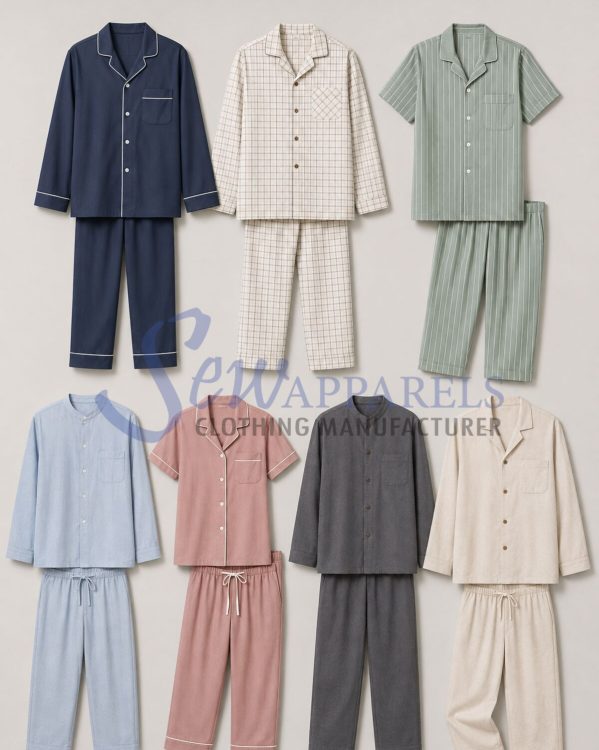
Use a woven pajama button approval checklist to connect identified trims to representative sample evidence. This guide covers adult woven pajamas. It is not children’s-product compliance advice, and its observations do not establish regulatory certification or universal safety limits. Confirm the actual attachment methods and buyer acceptance criteria for the project before treating a sample as approved.
Discuss the garment and trim preferences through our custom woven pajamas manufacturing page. Confirm the actual component availability and trial scope instead of assuming that a decorative button shown in a reference can be supplied or used without further review.
1. Define the adult scope in the woven pajama button approval checklist
An adult woven pajama button brief should identify the intended garment, fastening positions and relevant wearing context. Record whether the trim serves as a working closure or an identified decorative feature. A detail that looks suitable on a folded sample may behave differently when the adult wearer opens, closes or rests against the garment. Specify the use being reviewed without promising comfort for every wearer.
Identify the reference for colour, shape, surface finish and overall proportions. Include the supplier reference or agreed component code needed to distinguish similar options. Photographs are useful for communication, but lighting and scale can change the impression. Keep a physical trim reference where practical and state which visual features matter to the approval.
For the woven pajama button approval checklist, separate appearance acceptance from operation and attachment acceptance. The designer may accept a colour while the technical reviewer still needs evidence from the assembled placket. Record the decision owners and the remaining questions. An “approved” note on a trim card should not be allowed to authorize every aspect of the fastening automatically.
2. Inspect edge finish and contact surfaces
Pajama button edge finish inspection should cover the actual component proposed for the sample. Review visible edges, openings and the surfaces that could contact skin or fabric during normal use. Record chips, rough areas, unexpected projections or inconsistent finish as observations. Ask the supplier to assess any concern rather than assuming that the material name guarantees acceptable finishing.
The pajama button skin contact surface deserves attention alongside the visible face. Examine the back and attachment area as appropriate to the selected design. Observe the component on the garment, because the placket layers and attachment can affect how it sits. This review is a product-development check; it should not be described as a laboratory assessment of skin compatibility.
Woven pajama button edge quality should be compared with an identified accepted reference. Where an issue is found, record the component identity, location and sample condition. A comment such as “make it smooth” is less useful than an observation showing which edge differs and what evidence is needed for acceptance. Keep a questionable component out of final signoff until the relevant concern is resolved.
A woven pajama button approval checklist should also note any distinction between development trims and the intended production version. If a coating, mould or supplier article changes later, consider which appearance and contact observations need to be repeated. Do not assume that a visually similar replacement preserves every previously accepted feature.
3. Match the buttonhole to the actual button
Pajama buttonhole usable length should be evaluated with the selected button and intended assembly. Record the button dimensions and the method used to describe the opening. A nominal buttonhole measurement alone does not show how easily the trim passes through the actual fabric and support layers. Avoid prescribing a universal extra allowance without a representative trial and supplier agreement.
Run a pajama buttonhole operation trial on the relevant placket or finished garment. Observe insertion, release and the way the button sits when closed. Check for snagging, distortion, an opening that is difficult to operate or an unintended tendency to release. Record the conditions and any relevant differences from the intended production configuration.
If a larger or differently shaped button is proposed, reopen the affected buttonhole decision. The change may also influence the visual balance and attachment arrangement. Discuss the revised combination as a system rather than approving the trim in isolation and expecting the garment maker to solve the consequences later.
In the woven pajama button approval checklist, identify the actual assembly sample used for operation review. If the early sample uses a substitute shell or support, state the limitation and request the later evidence needed on intended materials. Approval should be connected to what the sample demonstrates, not simply to the label attached to that sample stage.
4. Agree attachment evidence and repeated-operation checks
Woven pajama button attachment evidence should identify the component, substrate and proposed attachment method. Ask the supplier which product-specific checks will demonstrate that the assembly meets the agreed brief. Do not invent a universal pull force, sewing setting or number of stitches. Where a formal test is required, agree its method, acceptance criteria and responsible provider separately.
Coats seam-type guidance provides terminology for describing seam arrangements. It is useful construction background when discussing the surrounding garment assembly, but it is not a button-attachment test standard and does not establish an acceptable attachment strength for adult pajamas.
An adult pajama repeated fastening trial can support a review of the intended operation and assembly. Define the procedure and observations with the supplier before evaluating it. Look for changed operation, visible loosening or damage to the relevant assembly. The extent of the trial should reflect the project’s agreed requirements; this checklist does not specify universal repetitions or guarantee lifetime performance.
Record the sample identity and any corrections arising from the trial. If the buttonhole is altered to improve operation, check whether the attachment and closed appearance still meet the brief. If the attachment method changes, decide which related evidence needs to be renewed. This prevents a sequence of small revisions from leaving the final approved combination untested.
Pajama trim attachment signoff should state the accepted configuration and evidence references. Keep it distinct from a commercial agreement or a general garment approval. The woven pajama button approval checklist should show who accepted the fastening, which version was reviewed and whether any condition still blocks release.
5. Review finish and function after the intended care route
Sleepwear button wash durability should be treated as a question requiring evidence from the actual trim and garment care plan. A decorative coating should not be assumed to tolerate washing or drying merely because the shell fabric does. Identify the supplier information and representative trial needed for the selected component.
A pajama button coating wash check can compare the component before and after the agreed care procedure. Record the conditions, sample configuration and observations. Review changes in appearance and any effect on the surrounding fabric. If the chosen garment instructions involve a different care route, use relevant evidence for that route rather than presenting a washing trial as proof of every possible cleaning condition.
CottonWorks quality testing guidance discusses care-related appearance and garment dimensional stability. These are useful background considerations for reviewing the complete assembly. The page does not certify button coatings or provide a universal wash-durability limit for the fastening selected here.
After care, reassess operation on the assembled placket where relevant. The button finish can remain visually acceptable while the garment opening or attachment behaves differently. Conversely, the closure can still operate while the finish no longer matches the accepted reference. Record both kinds of observation rather than letting one successful result close an unrelated issue.
Within the woven pajama button approval checklist, retain the original and reviewed references with their care histories. Use the woven pajama button approval checklist to agree any additional investigation before final acceptance. A report stating only “washed and okay” leaves later reviewers unable to identify the procedure, component version or criteria behind the decision.
6. Approve component records and spare-button instructions
Pajama fastening component codes should link the accepted trim to the relevant garment version and colourway. Include the supplier or internal references needed for ordering and comparison. Where visually similar variants have different dimensions or finishes, maintain separate identities. The record should allow the production team to identify the accepted component without relying on memory.
A woven pajama spare button brief should state whether a spare is included and how it is identified and presented under the agreed product plan. Confirm availability and responsibilities before promising a spare arrangement. Do not infer that every garment includes additional buttons or that replacement stock will remain available indefinitely.
Pajama spare button identity should match the intended function and component record. If an alternative spare is proposed, assess its compatibility with the accepted opening and attachment requirements rather than approving it on colour alone. Record any substitution and the buyer’s decision before it becomes part of the packing instructions.
The woven pajama button approval record should gather the visual reference, edge observations, operation trial, attachment evidence and relevant care results. Name the reviewer, sample identity and technical pack revision. State any open condition explicitly. A documented conditional decision is clearer than a general approval that hides an unresolved coating or attachment question.
- Scope: adult garment version and working or decorative fastening role.
- Identity: button reference, dimensions and agreed appearance standard.
- Assembly: buttonhole and attachment configuration actually reviewed.
- Evidence: operation, attachment and relevant care observations.
- Release: decision owner, accepted revision and spare instructions.
Example: distinguish colour acceptance from coating approval
Suppose an illustrative adult pajama sample uses a button whose colour matches the design reference, but the intended coating has not yet been reviewed after the agreed care route. Record colour acceptance while keeping the care decision open. Review the identified assembly and its results, then accept or revise the component accordingly. This example describes decision control; it does not prescribe a test limit or predict a particular coating failure.
For private label woven pajamas production, the final record should connect the accepted component to the production brief. If the supplier changes the trim later, review the affected evidence. A woven pajama button approval checklist helps preserve the approved combination instead of letting an undocumented alternative replace it.
Where textured cloth is proposed, use the seersucker woven pajama fabric approval record to identify the shell and care condition used in the fastening trial. Retain the same fabric reference when comparing buttonhole operation and after-care appearance.
Prepare a focused adult pajama fastening brief
Send the adult pajama reference, button preference, intended care expectations and current sample comments. Ask Sew Apparels to confirm the actual component and development scope available for the project. Startup brands can use the same clear brief without assuming an unconfirmed minimum quantity, stocked trim or development timetable.
Use the woven pajamas buying guides for related development decisions. A complete woven pajama button approval checklist connects appearance to practical fastening evidence and gives the buyer a clear record of what has been accepted before release.