
Yoga pants matching bra set size allocation starts with a simple question: can a customer choose the bra that fits their upper body and the pants that fit their lower body independently? A matching colour does not make those two size requirements identical. Buying equal quantities of medium tops and medium bottoms may create an attractive range photograph, yet leave the business unable to fulfil the combinations customers actually request.
The practical decision is whether to buy fixed pairs, sell separate pieces, or offer a coordinated selection backed by shared component stock. Each route changes packing, item identification, returns and replenishment. Use the six checks below to build an allocation brief from evidence rather than treating a familiar size label as proof of fit. This is a planning framework, not a claim about an individual customer’s measurements or guaranteed sales.
1. Define the customer fit promise before allocating units
For yoga pants matching bra set size allocation, write down exactly what the offer includes. A fixed small set usually means a specified small bra and small pant sold together. A separate-pieces offer lets customers buy either component. A coordinated selection might allow a medium bra with a small pant while maintaining the same shade and design family. Those are different promises and need different order records.
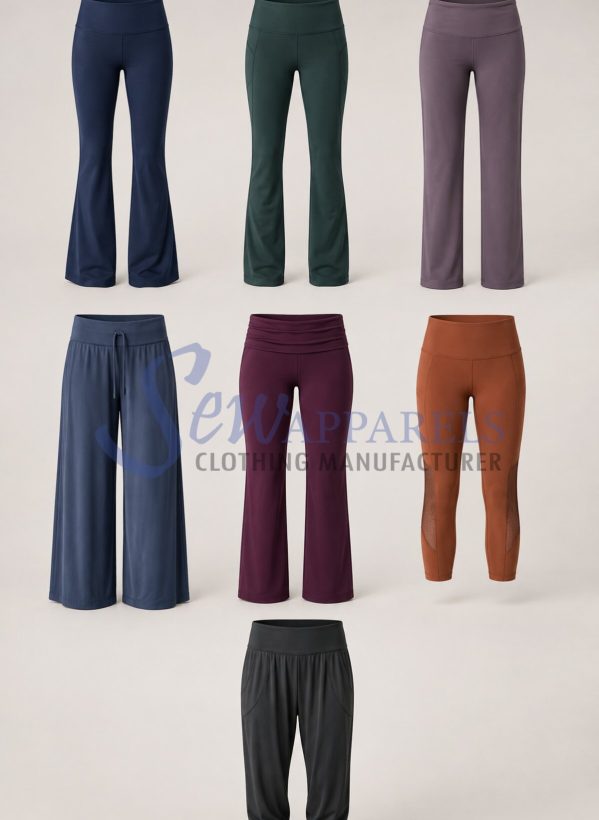
Yoga set mixed top bottom sizes should be considered alongside the actual size charts, intended wearing ease and approved samples. Use waist contour development to define pant fit separately from bra sizing. Equally, pant fit does not establish the support or coverage of a bra. Keep each garment’s measurements, grading and fit approval distinct, even when the merchandising presents them as one outfit.
A yoga set customer fit promise should explain available combinations clearly. Avoid suggesting that every customer’s upper and lower body will share one letter size. Show what the buyer can select and what happens when a preferred combination is unavailable. Confirm the bra specification separately with its supplier; a yoga pant manufacturer quotation does not automatically include matched bra development or production.
2. Build a joint-demand matrix rather than copying two size curves
A useful yoga set size allocation model for yoga pants matching bra set size allocation records yoga pant/top joint demand: how often each top size is requested with each bottom size. Separate size totals reveal component requirements, but do not reveal the pairings. Start with reliable orders, customer selections or an explicitly labelled pilot estimate. Keep the source, period, colourway and uncertainty visible.
The following fictional example represents 100 requested outfits, each containing one bra and one pant. It illustrates allocation arithmetic only; it is not a recommended size ratio, a market forecast or Sew Apparels sales data. Rows are bra sizes and columns are pant sizes.
| Bra / pant size | Small pant | Medium pant | Large pant | Bra total |
|---|---|---|---|---|
| Small bra | 20 | 8 | 2 | 30 |
| Medium bra | 10 | 25 | 10 | 45 |
| Large bra | 0 | 10 | 15 | 25 |
| Pant total | 30 | 43 | 27 | 100 |
Here, 60 requests use the same letter size and 40 use different sizes. The yoga pant bra size pairing therefore matters even though both component totals equal 100. Buying only same-letter prepacked sets would not directly satisfy those 40 mixed requests. If components remain separately pickable, the row and column totals describe the required units for this specific matrix.
Use yoga pants matching bra set size allocation to compare a base estimate with an alternative mix, rather than pretending one pilot is certain. Document whether unfulfilled selections, cancellations and out-of-stock choices were captured. Completed orders alone may hide demand for combinations that were unavailable. Segment cautiously; very small samples do not justify precise claims about a whole customer population.
3. Compare fixed pairs with separate component stock
Fixed size yoga set inventory can simplify packing and presentation when the approved combinations match demand. However, fixed packaging can restrict substitutions. A yoga separate pieces selling plan offers more flexibility, but requires accurate component quantities, picking controls and a clear customer journey. Neither arrangement is automatically cheaper or more profitable.
For yoga pants matching bra set size allocation, compare the same garment specification under both routes. A fixed pair versus separate quote should identify pant cost, bra cost, packing materials, pairing labour, inspection, labels, carton preparation and any allocation or repacking service. Confirm what is included rather than comparing a bundled price with a component-only price.
Mix match yoga set stock also creates competition between offers. The same medium pant may be needed for a small-bra combination, a medium-bra combination and a standalone purchase. Do not count that unit three times. Set priorities or reservations for channels and promotions, then reconcile them against one component balance. A yoga matching-piece purchase ratio may differ from one-to-one when customers buy spare pants or additional tops separately.
Yoga set orphan stock exposure is the risk of remaining components without the combinations customers want. Review it by size and shade, not merely by total units. A large pile of one bra size cannot complete outfits needing another. Before prepacking bulk sets, decide whether components can be released for separate sale, reassigned to an approved pairing or held for replenishment.
4. Connect allocation with item identity and stock rules
Reliable yoga pants matching bra set size allocation requires a distinct internal identity for each component variant and an unambiguous record of each offered combination. Link the bra size, pant size, colour, revision and quantity to the order. A bundle name alone is insufficient for a picker who must distinguish a medium bra with a small pant from the reverse pairing.
For businesses using GS1 identification, the GS1 guidance on bundle GTINs distinguishes newly created physical bundles from virtual bundles and addresses component identification. Apply the relevant rules to the actual offer and trading requirements. This does not mean every internal planning code must be a GTIN, or that every coordinated outfit is a physically attached bundle.
Yoga range bundle item identity should remain connected to the component records after packing. Record who can amend the pairing, how packing labels are checked, and how substitutions require approval. Treat a new fabric revision or shade lot as a controlled change; it should not silently enter a matching offer just because its size code looks familiar.
For a platform-specific example, Shopify’s bundle inventory guidance calculates availability from tracked components and quantities required, with the limiting component determining complete bundles. Its documentation also describes inventory-setting exceptions. Verify your own shop’s behaviour; these Shopify rules are not universal software rules or a recommendation to change platforms.
If a one-bra, one-pant combination has 12 eligible bras and eight eligible pants, it can form eight complete outfits before reservations or other constraints. Available stock must exclude units already committed, quarantined or otherwise unavailable. Do not add the availability of several combinations sharing those eight pants and present the sum as simultaneously fulfilable stock.
5. Plan returns, replenishment and coordinated production
Include coordinated yoga set return balance in yoga pants matching bra set size allocation. A customer may return one component while keeping the other, subject to the business’s applicable terms. Record the item, reason, inspection outcome and refund treatment separately. A returned bra is not automatically saleable stock, and a returned pant does not automatically restore a complete set.
Distinguish fit feedback from dispatch errors, damage and shade concerns. If medium bras are repeatedly returned while matching pants are retained, the next purchase decision needs component evidence. Replenishing both components equally may increase surplus. Confirm eligibility and consumer obligations for the markets served without making unsupported claims about a universal returns policy.
A yoga co ord size order should specify approved pant quantities separately from bra quantities, plus any fixed pairing schedule. Include colour references, fabric lots, tolerances, packaging status and shipment requirements. Visually coordinated garments made from different constructions may respond differently to dyeing, care and wear. Approve the actual matched presentation rather than assuming identical colour names guarantee a match.
During yoga pants matching bra set size allocation, discuss custom yoga pants manufacturing with the pant specification and order assumptions available. For private label yoga pants production, labels, grading, materials and the allocation schedule should be reviewed together. Minimum quantities and lead times depend on the confirmed project; do not promise an unverified minimum or guaranteed replenishment date.
6. Release a clear brief and monitor the first allocation
A coordinated yoga range commitment should identify who owns the size forecast, component purchasing, packing and retail stock reconciliation. Set an initial review date and an evidence trigger for changing the next allocation. An early sell-out is useful information only when you know whether it reflects strong demand, a small opening quantity or a stock-recording problem.
Use yoga pants matching bra set size allocation as a controlled brief containing the fit promise, demand matrix, component totals, pairing rules, item identities, quotation inclusions and return handling. Add the assumptions that could change the result. Preserve the approved version so a later revision can be explained rather than replacing the numbers without a record.
Before release, reconcile the matrix totals to the purchase order and verify one mixed-size packing example. Check that the buyer-facing selection matches the dispatch record. Test a shared-stock reservation and a partial return in the relevant workflow. Resolve any ambiguous size selector or packing instruction before committing a larger quantity.
Frequently asked allocation questions
Should bra and pant quantities always be equal? They are equal for an offer requiring exactly one of each only when every purchased component is allocated to that offer. Separate sales, returns, spares and opening stock can create different requirements. Calculate the relevant component balance instead of applying an automatic equality rule.
Can a startup launch with fixed pairs? Yes, if its confirmed fit promise, evidence and stock risk support that choice. A smaller launch does not remove the need for clear component specifications. Keep the first allocation manageable and review actual mixed-size requests before expanding the combinations.
Review the wider fit and construction questions in the yoga pants buying guides. Bring the final allocation assumptions and pant specification to the custom yoga pants manufacturing page when preparing an enquiry. The aim of yoga pants matching bra set size allocation is a coordinated offer that can be picked, fitted and replenished honestly, with each component’s role visible.