
Compression shorts fabric yield quotation should explain the assumptions behind the amount of material assigned to each garment. A low consumption figure is not automatically a better offer if it uses a different width, size mix or pattern revision. Buyers need a traceable cut plan before treating two material quotations as directly comparable.
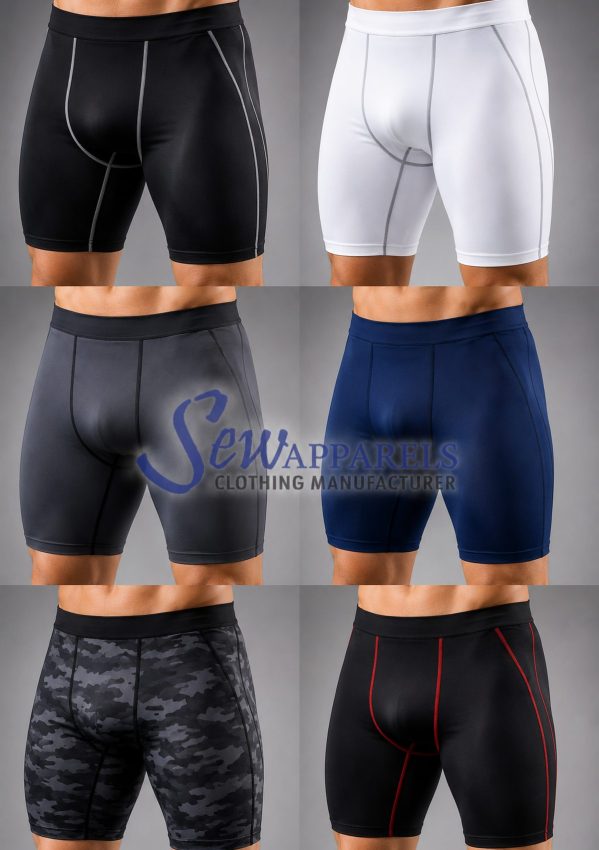
This guide sets out six inputs behind a credible consumption figure for multi-panel compression shorts. It distinguishes marker consumption from the quantity purchased and shows how to compare estimates without weakening the approved fit. Any numerical example below is hypothetical and is not a Sew Apparels price, production result or recommended allowance.
What compression shorts fabric yield quotation should include
A quotation should state the style revision, material reference, unit of consumption and basis of calculation. It should identify whether the figure is preliminary, based on a completed marker or reconciled with a production cut. These stages provide different levels of confidence. An early sketch estimate should not be described as a confirmed requirement for the finished order.
Keep material categories separate. Main body fabric, gusset material, mesh panels and a fabric waistband may each need their own consumption record. A combined kilogram figure can hide different widths and costs. Request a bill of materials that connects every relevant cut component to its material and quotation line.
1. Confirm the pattern revision and complete component set
Ask for the approved pattern revision used in the calculation. Identify every cut component and its required quantity per garment, including mirrored pieces or separate gusset layers where applicable. Multi panel short marker yield depends on the actual set of shapes. A missing component makes the estimate incomplete even if the displayed marker efficiency looks attractive.
For compression shorts fabric yield quotation, preserve the fit intent before evaluating savings. Short negative ease pattern consumption must be based on an approved pattern, not on an arbitrary reduction designed to lower fabric usage. Negative ease describes a relationship between garment and wearer dimensions; it does not authorise the supplier to shrink panels without a fit review.
Document seam allowances, hem turnbacks and other included construction margins. State whether any shrinkage compensation is already incorporated in the pattern. If those dimensions change during sampling, revise the consumption record. Keep the costing revision connected to the final construction rather than assuming that the first marker remains valid throughout development.
2. Use the correct usable width and material unit
Compression short usable fabric width should reflect the width available for the planned cutting process. Distinguish nominal roll width from the width accepted after relevant edge exclusions and preparation. Confirm whether the material is supplied open width, tubular or in another form. A quoted width should not silently become a wider marker simply because it produces a lower estimate.
Compression-short fabrics can be quoted by different units. State whether the compression short material quotation uses metres, yards or kilograms. If a conversion is needed, identify the width and mass per area used. Do not compare unlike consumption units as though the numbers represent equivalent material quantities.
For compression shorts fabric yield quotation, ask what happens if the delivered usable width differs from the assumed width. A supplier may need a revised marker and updated requirement. Record that dependency before purchasing fabric so the team can assess the effect of a width change without reconstructing the original estimate.
3. Preserve directional and matching constraints
Document directional stretch marker restriction for each relevant material. Specify the intended orientation of the panels and the rotations permitted by the approved construction. Greater material utilisation is not useful if parts are placed in an orientation that changes the intended garment behaviour. The marker should respect the technical brief rather than optimise only the empty space between pieces.
Gerber’s CutWorks nesting documentation describes arrangement and matching tools that work within job parameters. It illustrates why part placement rules are part of a nesting job. Software capability does not mean every rotation or flip is acceptable for the proposed fabric; those permissions need to follow the product specification.
When reviewing compression shorts fabric yield quotation, state any face, direction, print-placement or panel-matching requirements. Keep them in the marker efficiency supporting record. If two suppliers use different permissions, request comparable markers before judging the consumption difference. A more restrictive approved layout may reasonably use more fabric than an unrestricted estimate.
4. Match the size ratio to the order
A compression short size ratio marker should represent the quantities intended for purchase. Ask for the size distribution and the garment count represented by each marker. A middle-size sample marker is useful for development, but it does not automatically describe an order weighted towards larger sizes or containing several separate colour runs.
Compression shorts fabric yield quotation should distinguish an average across a mixed marker from fabric usage per size evidence. Interlocking shapes can make a combined layout more efficient than several individual layouts. Do not assign the mixed average to every size as though each garment independently uses that amount. Identify how the estimate was derived and which order mix it covers.
For colourways or materials that cannot share a lay, maintain separate cut-plan quantities. A favourable combined size ratio may not be available in a small isolated colour run. Record minimum cutting constraints and any proposed overcut separately from the requested garment quantity. The commercial approval should make those differences visible.
5. Separate marker consumption from additional allowances
Marker consumption already includes the unused space inside the marker rectangle. A separate compression short cut waste allowance may relate to end losses, splices, defects, recuts or other identified cutting conditions. Ask which items are included in the quoted figure and which are added afterwards. Avoid adding a general waste percentage on top of another allowance that covers the same loss.
For compression shorts fabric yield quotation, request the basis of each allowance rather than accepting a generic industry percentage. Relevant production history or a documented risk assumption may help explain it. Keep the allowance open for review when the material, order size or cut plan changes. An estimate should make uncertainty visible instead of implying guaranteed consumption.
Lectra’s cutting-room material waste roadmap emphasises production constraints and monitoring estimated versus actual yield-related measures. Apply that principle to the quotation record. Its general guidance and commercial examples do not establish a waste allowance or promised saving for this compression-short order.
6. Reconcile consumption with purchase quantity
Consumption versus purchase quantity is an important distinction. The cut plan estimates material needed for a defined order, while procurement may also reflect roll availability, supplier minimums, lot separation and approved reserve. A purchase quantity can exceed the calculated requirement without proving that the marker is inefficient. Ask for the reason for the difference.
Before approving compression shorts fabric yield quotation, show the marker requirement, separately identified allowances and procurement adjustment in the short yield cost worksheet. Keep material cost separate from sewing, trims, testing and other garment costs. An attractive fabric usage number does not establish the lowest total finished-garment cost.
Short cut plan commercial approval should state the assumptions accepted by the buyer and supplier. Identify the relevant pattern, width, size mix and quantity, with a process for revising the quotation if they change. Keep leftover ownership and any agreed reuse arrangement visible in the commercial discussion rather than assuming all surplus can be used in a later order.
A hypothetical consumption worksheet
Suppose an approved hypothetical marker is 5 metres long and represents 10 garments at a defined usable width. Its marker-length consumption is 0.5 metre per garment for that marker and size mix. This is a simple average, not a fabric usage figure for each individual size. It also does not include every possible procurement or cutting adjustment.
If the hypothetical order requires 1,000 garments in the same applicable mix, the base marker-length requirement would be 500 metres. A separately agreed illustrative allowance of 20 metres would make the planned requirement 520 metres. If procurement then requires 540 metres because of available roll quantities, the extra 20 metres is a purchase adjustment, not another marker-efficiency loss.
These figures demonstrate the bookkeeping distinction only. They do not recommend a four-percent allowance or establish the requirement for real compression shorts. The actual calculation needs approved markers, relevant material constraints and a reconciled order plan. Do not reduce the pattern to force an example’s consumption onto a different product.
Compare supplier figures on a common basis
A compression short yield comparison should use the same approved construction and commercial scope. Request fabric consumption quote assumptions in a compact checklist so hidden differences can be identified quickly. If a supplier offers a materially different layout, discuss whether it respects the fit and material requirements before treating the result as a saving.
- Pattern: revision, components, quantities and included construction margins.
- Material: reference, usable width, supply form and quoted unit.
- Layout: stretch direction, rotation, face and matching rules.
- Order: size ratio, colour separation and marker garment count.
- Allowances: named losses, calculation basis and exclusions.
- Procurement: planned requirement, purchase adjustment and surplus handling.
Review compression short fabric costing inputs when the sample or order changes. A revised gusset, longer leg or different panel material can require another estimate. Keep a dated quotation revision with the supporting marker information. When production evidence becomes available, compare it with the approved estimate and investigate differences without silently rewriting the original assumptions.
Build the quotation request around the product
For custom compression shorts manufacturing, provide the technical pack, intended material system, size ratio and quantities before requesting a firm consumption-based offer. Private label compression shorts production needs a complete component map and approved fit. Discuss material minimums and development quantities directly instead of assuming a universal consumption or order threshold.
The existing Compression Shorts Buying Guides connects related construction decisions with the original manufacturing page. Store the consumption record beside the approved pattern and material references. This keeps the commercial figure tied to the garment the team intends to produce.
Frequently asked questions
Does higher marker efficiency always mean lower garment cost?
No. Width, material price, approved orientation, order mix and other costs can differ. Compare the same product scope and inspect the underlying requirement before choosing an offer.
Can a sample-size marker quote the whole order?
It can support an early estimate, but the production requirement should reflect the actual size mix and cutting constraints. Identify the estimate’s limitations and update it when the order is defined.
What makes a consumption quotation reviewable?
Compression shorts fabric yield quotation is reviewable when its pattern, width, layout rules, size mix and allowances are traceable. Separate those inputs from purchase adjustments so the buyer can understand the complete material requirement.
Confirm the compression shorts gusset geometry before freezing the component count. A revised gusset shape or extra layer can change the marker requirement, even when the commercial style name remains the same.