
Compression shorts bonded leg hem durability depends on the complete bond, not simply on how clean the leg opening looks at first inspection. The fabric, adhesive, hem geometry and application process must work together through dressing, movement and the intended care routine. Buyers should request evidence from the proposed construction before approving a low-profile bonded finish.
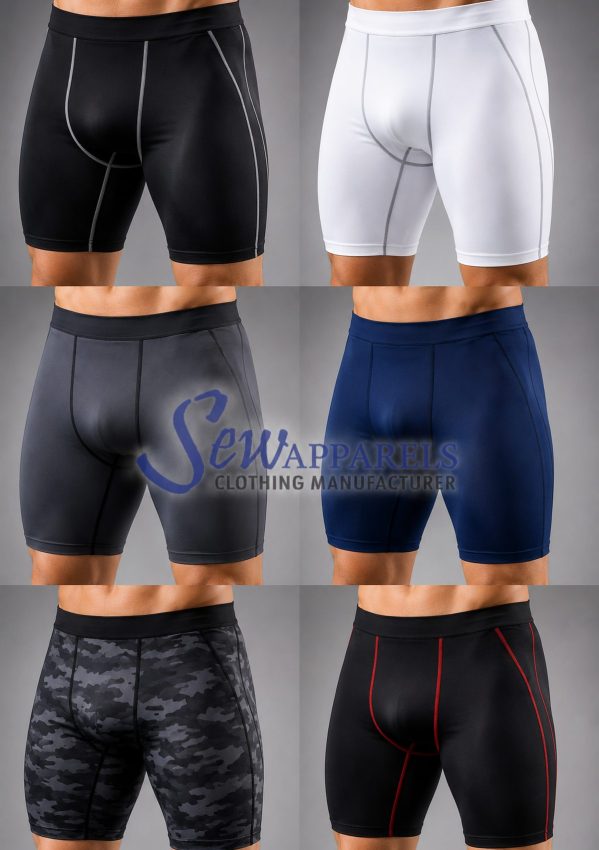
This guide explains six approval steps for a bonded compression-short leg opening. It separates visible appearance, extension behaviour and measured adhesion so a pleasant sample does not become an unsupported durability promise. The checklist is a development framework, not a universal test standard or a guarantee that any adhesive will suit every stretch fabric.
What compression shorts bonded leg hem durability means
A bonded hem joins the relevant layers using an adhesive system rather than relying only on a sewn attachment. Confirm the actual construction in the technical pack: a turned hem, applied reinforcement or another arrangement can create different interfaces. Do not describe an entire garment as seamless merely because its leg opening has a bonded finish.
Durability needs a defined context. State which material combination, sizes, extension conditions and care instructions the approval covers. An intact unworn sample is useful evidence of initial appearance, but it does not establish repeated-use performance. Keep the buyer’s intended claim narrower than the evidence rather than turning a single successful trial into a lifetime statement.
1. Identify the fabric and adhesive system
Adhesive system identification should record the adhesive reference, relevant thickness or form, fabric reference and approved hem arrangement. Include material revisions and lot information where available. Different adhesives can have different application and extension characteristics; a generic description such as stretch glue is not enough to reproduce the approved sample.
For compression shorts bonded leg hem durability, identify which fabric surfaces meet the adhesive and how the bond is prepared. Discuss finishes, material handling and any supplier instructions with the bonding specialist. Avoid assuming that an adhesive selected for another garment automatically suits this short, even when both fabrics contain elastane.
Ask the adhesive supplier to evaluate the actual material combination and application. Bemis’s apparel bonding guidance describes adhesive selection, controlled processing and prototype bond, extension and washing evaluations. That supports a construction-specific qualification approach; it does not prove that Sew Apparels uses its products or that the proposed shorts already meet a durability requirement.
Keep alternative materials visible in the bill of materials. Adhesive substitution control should require review before another adhesive, film thickness or fabric finish replaces the approved combination. A purchasing substitution may need fresh trials. Equivalent appearance alone does not demonstrate equivalent bond behaviour.
2. Record a repeatable bonding process
The bond process sample record should connect each trial to its material references and machine setup. Record the relevant application conditions, equipment identification, operator or station and sample date. Use the adhesive supplier’s validated guidance to develop settings rather than copying a temperature or pressure from an unrelated online example.
Compression shorts bonded leg hem durability should be reviewed against the conditions that actually made the sample. A nominal machine setting is not a complete account of the bond interface. Ask the technical team how the process is checked and how changes in equipment or material are qualified. Keep the final approved record available to production.
Document any repeated heat exposure, including later finishing or repair operations. A second application step should not silently be treated as harmless. Evaluate the relevant sequence on the proposed construction and record its effect. Where the process changes, retain the earlier trial separately so the team can see what was revised instead of overwriting the development history.
Inspect consistency around the leg opening, including joins and transitions. Label trial pieces so an attractive section is not mistaken for the entire hem. If a sample has a local defect, record its location and construction detail before changing settings. Multiple unrecorded adjustments make it harder to identify which change improved or weakened the result.
3. Check leg-opening extension and recovery
A leg opening extension test should represent the planned use and garment geometry. Define how the opening is extended, the starting measurement and the sequence used. Review compression shorts bond line stretch alongside the body fabric. The hem can look intact while restricting the opening more than the surrounding material.
When evaluating compression shorts bonded leg hem durability, distinguish an extension trial from a quantified adhesion result. A manual stretch observation can identify visible opening or distortion, but it does not establish a laboratory peel strength. Record the trial method and its limitations so the buyer knows what the observation supports.
Review local hem stiffness with the intended fit. A rigid band, uneven fold or abrupt transition may affect the feel of the opening even if the bond remains attached. Check representative sizes and the actual hem arrangement. Do not assume that the middle-size sample demonstrates dressing comfort across the full size range.
Stretch trial evidence limits should be stated in the approval note. Identify whether the trial used a sample strip, a complete opening or a worn garment. Each can answer a different question. A short demonstration does not justify a universal cycle-life claim, and an adhesion result alone does not prove comfortable fit.
4. Inspect the bond before and after care
Bonded compression short wash endurance should be assessed using an agreed care procedure that fits the proposed label and buyer requirement. Record the washing and drying conditions, observation stages and sample identification. Avoid quoting a universal number of wash cycles as though it applies to every fabric, adhesive and garment.
For compression shorts bonded leg hem durability, compare the same locations before and after care. Bond line edge lift should be distinguished from a loose fabric edge outside the intended bond. Use consistent inspection and photos where the quality record permits them. Keep the internal inspection photos linked to the exact sample and care record.
Inspect compression short adhesive hem peeling and compression short leg opening delamination as separate descriptions of the observed failure, not automatic explanations of its cause. Record whether separation occurs at an interface, within the adhesive or through damage to the fabric. That distinction can help a specialist investigate the material or process instead of simply increasing application heat.
Bond cracking inspection should also consider the location and the sample’s history. Record whether a crack was visible before care, appeared during extension or followed a particular treatment. Recheck extension behaviour after the agreed care sequence. A flat hem at rest can still open when the wearer stretches the leg opening.
5. Choose a suitable adhesion evaluation
Peel test method selection needs input from a qualified laboratory or bonding specialist. Specify the interface being evaluated and whether the specimen can be prepared in a way that gives a meaningful result. Small, curved or folded garment areas may not behave like a flat material specimen. Do not invent a test method by attaching a familiar standard number to a different construction.
ISO’s published scope for ISO 2411:2024 concerns coating adhesion strength of coated fabrics. It is not automatically a finished compression-short hem durability method. A laboratory should confirm applicability or select a suitable agreed method for the actual bonded assembly; the standard’s existence does not certify the garment.
For compression shorts bonded leg hem durability, record specimen preparation, test direction, conditioning and reported failure mode with the result. Agree acceptance requirements before reviewing the numbers. A value without its method and specimen context is difficult to compare, especially when another supplier evaluates a different interface or material combination.
Wash exposed bond strength should be linked to the recorded care history. Keep unwashed and care-exposed observations clearly identified rather than combining them into one unexplained figure. If the fabric tears before the interface separates, report that failure mode. It should not be relabelled as proof of unlimited bond strength or long-term garment durability.
6. Approve the construction and control changes
A leg hem release checklist should connect the approved appearance, extension observations, care evaluation and any measured adhesion evidence. Identify unresolved limitations before production approval. The release should name the material and process revision it covers, with a clear route for reviewing changes.
Before signing off compression shorts bonded leg hem durability, compare representative production-intended samples with the approved reference. Decide how ongoing checks will be recorded and how questionable results are escalated. A development sample does not remove the need to control consistency in production, but the required check frequency should follow the agreed quality plan rather than an arbitrary online rule.
Keep corrective trials traceable. If edge lift appears, isolate the relevant material and process information, investigate the failure and evaluate the proposed correction. Do not repeatedly reheat finished garments without a controlled assessment. Retain the failed sample and the revised result so the approval reflects evidence, not only the last attractive piece.
A practical buyer approval record
Use one record that can be read alongside the technical pack. The purpose is to make the approved combination reproducible and the evidence understandable. The following fields help organise the discussion without claiming that every buyer or construction needs an identical laboratory programme.
- Construction: garment revision, hem arrangement and representative sizes.
- Materials: fabric, adhesive references and approved alternatives.
- Process: equipment, trial conditions and later heat exposure.
- Extension: method, observations, recovery and comfort limitations.
- Care: procedure, stages and before-and-after defect locations.
- Adhesion: applicable method, specimen context, result and failure mode.
- Release: agreed requirements, decision, change controls and responsible reviewers.
A clear compression shorts bonded leg hem durability record also helps commercial discussion. Ask whether sampling and any external evaluation are included in the quotation, and identify what would require another development round. Avoid buying a durability label without knowing the evidence behind it. The aim is an approved product construction with a reviewable scope.
Build the brief around your compression shorts
For custom compression shorts manufacturing, provide the intended material, fit, leg-opening arrangement and care expectations. Private label compression shorts production benefits from an approved bonding reference before bulk decisions. Discuss development quantities and material availability directly; this guide does not promise an adhesive system, machine capability or minimum order for an unreviewed project.
The existing Compression Shorts Buying Guides connects related construction decisions with the manufacturing page. Keep the bonded-hem evidence alongside the approved pattern, material references and quality plan so subsequent changes can be assessed against the same product.
Frequently asked questions
Does a smooth bonded hem prove durability?
No. Appearance is one part of approval. Review extension, care exposure and appropriate adhesion evidence for the proposed construction before making a performance claim.
Can another adhesive be substituted without testing?
It should follow the agreed change-control process. A different reference or material combination may need new qualification, even if the finished sample initially looks similar.
What evidence should the final approval retain?
Compression shorts bonded leg hem durability approval should retain the material and process revision, trial conditions, results and limitations. Keep the release decision tied to the evidence actually obtained.
Include the approved hem allowance in the fabric yield quotation; a revised fold or reinforcement can change the cut-component requirement.