
Compression shorts leg opening ride up should be reviewed during the movements and garment pairing the buyer intends to support. A leg edge that sits neatly in a standing photo may migrate during squatting, running or repeated bending. Development needs a consistent starting position and recorded observations before the team can judge whether the hem meets the intended coverage requirement.
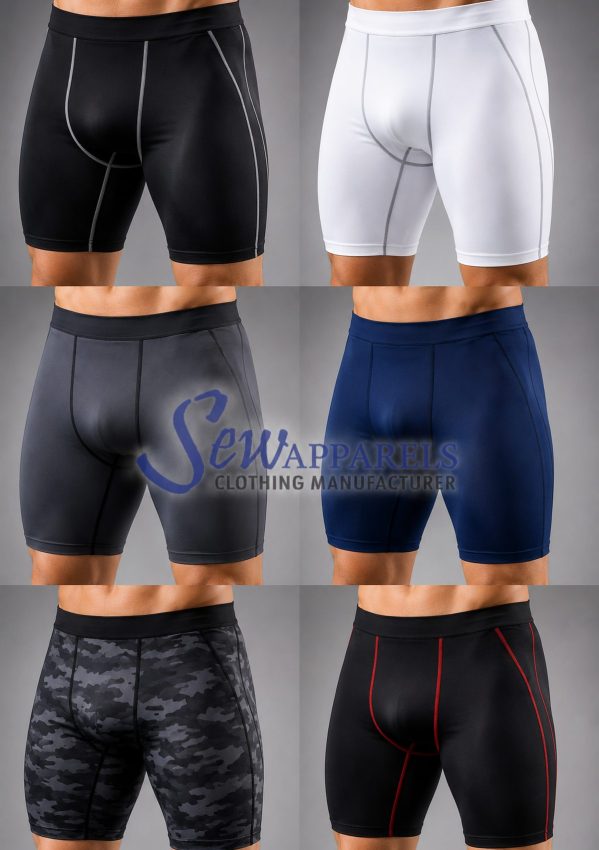
This guide explains six wear checks for compression-short hem stability. It separates leg-edge migration from waistband movement, rolling and discomfort, so a fit correction responds to the actual observation. The framework does not promise zero movement for every wearer or establish a universal migration tolerance. Agree the product’s intended use and acceptance criteria before approving a sample.
Define compression shorts leg opening ride up clearly
Ride up describes upward movement of the leg edge relative to the wearer during use. Record whether the edge shifts as a whole, rolls into a narrow band or changes because the complete short moves. These observations can overlap, but they are not interchangeable. An unchanged leg edge with a moving waistband calls for a different investigation from local hem rolling.
Compression short hem migration should be judged against the intended coverage, not an arbitrary ideal that all shorts remain motionless. Identify whether the style is designed for standalone wear, use beneath another garment or a specific activity. The development team needs that context to choose representative movements and decide what an acceptable result means.
1. Confirm size, wearer context and the sample revision
A compression shorts leg opening ride up trial needs a defined garment and wearer context. Record the sample revision, labelled size, material references and relevant fit observations. Use the intended size-selection approach rather than asking a wearer to choose a smaller size just to make the leg edge feel tighter. A fit trial should evaluate the proposed product.
For compression shorts leg opening ride up, consider the intended size and shape range when selecting representative trials. Similar labelled sizes do not guarantee identical body proportions. Document the relevant body measurements using a consistent approach, with appropriate consent and privacy handling in the development record. Do not publish identifiable fit-model information in the product article.
ISO 8559-1’s body-measurement framework describes anthropometric definitions for clothing development. It helps place sizing information on a consistent basis. It does not prescribe a compression-short pattern, an acceptable ride-up distance or a pressure requirement, and it does not certify the proposed fit.
Identify any sample alterations before the trial. A temporarily shortened leg, changed hem or adjusted waistband should have its own revision note. Keep the comparison sample distinct from the approved reference. Otherwise the team may attribute an improvement to fabric or hem construction when several fit dimensions changed at the same time.
2. Establish the leg edge’s starting position
Record the short hem starting position after the wearer puts the garment on normally and the fit reviewer confirms the intended placement. Define the standing posture and observation point. Avoid repeatedly pulling the leg downward to create an unusually low starting edge. A repeatable starting condition makes later movement easier to interpret.
When reviewing compression shorts leg opening ride up, record waistband placement as well as the leg edge. This helps distinguish local edge migration from the whole garment shifting. Check whether both legs begin in comparable positions and whether a seam, fold or twist has been corrected before the sequence starts.
Compression shorts leg edge migration measurement should use an agreed reference and consistent observation method. If the team records a distance, explain where and how it is measured, including the posture. Do not compare a standing measurement with a seated observation as though they represent the same geometry. A number without a defined method can be misleading.
A short hem retention sample should preserve the approved leg length and opening arrangement. Longer coverage may be worth evaluating as an option, but adding length alone does not establish better stability. Keep length, opening dimensions and material changes visible so the buyer can see which design variables differ between samples.
3. Observe the intended movement sequence
Compression shorts leg opening movement observation should reflect the proposed activity. Agree a sequence such as walking, controlled squatting, sitting and returning to standing, or another relevant movement set. Identify its duration or repetitions in the trial record. The article does not prescribe one sequence as suitable for every sport or wearer.
For compression shorts leg opening ride up, observe the edge during movement and after the wearer returns to the agreed posture. Record whether migration develops gradually, occurs at a specific motion or returns without adjustment. If the wearer pulls the hem back into place, note that intervention rather than treating the sequence as uninterrupted.
Compression thigh coverage movement observations should reflect the intended use case. Describe the coverage change and the wearer’s feedback separately. A reviewer may see a small positional shift that the wearer does not find distracting, or the wearer may report discomfort without a large visible movement. Both observations belong in the report.
Compare the two legs and relevant seam areas. Local rolling around a hem join may differ from a consistent shift around the complete opening. Ask the reviewer to describe what happened instead of immediately selecting a solution. A clear observation gives the pattern and construction team a better basis for a controlled adjustment.
4. Evaluate comfort and the outer garment together
Compression shorts leg opening retention feedback should include comfort, the need to readjust and whether the edge distracts from the activity. Ask about the experience in neutral terms. Do not lead the wearer to approve a sample because the team prefers its appearance. Keep subjective feedback distinct from measured dimensions.
Compression shorts leg opening ride up should not be addressed simply by making the opening tighter. A thigh hem pressure complaint is a reason to review fit and comfort, not proof that the product provides a particular compression pressure. Without a suitable measurement method, do not assign pressure units or suggest a therapeutic benefit.
Consider the compression short outer layer effect when the style is intended to be worn beneath another garment. Repeat a relevant comparison with the specified outer short or uniform, noting the material and fit. Keep standalone and layered observations separate. A result with one outer layer does not establish compatibility with every garment.
The compression hem comfort balance matters as much as visible coverage. Examine rolling, stiffness, edge feel and restricted movement alongside retention feedback. Discuss potential material or construction changes with the technical team rather than assuming that a gripper, elastic or bonded finish is automatically suitable. Any added feature needs its own qualification.
5. Recheck the leg edge after the intended care
Review the compression leg edge after care using a documented washing and drying procedure that matches the proposed label and agreed development brief. Keep the care history with the sample. An unwashed prototype and a care-exposed sample should not be described as equivalent unless the relevant dimensions and behaviour have been checked.
AATCC TM150 addresses garment length and width changes after home laundering. Its published scope notes that it may not suit certain stretch fabrics. A qualified laboratory should confirm an appropriate dimensional evaluation. The method is not a ride-up test and does not prove leg-opening retention during wear.
For compression shorts leg opening ride up, combine any appropriate dimensional evidence with another recorded wear observation after the agreed care exposure. Identify changes to leg length, opening appearance or rolling without assuming that dimensional change explains every fit issue. The garment’s movement behaviour still needs to be observed in its intended context.
Use the same starting and observation conditions where practical for the comparison. Record any difference that could affect interpretation, such as another wearer, size or outer layer. A care-exposed trial with changed conditions can still be informative, but it should not be presented as a direct before-and-after comparison without qualification.
6. Make one controlled adjustment and review the result
The compression shorts leg opening fit adjustment record should identify the observed issue, proposed change and revised sample. Keep material, leg geometry and hem construction differences traceable. When several variables change together, acknowledge that the result cannot isolate which change produced the improvement.
Before approving compression shorts leg opening ride up performance, repeat the relevant sequence on the revised sample. Compare coverage, readjustment and comfort against the agreed requirement. A better standing fit does not remove the need to check movement. Retain the original observation so the buyer can understand the reason for the revision.
Compression leg coverage approval should state the size range, material and garment pairing represented by the evidence. Record unresolved limitations and any additional review needed before bulk release. Avoid a broad no-ride-up claim when the evidence covers only a short trial on one size and one wearer.
A useful hem stability wear report
A compression shorts hem stability wear report should be concise enough to review alongside the technical pack. Keep objective observations and subjective feedback in separate fields. The following structure helps the team preserve the context that makes a comparison meaningful rather than collecting an unexplained pass or fail.
- Sample: revision, size, fabric and hem arrangement.
- Starting fit: waistband placement, leg-edge position and posture.
- Use context: standalone or layered wear and relevant outer garment.
- Sequence: movements, duration or repetitions and observation stages.
- Result: migration, rolling, coverage change and readjustment.
- Feedback: comfort, edge pressure complaints and activity distraction.
- Care: treatment history, dimensions and repeated wear observations.
- Decision: agreed requirement, adjustment, limitation and release status.
Record the approval in terms of the product requirement. For example, a buyer may prioritise maintaining intended thigh coverage without repeated manual adjustment during its defined activity. That is a brief to evaluate, not a result claimed for an untested garment. Agree how the team will judge it before interpreting a trial.
Keep wording proportional to the evidence. A sample reviewed in a limited fit session can support a development decision, but it does not establish every user’s long-term experience. If marketing wants a stronger retention statement, identify the additional evidence needed rather than expanding the claim after the sample has been approved.
Prepare a product-specific development request
For custom compression shorts manufacturing, provide the intended activity, size approach, coverage, material and outer-garment pairing. Private label compression shorts production benefits from a clear wear brief and traceable sample feedback. Discuss development quantities and proposed constructions directly instead of assuming a universal anti-ride-up feature or minimum order.
The existing Compression Shorts Buying Guides connects related hem, waistband and construction decisions with the manufacturing page. Keep movement evidence beside the approved technical pack. This makes later fit changes easier to review against the same intended product.
Frequently asked questions
Does a tighter opening always reduce ride up?
No universal result can be assumed. Evaluate the proposed adjustment with movement and comfort feedback rather than approving tightness on its own.
Can a laundry dimensional test prove hem retention?
No. It addresses a different question. Review its applicability and combine relevant care evidence with recorded wear observations for the intended garment.
What should a buyer approve?
Compression shorts leg opening ride up approval should name the construction, trial conditions, coverage and comfort evidence. Keep limitations visible and review changes before making broader retention claims.
Qualify any proposed bonded finish through the bonded leg hem review before changing the approved construction.