
Compression shorts under uniform friction should be assessed with the actual outer garment intended for the product. A smooth base-layer fabric does not, on its own, establish easy movement beneath every uniform. The contact surfaces, fit, seams and decoration can differ, so buyers need a paired-garment evaluation before approving a broad layering claim.
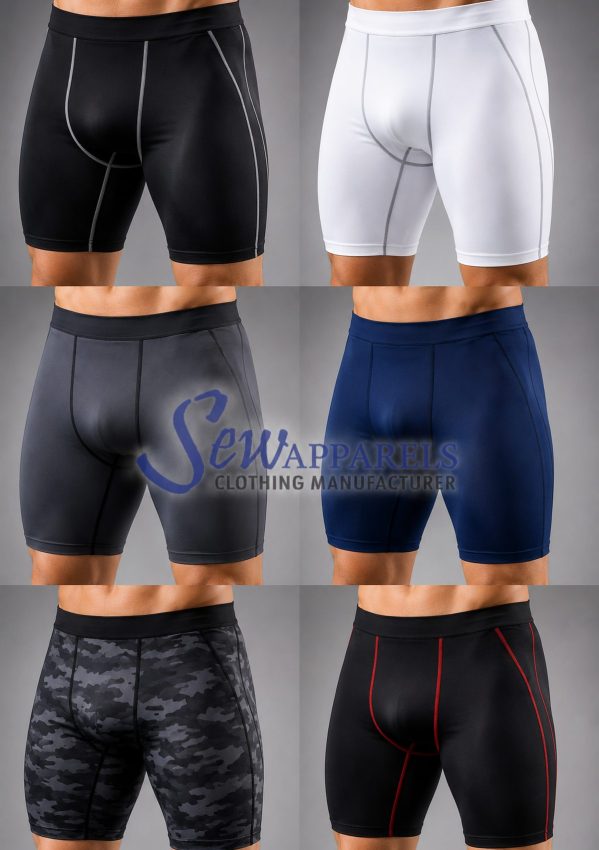
This guide sets out six checks for developing compression shorts worn beneath a uniform. It separates perceived drag, garment displacement, surface wear and wearer comfort. The framework helps a team document compatibility with a defined pairing; it does not claim a universal low-friction coefficient, medical benefit or guaranteed experience for all wearers.
Define compression shorts under uniform friction
In a development discussion, friction may describe resistance noticed as the two garment surfaces move against each other. Ask the reviewer to identify the contact area and what was observed. Compression shorts outer uniform drag can appear as catching, delayed sliding or movement of one garment with the other, but the observation should not automatically be labelled a measured coefficient of friction.
Under uniform shorts surface interaction is only one part of the system. A tight outer leg, bulky seam, moving waistband or inappropriate starting fit can also affect the wearer. Keep these possibilities visible until the team has reviewed the garment pairing. Choosing a different fabric before understanding the observation can leave the actual issue unresolved.
1. Identify both garments and their contact surfaces
Outer short pairing should name the outer uniform revision, size, fabric and relevant lining. Record the base-layer revision alongside it. An evaluation with one outer short cannot be treated as evidence for every uniform in a collection. If another outer garment is proposed, identify what needs to be checked again.
For compression shorts under uniform friction, inspect the surfaces that will meet during wear. Record fabric face, construction direction, seams and contact zones. Paired fabric direction should reflect the actual garment layout rather than a convenient flat swatch arrangement that reverses the face or orientation.
Include decoration and accessories where they contact the base layer. A transfer, embroidered backing, label edge or pocket construction may create a local interaction that a plain fabric comparison misses. Keep the decorated production-intended pairing distinct from an undecorated prototype. A change to an outer uniform can affect the compatibility review even when the compression short remains unchanged.
Record each garment’s intended size selection and placement. Avoid choosing an unusually loose outer uniform simply to improve a trial result. The evaluation should represent the buyer’s proposed product use, including relevant size combinations. Make the assumptions clear before comparing suppliers or material options.
2. Use a consistent surface comparison
A base layer shorts fabric friction trial can support early material selection when its setup is described. Identify the paired surfaces, direction, condition and way the comparison is made. A manual sliding observation can reveal a difference worth investigating, but it should not be presented as an instrumented laboratory result.
When reviewing compression shorts under uniform friction, compare candidates on the same basis. Changing the outer fabric, contact pressure or direction at the same time makes the result harder to interpret. If a laboratory evaluation is required, ask a qualified specialist to select an applicable method and explain its relationship to the actual garment pairing.
Surface drag assessment should state what the reviewer sees or feels. Use specific descriptions such as local catching at a seam or delayed movement across a plain surface. Avoid unsupported terms such as friction-free. The buyer needs to understand the observation, not just receive an attractive adjective.
Keep trial evidence and material preferences separate. A softer hand feel can be desirable without proving lower resistance between the proposed layers. Likewise, a flat-swatch result does not include garment geometry. Carry the selected candidate into a complete paired-garment trial before using it as the basis for a finished-product compatibility statement.
3. Observe movement in the intended pairing
A layer compatibility wear trial should use a defined movement sequence. Select activities relevant to the brief, such as walking, sitting, bending or controlled squatting, and record the sequence and observation stages. The purpose is to examine the proposed garment system, not to prescribe one universal sportswear test.
For compression shorts under uniform friction, establish the starting placement of both waistbands and leg edges. Observe the layers during movement and again after the wearer returns to the agreed posture. Record any manual readjustment. Repeatedly resetting the garments without noting it can hide the interaction the trial is intended to reveal.
Garment bunching observations should name where the material gathers and which garment moves. A folded base-layer leg beneath a stable outer short is a different observation from both garments shifting together. Check whether the issue is consistent around the leg or concentrated at a seam, pocket or decoration.
Distinguish drag versus waistband movement. If the waistband descends while the contact surfaces slide normally, the fit reviewer should not automatically blame fabric friction. Record the initial observation and investigate the relevant fit or construction variable. A controlled comparison is more useful than changing several features at once.
4. Review local contact and wearer comfort
Decoration contact friction should be inspected on the proposed decorated garment. Locate the contact and note whether an edge, backing or raised detail interferes during the sequence. Do not conclude that all decoration is unsuitable from one local issue. The technical team needs the particular location and construction to evaluate a correction.
Compression shorts under uniform friction should include a compression shorts layering comfort assessment alongside visible movement. Ask the wearer about catching, pulling, the need to adjust and activity distraction. Keep the language neutral and record the feedback separately from objective measurements. A comfortable short session does not establish long-term comfort across the intended customer population.
Layer comfort feedback may differ between wearers and sizes. Describe the represented conditions rather than averaging away a specific complaint. If discomfort is reported, review the pairing and avoid forcing the wearer to continue simply to complete a planned sequence. The development record should identify the limitation without making a medical diagnosis.
Review fit and contact together when considering a change. A smoother fabric, relocated seam or different outer fit may be a candidate, but each needs evaluation in the same relevant context. Avoid promising that one construction feature eliminates rubbing. A change that improves sliding can still alter coverage, appearance or the intended fit.
5. Examine care exposure and surface wear separately
After wash layer movement should be reviewed with a recorded care history for both garments. Identify whether each was washed and dried under its intended procedure and whether their dimensions or surface appearance changed. Keep care-exposed samples distinct from new samples so a comparison does not silently mix conditions.
AATCC TM150 addresses garment length and width changes after home laundering, and its scope notes limitations for certain stretch fabrics. A qualified laboratory should confirm a suitable dimensional evaluation. Such a result does not measure paired-layer friction or prove comfortable movement beneath a uniform.
For compression shorts under uniform friction, repeat the relevant paired-garment observation after the agreed care exposure. Record any changes in starting fit, bunching or surface interaction. Do not assume a care-related dimensional change explains every observation; the actual layers still need to be evaluated together.
Outer uniform surface wear is another question. Inspect the contact areas of both garments for relevant visible changes, noting the trial history. A perceived drag difference does not establish abrasion resistance, and a visible surface change does not by itself identify the cause. Keep photographs or sample references in the internal quality record where appropriate.
ISO 12947-2 covers specimen breakdown in Martindale abrasion evaluation and excludes coated or laminated fabrics from its stated applicability. It is not a paired-uniform friction or skin-comfort test. A laboratory should select suitable evidence for the actual material and claim rather than treating an abrasion result as proof of low drag.
6. Approve the defined garment combination
An under uniform approval record should identify the garments, sizes, conditions, movement sequence and results. State what the evidence supports and which combinations remain outside the review. A qualified approval is more useful than a vague suitable-for-all-uniforms statement.
Before approving compression shorts under uniform friction performance, review both visible interaction and wearer feedback against the agreed brief. Keep surface comparison, dimensional evidence and abrasion evidence in their respective fields. None should be used as a substitute for the question it does not answer.
Record proposed corrections with a revised sample reference. If the outer uniform changes, review that change as part of the system rather than treating the approved base layer as automatically compatible. Material substitutions, added decoration and altered fit can require another relevant comparison. Define that review route before release.
A practical paired-layer review sheet
Use a compact sheet that can be read alongside the two technical packs. It should show the pairing tested and the limits of the conclusion. The following fields organise the evidence without implying a universal test method or acceptance threshold for all compression shorts.
- Pairing: base layer, outer uniform, material references and sizes.
- Contact: fabric faces, direction, seams, decoration and local zones.
- Starting fit: waistband placement, leg edges and relevant fit conditions.
- Surface comparison: setup, condition, observation and evidence limits.
- Movement: sequence, garment displacement, bunching and readjustment.
- Feedback: pulling, catching, comfort and activity distraction.
- Care and wear: recorded treatment and separate surface observations.
- Decision: requirement, represented scope, correction and approval.
A buyer may ask for comfortable movement beneath a specified team uniform without frequent manual adjustment. That describes an intended requirement, not an established Sew Apparels result. Agree how it will be evaluated, then keep the release decision tied to the evidence obtained. Do not turn a development brief into a published performance claim.
For compression shorts under uniform friction, preserve the original comparison when a revision is made. A traceable record lets the team distinguish a useful product change from a different trial condition. It also helps future material or uniform updates follow the same review logic.
Prepare a manufacturing brief for the complete system
For custom compression shorts manufacturing, provide the intended outer uniform, activity, material and size requirements. Private label compression shorts production benefits from access to the actual pairing during development. Discuss samples and development quantities directly; this guide does not promise a universal low-friction material, test capability or minimum order.
The existing Compression Shorts Buying Guides connects related fit and construction decisions with the manufacturing page. Store the paired-layer observations beside the approved technical packs so later changes can be reviewed against the same intended use.
Frequently asked questions
Does a smooth fabric always slide better under a uniform?
It cannot be assumed for every pairing. Evaluate the actual contact surfaces and complete garments under recorded conditions.
Can an abrasion result prove low friction?
No. Abrasion resistance and paired-layer drag answer different questions. Select evidence appropriate to the proposed claim.
What should the approval cover?
Compression shorts under uniform friction approval should name the garment combination, trial conditions and feedback. Keep its scope and limitations visible when materials, fit or decoration change.
Keep local migration findings linked to the leg opening ride-up review so drag and hem displacement remain distinct observations.