
A coverall fabric blend quotation is useful only when the buyer can identify what the price includes. A cotton option and a polycotton option may differ in weight, construction, finish, care requirements and order assumptions as well as fibre composition. Comparing the final unit prices without those details can make a lower offer look equivalent when it describes a different garment.
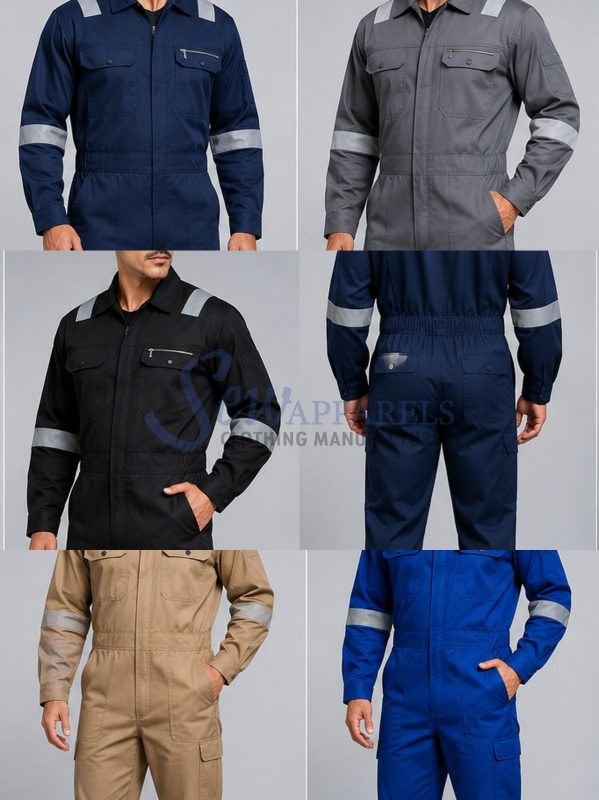
This guide helps workwear brands and uniform purchasers build a comparable request before sampling or ordering. It explains specification control, size-ratio assumptions, included tests and delivery scope. It does not publish a current Sew Apparels price or claim that one blend is always cheaper, more durable or more protective. Confirm project-specific materials, performance requirements and commercial terms directly.
1. Define the coverall fabric blend quotation specification
Start with the coverall supplier fabric specification. Identify the fibre composition, target finished weight, weave or other construction, colour, usable width where relevant and finish. Give the garment a revision number and keep the proposed fabric attached to that revision. “Cotton coverall” and “polycotton coverall” are descriptions, not complete specifications.
A cotton coverall quoted specification should also identify the agreed garment construction, closures, pockets, seams and labels. If the comparison changes only the fabric, keep those features consistent. If the supplier proposes construction changes to suit a material, list them clearly so the buyer can assess both the price and the practical effect.
In the specification, state the intended use without inventing a protective claim. Ordinary workwear and clothing intended for a specific protective function require different review. Fibre content alone does not establish flame resistance, chemical protection or another hazard-specific performance.
Make the reference material traceable
Ask for a material code and an identified swatch or sample reference. A generic photograph does not establish weight, construction or finish. Record which alternative each offer uses and which evidence will be needed before the material is approved for production.
2. Normalise the coverall fabric blend quotation price basis
Coverall fabric quotation normalization means placing offers on an understandable common basis while retaining genuine differences. Identify whether the supplier is quoting fabric, a finished garment or a development package. A material price per metre cannot be compared directly with a garment price per piece without consumption and production assumptions.
The coverall material price basis should state the quoted unit, currency, quantity, colour allocation and validity period. Ask whether minimum material purchases, sample charges or setup costs are included. Keep one-time costs separate from repeat production costs rather than concealing them inside an unexplained unit figure.
For a coverall fabric blend quotation, compare the same order scenario first. A quote based on a larger quantity or fewer colours may have different purchasing and setup assumptions. Do not attribute the whole price difference to cotton versus polycotton when the volume basis also changed.
Retain differences that cannot be normalised reliably
If a supplier cannot quote the same weight or construction, label the offer an alternative. Do not create a calculated “equivalent” price using an unsupported adjustment. A clear exception column is more useful than a spreadsheet that appears precise while hiding different products.
3. Check consumption in the coverall fabric blend quotation
The coverall price size ratio basis connects the order’s size distribution to material and production assumptions. Provide quantities by size, including any separate length range, and identify the approved measurement chart. A costing based on a middle-size sample may not describe an order with a different size mix.
Review usable fabric width, directional cutting restrictions and any relevant matching requirements with the supplier. Ask which consumption allowance and cutting assumptions support the offer. These are project-specific inputs; do not impose an invented universal waste percentage on every material.
For the coverall fabric blend quotation, separate quoted consumption from an approved production outcome. A development estimate can change when the pattern, width or size allocation changes. Record the conditions that would trigger a revised quotation before assuming the original price covers every later amendment.
Keep the garment pattern in the comparison
Different materials may need different development decisions, but those changes must be visible. If one offer uses a revised pocket, seam or pattern allowance, confirm it with the buyer. A material saving that depends on changing the garment cannot be treated as a like-for-like fabric substitution.
4. Include care and evidence in the coverall fabric blend quotation
The coverall quoted care requirement should describe the intended route and the evidence the buyer needs. Distinguish domestic care from industrial laundering. Do not assume that a fabric’s blend name alone establishes dimensional stability, appearance retention or compatibility with the intended complete-garment process.
ISO 15797:2017 describes industrial washing and finishing procedures for evaluating workwear. It supports discussion of relevant properties under defined test conditions and distinguishes evaluation procedures from operating instructions for industrial laundries. A supplier mentioning the standard must still identify the actual assessment and its scope; the reference does not certify the quoted garment.
For the coverall fabric blend quotation, list the coverall quotation included tests separately. Record who arranges them, which specimens are assessed, the proposed method and acceptance criteria, and whether the charge is included. A fabric report for another material or care route should not be treated as automatic approval.
Compare evidence costs honestly
An offer including agreed testing and another excluding it have different scopes. Ask for the missing assessment cost where it can be confirmed. If the requirement is unresolved, flag the comparison as incomplete rather than inventing a price or assuming it will be free.
5. Clarify finishing in the coverall fabric blend quotation
A coverall fabric finish quote should name the proposed treatment and any supported requirements. Identify whether finishing is included in the material price or charged separately. Avoid broad descriptions such as “premium finish” when the buyer cannot determine what the supplier intends to deliver.
Polycotton coverall cost assumptions should be reviewed alongside the cotton offer’s assumptions. Neither blend category fixes the commercial outcome by itself. Yarn specification, weight, construction, colour, finishing and available purchasing quantities can all change the products being compared.
Before approval, ask how finish substitutions will be handled. A different treatment may affect appearance, hand feel or the evidence needed for approval. Do not accept a cheaper finishing alternative silently when the original brief includes a defined care or performance requirement.
Keep sample and bulk material connected
Confirm whether the quotation assumes the same material as the approved sample or a proposed bulk alternative. Identify the required confirmation before release. A sample made from convenient stock fabric does not establish that the bulk quote covers an identical material.
6. Reconcile delivery scope in the coverall fabric blend quotation
Coverall like for like pricing also requires an agreed delivery basis. Identify packing, transport-related inclusions, destination assumptions and any separate charges. A lower goods price may exclude services included in another offer, so retain those scope differences in the comparison.
The ICC’s Incoterms rules overview explains how trade terms allocate delivery tasks, costs and risks between buyers and sellers. Where the parties use such a rule, specify the agreed rule, named place and edition. Do not treat a three-letter term alone as a complete quotation or assume it settles product quality requirements.
In the commercial brief, record the expected delivery schedule, payment terms and price validity with the supplier. Confirm whether a change in material selection affects availability or lead time. Do not present an unconfirmed delivery date or currency adjustment as an agreed commercial commitment.
Use a scope table without false precision
List each offer’s garment revision, material reference, quantity basis, included assessments and delivery terms. Mark confirmed costs, estimates and unknowns distinctly. A calculated total should be described according to the reliability of its inputs rather than reported as a final payable amount.
Make the material decision after reviewing the differences
A coverall blend commercial comparison should explain why the chosen option meets the brief and what remains to be confirmed. Price is one input; material identity, sample suitability, care evidence and commercial scope also matter. Do not infer service life or wearer comfort from the lowest unit price alone.
Use a coverall blend selection cost brief to record the selected material, rejected alternatives and approval conditions. When discussing custom coveralls manufacturing, send that brief with the garment specification. For private label coveralls production, keep the brand’s requirements and supplier’s confirmed inclusions together in the released order file.
A coverall material substitution price review is needed when the offered material changes. Identify the price difference, revised specification and any affected sample or evidence requirement. An equal price does not establish an equivalent product, and a lower price does not authorise a substitution without the buyer’s decision.
Hypothetical comparison
Imagine two fictional offers for the same quantity. One includes the agreed assessment and packing; the other excludes the assessment and uses a different finished weight. The second offer cannot be declared the cheaper equivalent until those differences are resolved. This example is not a Sew Apparels quotation, market price or universal costing formula.
Keep the coveralls movement allowance design review attached to the specification when comparing materials, so a quoted fabric change does not silently alter the approved fit or pattern.
Common buyer questions
Is polycotton always cheaper than cotton?
No universal price conclusion follows from the blend name. Compare identified specifications under the same quantity, size allocation and commercial scope. Obtain current project quotations rather than relying on a general material ranking.
Can equal fabric weight make two offers equivalent?
It establishes only one comparable attribute. Construction, composition, finish, colour and garment assumptions still need review. Keep the complete specification visible so the buyer understands what the shared weight does and does not show.
Should the quote include every possible test?
Define the evidence needed for the intended product and use with the responsible technical parties. An indiscriminate test list can add cost without answering the approval questions. Conversely, omitted required evidence leaves a real gap that should be resolved before release.
How can a startup brand prepare a focused request?
Start with one controlled style, an identified material direction and a realistic size and colour allocation. State which costs need confirmation and which alternatives the supplier may propose. Confirm current quantities and development terms directly instead of assuming a small enquiry guarantees a low minimum order.
Prepare a comparable enquiry
Bring the specification, cotton polycotton coverall quote questions and coverall blend price comparison inputs to the coveralls manufacturing page. Ask for clearly identified alternatives and project-specific inclusions. A complete enquiry gives the team a better basis for discussing material, sampling and commercial scope.
The Coveralls Buying Guides connect related fit and construction decisions. Keep the chosen material attached to the approved garment revision and quotation. That creates a comparison the buyer can explain and an order the supplier can check against a clear specification.