
A coveralls bulk order height size range needs more than a chest-size list. A one-piece garment connects the shoulders, torso, crotch and legs, so a wearer can match the chest designation and still experience restricted reach or excess length. Buyers should approve the relationship between body proportions, garment measurements, movement and order quantities before committing to a bulk assortment.
This guide explains how to build that purchasing brief for ordinary workwear. It does not establish protective performance or replace a workplace risk assessment. For manufacturing enquiries, the Coveralls product page is the starting point; the decisions below help make a request for custom coveralls manufacturing specific enough to assess.
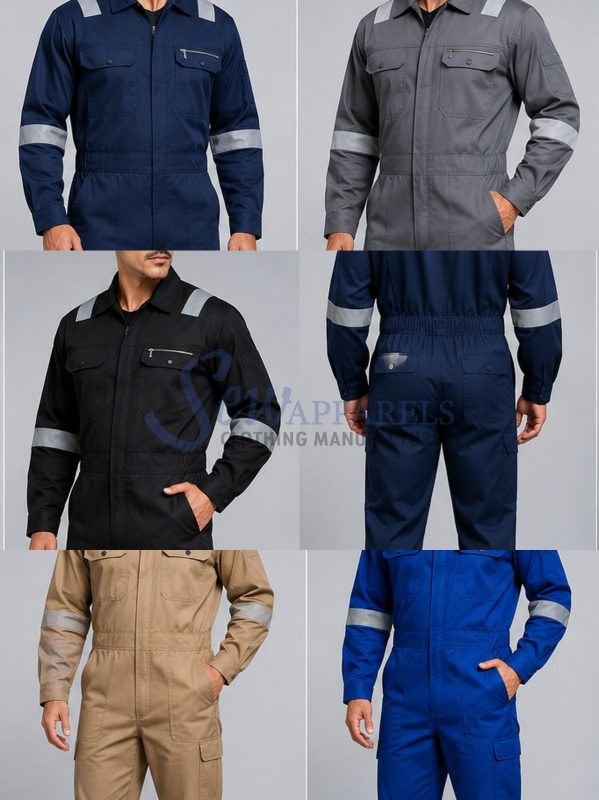
1. Define the coveralls bulk order height size range by the intended wearers
Start with the workforce or customer population actually covered by the order. Record the available size information, how it was collected and which measurements remain unconfirmed. Height is useful, but two people of similar stature can have different torso and leg proportions. Do not allocate every tall wearer to a longer leg simply because a spreadsheet contains only total height.
A coverall torso length size range should identify the body information used for development and the corresponding garment points of measurement. Keep those records separate. Body chest circumference describes the wearer; finished garment chest describes the article with its intended allowance. A label such as regular or tall has no dependable meaning until the supplier’s definitions and measurement method are attached.
ISO 8559-1:2017 provides definitions and principles for body measurements used in clothing development. It is a useful measurement reference, not a prescribed coverall pattern, universal fit allowance or guarantee that a particular size will fit. Agree which definitions the project uses and document the finished garment method separately.
For one piece workwear height sizing, state the intended underlayers, footwear and tasks. A light indoor uniform and a garment worn over seasonal layers may require different fitting decisions. Describe the use case without treating extra fabric as an automatic solution to every restriction.
2. Separate torso proportions from multiple inseam options
The coveralls bulk order height size range should distinguish changes to the body block from changes to the lower leg. Shortening a hem changes leg length; it does not automatically change the shoulder-to-crotch relationship, waist position, pocket location or sleeve length. Likewise, adding length below the knee will not resolve a short torso during overhead reach.
A coveralls multiple inseam assortment may be practical when the upper garment fits and only the leg finish differs. Ask the development team to confirm which measurements change across the proposed lengths. Where the torso also needs adjustment, identify the separate pattern block rather than disguising it as a hem alteration.
For a coveralls short height block order, inspect waist placement, crotch depth, sleeves, knee position and pockets as well as the hem. A shorter person may need a different proportion balance, but that must be demonstrated by the relevant fitting evidence. Avoid assuming that every short wearer has the same body shape.
A coveralls tall body length specification should state the actual pattern revision and affected measurements. Check whether additional length is distributed in the torso, rise, sleeves and legs, or only in selected locations. Within the coveralls bulk order height size range, the naming convention should make that distinction visible to purchasing, inspection and garment issue teams.
Coveralls torso proportion fitting also needs an exception route. Record observations such as pressure at the shoulders when reaching, a low crotch when standing, or waistband displacement when sitting. These observations guide a development review; they are not sufficient on their own to prescribe a fixed number of centimetres.
3. Build a size matrix before requesting the quotation
A workable coveralls bulk order height size range converts approved variants into an order table. Use separate columns for the chest or body-size designation, height block, inseam or finished leg option, pattern revision and quantity. Keep the planned total visible so additions to one cell do not accidentally increase the purchase order.
A coveralls chest and inseam size matrix should not imply that every theoretical combination is available. Mark each cell as required, approved, awaiting development or excluded. An empty cell is ambiguous: it may mean zero demand, missing data or an unavailable variant. Choose explicit labels and resolve the uncertain cells before release.
| Illustrative order field | What the buyer records | What must be confirmed |
|---|---|---|
| Body-size designation | Agreed size code and supporting measurements | Supplier chart and intended allowance |
| Height block | Short, regular or tall project code | Pattern measurements that change |
| Leg option | Approved finished inseam or named option | Measurement method and care state |
| Quantity | Units per approved combination | Totals, minimums and replacement provision |
| Revision | Approved pattern and sample identifier | Same revision on quote and order |
This is an example of record structure, not Sew Apparels’ standard size chart or an availability promise. Populate it with project evidence. The coveralls height block quantity split should reflect confirmed demand or clearly identified estimates. Do not quietly turn an estimated population distribution into an approved allocation.
Include coveralls multiple length quotation inputs such as the number of distinct blocks, quantities per variant, required samples, labelling, packing and agreed care evaluation. Ask the supplier to identify any development charges or minimums separately. A single blended unit price can conceal low-quantity variants that have not actually been accepted.
4. Approve sample coverage through controlled fitting
Use the coveralls bulk order height size range to plan samples, rather than ordering one middle size and extending approval to the entire assortment. Coveralls height size sample coverage should address relevant block differences, size boundaries and known proportion exceptions. Agree the selection with the development team and explain the limits of what the sample set can demonstrate.
A coverall size range fit trial should record the wearer code, relevant measurements, sample identifier, underlayers, footwear and garment condition. Inspect standing appearance, sitting, bending, reaching and the tasks applicable to the intended use. Assess pocket access and fastening operation as well as whether the legs look the expected length.
Keep a consistent observation form. Note where tension appears, whether the crotch or shoulders restrict movement, and whether excess material creates a practical issue. Compare the observations with the garment measurements before changing the pattern. Trial feedback should identify the problem, while the proposed correction remains a development decision requiring another check.
For protective clothing, fit belongs within the wider selection process. CCOHS guidance on designing a PPE programme discusses fit, selection and worker involvement in that Canadian workplace context. Ordinary coveralls do not become certified PPE because a fitting trial is completed; any required protective garment needs its own applicable evidence and competent assessment.
Review coveralls long torso fit exceptions separately from general tall sizing. If a wearer has a longer torso and a regular leg requirement, increasing both dimensions may introduce another problem. Record whether an existing block works, whether development is necessary, or whether the combination cannot be supplied within the current project.
5. Control care state, labels and packing across the assortment
Approve the coveralls bulk order height size range in a stated condition. Measurements taken before care should not be compared directly with post-care garments without identifying the change. Where the intended laundry route is relevant, agree the evaluation and record the resulting dimensions and fit observations. Do not assume all fabrics or constructions respond identically.
The coveralls regular length assortment needs the same traceability as the special lengths. Regular should be an identified block, not the unnamed default into which all unresolved wearers are placed. Specify the size and height information required on the garment label and packing record, using wording that matches the approved order matrix.
Coveralls one piece garment size architecture should remain understandable after the cartons are opened. If two garments share the same chest code but differ in torso length, make the variant distinguishable through the agreed identification system. Confirm how warehouse staff and issue teams will select the correct combination without measuring every garment.
State whether packing separates height blocks, chest sizes or individual issue allocations. Confirm the carton quantities and the reconciliation method. A correct production assortment can still be issued incorrectly if labels use one terminology and the purchase order uses another. Check a packing example before accepting the final arrangement.
6. Release a complete supplier brief and manage later changes
The coveralls bulk order height size range is ready for release when the size matrix, sample approvals, measurement chart, pattern revisions, quantities and exceptions agree. A coveralls size range supplier brief should connect those documents through one revision reference and identify who can authorise changes. Attach unresolved questions rather than allowing assumptions to disappear into an email chain.
For private label coveralls production, include the required label content, brand identification and packing instructions in that same brief. Confirm the scope of any requested support with the supplier. This article does not imply a particular size availability, MOQ, pattern service or delivery commitment; those depend on the agreed project.
Before reorder, compare the issued garments with the original allocation and review returns or reported fit problems. Separate stock shortages from fit failures. If a height block changes, assess the affected measurements, samples, price basis and labels before approving substitution. Retain the earlier revision so replacement garments can be matched accurately.
Compare the coveralls movement allowance design review with the height-block sample findings so torso clearance and leg-length decisions remain separately traceable.
Buyer questions before approval
Can longer legs solve a short torso?
No. Additional leg length does not automatically create torso room. Establish where the restriction occurs and confirm the proposed block adjustment through measurements and another appropriate fitting check.
Should every chest size have three height blocks?
Only when justified by the intended population and confirmed supply scope. The coveralls bulk order height size range should cover demonstrated requirements, while clearly recording combinations still awaiting evidence or supplier acceptance.
What should stay unchanged during a comparison?
Keep the sample revision, garment condition, underlayers and observation method identified. Changing several variables at once makes it difficult to establish why fit improved or worsened.
Use the Coveralls Buying Guides to connect this assortment decision with related garment-development topics. Finalise the coveralls bulk order height size range through an approved matrix and traceable sample evidence before bulk release.