
Coverall women fit block development starts with the intended wearers’ proportions and work requirements, not an assumption that a smaller existing size will fit. A one-piece garment links the shoulders, chest, waist, hips and crotch. Changing one area can affect movement elsewhere, so buyers need a documented block comparison and suitable sample evidence before ordering.
This guide explains a development brief for ordinary uniform coveralls. It does not establish PPE certification or prescribe one body shape for all women. For manufacturing enquiries, use the Coveralls product page with the proposed measurements, fitting scope and quantities when discussing custom coveralls manufacturing.
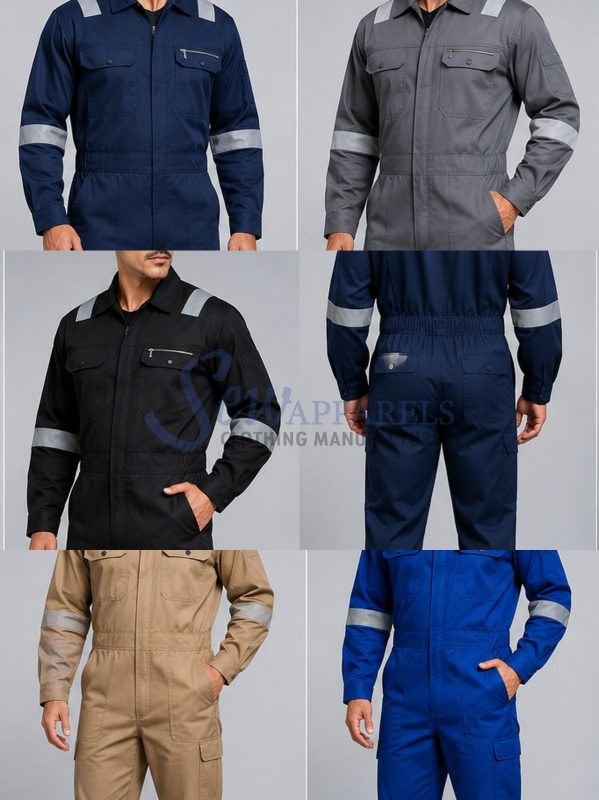
1. Define coverall women fit block development through actual requirements
A women coverall fit block brief should identify the population, tasks, intended underlayers and relevant fit concerns. Describe what the garment must allow the wearer to do, including dressing, sitting, reaching and accessing pockets. Separate appearance preferences from functional restrictions so the development team can evaluate both without confusing them.
The word women identifies the project audience, but it does not supply a complete measurement profile. Individuals differ in stature, torso length, chest, waist, hips and other proportions. Avoid treating one participant, one average or a general gender label as evidence that every intended wearer will fit the same block.
ISO 8559-1:2017 describes body measurement definitions and principles relevant to clothing development. Use agreed measurement definitions when gathering the information. The standard does not prescribe a coverall pattern, a finished garment allowance or a specific women’s size chart.
A coverall body proportion review should connect the available body information with the proposed garment chart. Keep body measurements and finished garment measurements distinct. Record the method, units and garment condition for each point so a chest circumference is not accidentally compared with a flat garment width.
2. Compare blocks without assuming that downsizing solves fit
Coverall women fit block development needs a clear description of the baseline and proposed alternative. If the existing block is considered, identify its intended measurement profile and previous sample evidence. A unisex name does not demonstrate that the block works for every body proportion, and a women’s name does not prove that the alternative fits.
Coverall unisex block limitations should be recorded as observed issues. For example, a wearer may need more hip room while the shoulders are already loose, or may experience torso restriction despite adequate leg length. These are reasons to investigate the relationship between dimensions rather than increase or decrease every measurement together.
Review the coverall hip chest relationship using the population information, finished measurements and fitting results. A pattern developer may propose different shaping, allowance distribution or length balance. The buyer should request a documented proposal rather than prescribing an unsupported universal ratio.
In its Canadian workplace context, CCOHS guidance on body type and gender considerations explains why simply scaling PPE may fail to accommodate different proportions and encourages individual input. That principle supports careful fit assessment; it does not certify ordinary workwear or establish a universal design for women.
A coverall fit block comparison should state which garment measurements change and why. If a new block changes hip width, torso length and sleeve position together, record those changes so the next trial can be interpreted. For coverall women fit block development, keep the baseline sample available until the comparison is resolved.
3. Plan a sample range that tests relevant proportions
The coverall women fit block development sample plan should represent the important differences in the intended order. A female work coverall sample range may need more than one body size or height option. Agree the selection with the development team and explain which population requirements it covers and which remain untested.
Women coverall size range development should distinguish body-size progression from height and torso variants. A shorter leg does not automatically create a shorter torso, and a larger chest does not necessarily require the same proportional change at the hips. Identify whether each variation is a graded size, a separate block or an alteration within an approved scope.
A coverall torso shape sample should carry the pattern revision, material identity and trim specification. Record any prototype substitutions. If the trial sample uses a different fabric stretch or a temporary fastening, its behaviour may not establish the fit of the final construction.
For women uniform coverall fitting, select participants respectfully and explain the purpose of the review. Use participant codes in development records where practical. Gather only the measurements and feedback needed for the decision, provide an appropriate fitting environment and avoid unnecessary personal detail in supplier documents.
Do not force a participant into a predefined label when another approved fit option suits them better. The project can use neutral block codes supported by clear measurement guidance. This allows issue teams to choose the appropriate garment while keeping the development records traceable.
4. Observe movement, access and wearer feedback separately
Assess coverall women fit block development with the same planned conditions across comparison samples. Identify underlayers, footwear, fastening state and garment care condition. Suitable controlled movements can include standing, sitting, bending and reaching where relevant to the intended work. Do not conduct a fitting exercise in a hazardous operating area.
A coverall female fit trial should check shoulder and chest movement, torso reach, waist position, hip and seat room, crotch behaviour and sleeve or leg length. Inspect pocket access and dressing as separate tasks. A garment can look acceptable while standing and still restrict a seated or overhead activity.
Coverall wearer fit feedback should include the wearer’s own description and the observer’s findings, clearly separated. If someone reports tightness, identify the location and task without dismissing the concern because the flat measurement is within tolerance. Conversely, a general preference for a different silhouette is not automatically a manufacturing defect.
| Review area | Evidence to record | Question for development |
|---|---|---|
| Chest and shoulders | Standing fit and reach observations | Is allowance distributed appropriately? |
| Waist, hips and seat | Position and seated or bending behaviour | Does the block suit the intended proportions? |
| Torso and crotch | Restriction, excess length or displacement | Is vertical balance correct? |
| Practical access | Dressing, fastening and pocket reach | Are functional features usable? |
| Sample limitations | Untested sizes, conditions or substitutions | What evidence remains necessary? |
This is a suggested review structure, not a certified test method. A coverall proportion complaint log should identify the sample, task, observation and proposed response. Keep the original complaint even after a correction, so the next sample can be checked against the same issue.
Coverall block measurement differences should be evaluated alongside the observations. Do not approve a change solely because a measurement moved in the expected direction. Confirm that the revised sample resolves the identified problem without creating another restriction or excessive volume elsewhere.
5. Define approval, exceptions and block allocation
Approve coverall women fit block development against agreed requirements and the evidence actually available. Record which sample revisions and size combinations were accepted. Where the review covers only selected sizes, state that limit rather than describing the complete order range as fully trialled.
A coverall separate block allocation should convert the accepted options into a quantity matrix. Include the block code, body-size designation, height or length option, revision and units. Verify that the total matches the intended order and that unresolved wearer requirements are not hidden in a default size.
Coverall fit choice guidance should explain how the approved options are selected. Connect the body-size information with the relevant garment chart, fitting results and exception route. Avoid promising that a label alone guarantees fit; the issue team should know when further assessment is needed.
If one participant’s proportions are not covered, record the proposed action. It may involve another sample, a confirmed alteration or a different approved option. For protective clothing, any alteration needs the relevant competent review and evidence; ordinary fitting advice must not authorise changes that could affect protective performance.
Include care condition in the approval. A sample assessed before washing may not establish the dimensions or comfort after the intended care route. Agree any required evaluation and document the result. This guide does not prescribe a laundering recipe or imply that all fabrics shrink in the same way.
6. Send a complete supplier brief and control the production revision
A release-ready coverall women fit block development brief connects the measurement chart, block drawing, sample identification, trial findings and quantity allocation. Identify the person authorised to accept changes and list unresolved items explicitly. A revised pattern should not reach production simply because an email describes it as better.
For private label coveralls production, align the block codes with garment labels, packing and the approved order matrix. Confirm which development and manufacturing requirements the supplier accepts. The article does not establish Sew Apparels’ size availability, minimum order, fitting service or lead time; those require project-specific agreement.
During production review, compare the actual material, pattern and trim with the accepted reference. A fabric substitution or another fastening can affect movement or dressing, even if the garment designation remains unchanged. Assess the effect and retain the approval record before carrying the earlier fit decision forward.
After issue, separate stock allocation problems from proportion complaints. Repeated exchanges may indicate an unclear selection guide, an unsuitable block or inaccurate quantities. Review the evidence before changing the entire range. Preserve the earlier revision so replacements and future orders remain identifiable.
Use the coveralls bulk order height size range review to keep the approved block, torso proportions and length allocation explicit in the purchasing matrix.
Questions before bulk approval
Does every woman require the same separate block?
No. The intended population includes different proportions and preferences. Evaluate fit through agreed measurements and sample evidence, and make suitable approved options understandable to the wearer and issue team.
Can one middle-size sample approve the whole range?
It provides evidence for that sample and trial scope. Coverall women fit block development should use justified sample coverage and clearly state the remaining limits.
What is the most useful information in a fit complaint?
The sample revision, affected area, task and observed behaviour are useful. A request to simply make everything smaller does not explain which proportions or movement requirements need correction.
Use the Coveralls Buying Guides for related sizing and construction decisions. Complete coverall women fit block development through traceable comparisons, wearer input and controlled approval before committing to the bulk assortment.