
Performance Jackets Buying Guides
Performance Jackets Buying Guides help activewear brands turn a jacket concept into a testable production brief. A training layer has to balance movement, weather exposure, ventilation, secure storage and branding without unsupported performance claims. This library covers six practical decisions: ventilation panels, zip-pocket integration, pack size costing, replacement zipper parts, cuff and glove compatibility, and hood field of view. Each article addresses one problem in detail. This page connects them into a coherent sample-approval process. Start with the wearer, activity and intended climate, then choose a silhouette and fabric system that can be evaluated on the actual sample.
A lightweight running jacket, warm-up layer and stretch training jacket need different construction decisions. Hood shape, sleeve pitch, lining, zipper, reflective detail and pocket load affect movement and comfort. Use the linked articles alongside the original Performance Jackets manufacturing page for private-label development, sampling and production enquiries. Compare pouch components, packing labour, carton cube, freight assumptions and storage recovery separately from garment function. Keep photographs, dimensions, fabric data and approval notes in one controlled specification so later colorways and component changes remain traceable.
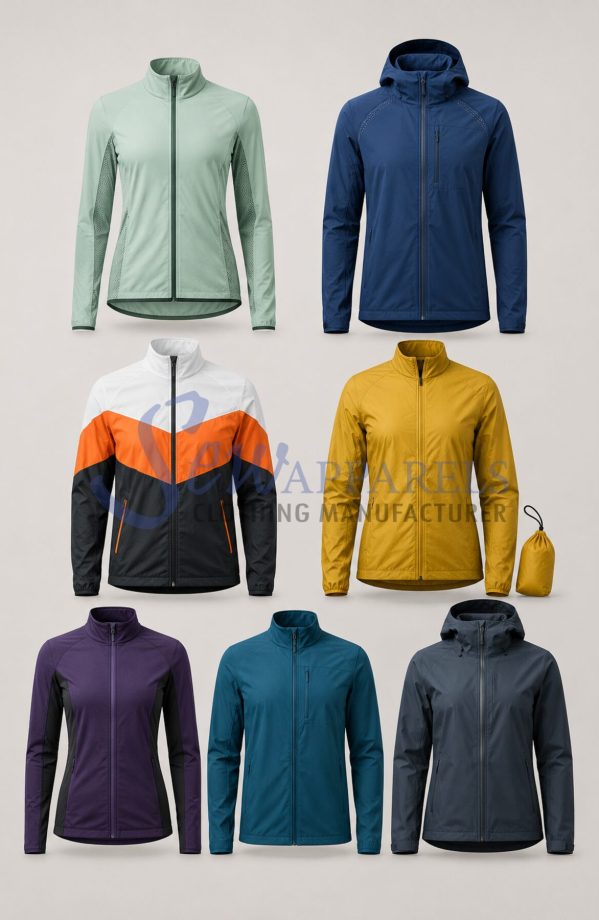
Performance jackets ventilation panel placement
Map heat and moisture zones against weather exposure, backpack contact and seam positions. Review underarm openings, back vents and mesh inserts on a moving wearer before approving a bulk pattern.
Read the ventilation guidePerformance jacket zip pocket integration
Set pocket angle, zipper support, bag shape and lining attachment so stored items stay secure without distorting the shell. Test access and load in realistic training positions.
Read the zip-pocket guidePerformance Jacket Packing: Pack Size Costing
Compare pouch components, packing labour, carton cube, freight assumptions and storage recovery before approving the jacket packing brief.
Read the pack size costing guidePerformance Jacket Zips: Replacement Parts Planning
Confirm zipper component identity, repair feasibility, supplier availability, spare stock and service budget before purchasing replacement parts.
Read the replacement zip parts guidePerformance Jacket Cuffs: Glove Compatibility
Review the actual jacket and glove pairing for layer order, opening access, gloved adjustment, wrist overlap and size compatibility before approval.
Read the cuff glove compatibility guidePerformance Jacket Hoods: Field of View
Review head turns, forward lean, brim position, eyewear, collar interaction and adjustment on the actual sample before approving the hood fit.
Read the hood field of view guideCustom performance jacket manufacturing
See the original product page for shell and stretch-jacket options, private-label branding, development steps and a manufacturing enquiry. Bring the approved ventilation and pocket brief.
Explore jacket manufacturingPerformance Jackets Buying Guides: Define the Use Case
Use Performance Jackets Buying Guides to define the activity before selecting a panel map. A runner producing sustained heat may need a different airflow route from an athlete wearing a jacket between sessions. Describe the intended climate, weather exposure, layering system and carrying equipment. Decide whether the jacket serves warm-up, training, commuting or mixed use. This gives the pattern and material teams a scenario for sample review; it does not promise measured breathability. Record the fit preference, intended base layer and whether the jacket must work with a hood or pack.
Fit is part of performance. Check shoulder reach, elbow bend, torso rotation and hem position in motion, with the actual layer worn underneath. A static front photograph will not reveal whether a back vent closes under a backpack or whether a pocket opening becomes awkward while running. Capture front, side and back views, including the garment after several minutes of wear. Note where fabric pools, pulls or exposes the wearer. Compare at least two representative sizes rather than assuming the base-size solution scales perfectly. These observations should feed the pattern revision and not remain informal comments.
Map ventilation without weakening weather protection
Ventilation is a placement problem as well as a fabric problem. Underarm mesh can release heat while staying relatively shielded from direct rain, whereas a broad back panel may admit air but get covered by a pack. Determine whether each opening is permanent, concealed under an overlap or controlled by a zipper. Check seam allowance, stretch direction and edge finishing around the opening. A vent that looks attractive when flat may gape or collapse once the wearer bends. The linked ventilation guide gives a focused method for comparing panel locations and documenting the chosen geometry.
When comparing fabric and finished-garment behavior, specify the method rather than writing “breathable” without a test basis. ISO 6330:2021 describes domestic washing and drying procedures for textile testing; it can inform consistent care-cycle checks on a sample, but it does not certify the jacket or set a universal performance threshold. Put the actual material specification, vent dimensions, construction drawing and wash-care route into the technical pack. If a supplier proposes a new mesh or coating, repeat the relevant wearer and after-care checks before final approval.
Build a secure pocket into the shell
Performance Jackets Buying Guides treat a zip pocket as part of the shell. Define the intended phone, key or card and its contact route. Set the opening for practical access, including any glove use, then specify its angle, length, zipper support, reinforcement and bag attachment. Adding a pocket after silhouette approval can distort a lightweight shell. Review the sample with its intended contents and record any movement or pressure. The linked zip-pocket article covers construction checks; the cuff and glove guide evaluates the actual layer pairing rather than assuming every glove fits.
Test pocket access and retention with the intended load, not only an empty pocket on a hanger. Walk, jog, bend and raise the arms; observe whether the contents swing, press into the body or strain a seam. Compare the zipped silhouette from the outside with the pocket full and empty. If the jacket is reversible or has a bonded interior, confirm that the bag and tape do not interfere with the other side. Record where the pocket opening begins relative to a side seam or panel line, then check that location across the size range. The approved sample should remain the visual reference for bulk inspection.
Approve materials, care and finish together
Review shell fabric, stretch inserts, mesh, lining, zippers and trims together. Request material specifications and evidence for intended claims. ISO 12947-2:2016 addresses Martindale specimen breakdown for applicable fabrics; coated and laminated fabrics are excluded. It can inform a scoped laboratory discussion, but it does not prove that a Sew Apparels jacket achieved a rating. Identify the method, specimen and required report before approval. A material swatch cannot show how assembled panels behave after care, how a zipper changes drape or how the hood affects the wearer.
Before bulk release, compare a pre-production sample with the signed technical pack. Confirm color, fabric hand, stitch quality, panel placement, pocket function, branding position and care label wording. After the planned wash or care trial, recheck measurements, seam behavior, vent shape and zip function. If a material or trim is substituted, document it and repeat the affected checks. Keep comments specific: “pocket opening shifts 12 mm toward side seam on size L” is actionable; “pocket feels wrong” is not. Photograph the final standard in consistent light and keep a physical sample where possible.
Low MOQ performance jacket planning
Performance Jackets Buying Guides support low MOQ planning through a focused launch brief. The original product page lists 500 pieces per design and color; confirm current feasibility for the proposed materials, trim package and size mix. State quantity, fabric source, colorways and delivery needs in the enquiry. Sampling and production timing depend on availability and approval. Begin with one silhouette and a clear use case before adding variants. Record ventilation, pocket, hood, cuff and packing decisions so the manufacturing team can assess the requested version without assuming that every configuration has the same commercial terms.
Development support for startup activewear brands
Startup brands can use Performance Jackets Buying Guides to prepare a focused manufacturing enquiry while their technical pack develops. Share the target customer, activity, style reference and retail positioning. Identify open choices for shell weight, stretch zones, hood, zipper, pocket layout and logo application. Ask the team to confirm available development support and current terms. Keep sample feedback in one revision log. Performance language must remain evidence-based: waterproof, breathability or abrasion claims need the relevant method and result. A supplier conversation or attractive sample does not establish tested performance.
Turn the jacket decision into a production brief
Bring fit references, measurements, drawings, material preferences, ventilation-panel maps, pocket and hood details, zipper choices, branding files, care expectations, size range and quantity. Attach annotated photographs showing approvals and open revisions. Performance Jackets Buying Guides connect these decisions with cuff compatibility, replacement-part planning and packing scenarios. Use the original product page for manufacturing options and a quotation discussion. Keep the final specification tied to the approved sample and confirmed materials; changes to trims, packing or construction need a review of the affected evidence.
Explore Performance Jackets manufacturing