
Performance jacket pack size costing connects a packable garment feature with the actual cost of presenting, handling and shipping the finished order. A jacket that fits a small pouch may still need a larger retail pack or protective export carton. Buyers should compare complete packing scenarios rather than assuming that the smallest consumer pouch produces the lowest total cost.
The packable jacket retail packing cost brief needs a representative jacket, size assortment, proposed pouch, packing method and shipment basis. Separate component cost, packing labour, carton use and freight assumptions. Keep the garment’s appearance and recovery after storage in the decision. This guide uses an illustrative calculation to explain the approach; it does not quote Sew Apparels prices or a carrier rate.
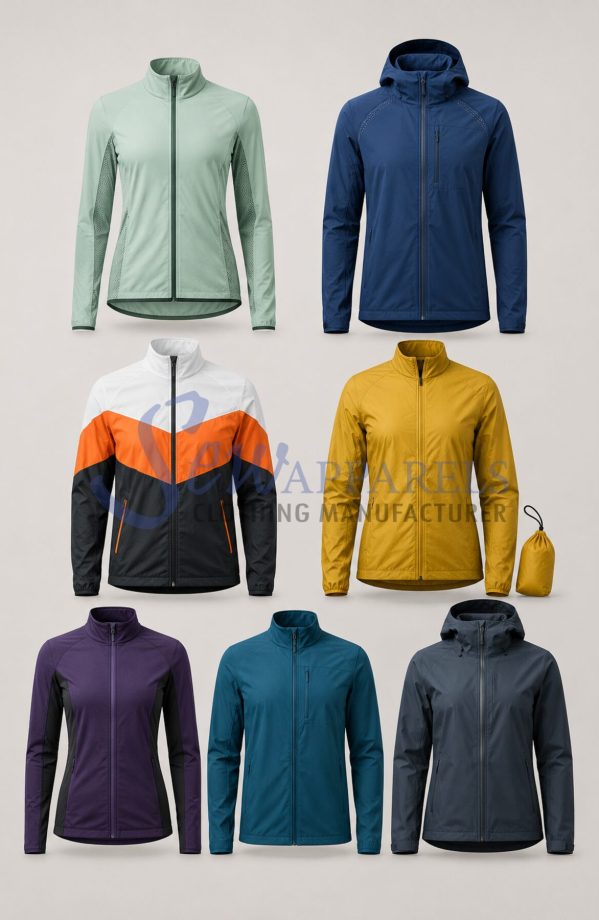
Why performance jacket pack size costing starts with the finished sample
A sketch of a pouch cannot establish the packed volume of a completed jacket. Fabric, lining, trims, pockets, closures and garment size affect how the product packs. The sample must represent the proposed construction and folding route. Record whether the jacket uses a separate pouch, an integrated self-pack pocket or ordinary retail folding.
Packable sports jacket pouch volume is a consumer-use measure, while export carton cube describes the outside shipping package. Those values serve different purposes. A pouch’s nominal dimensions do not show the number of finished units that fit a carton without damaging the presentation or creating bulges. Measure the actual proposed arrangement before approving the costing assumptions.
1. Define the packing options and size assortment
Start performance jacket pack size costing with a packing scenario comparison. Option A might use a separate pouch; Option B might use an integrated self-pack pocket; Option C might ship folded for retail with a pouch included but not filled. These are example scenarios, not automatically available product options. Ask the manufacturer to confirm the proposed construction and process.
Record finished pouch dimensions after the jacket is packed, including closures or projections relevant to handling. Packed size by garment size should cover the intended assortment. A pouch that works for the smallest sample may not suit the largest size or a different lined version. Verify the packing route and practical access rather than forcing every size into an unproven common pouch.
Identify what the customer receives. The pouch may need branding, a closure or other agreed details. Retail presentation may require additional folding, a band, a bag or information material. Specify those components so the quotation does not compare a bare garment in one scenario with a complete retail presentation in another.
2. Separate pouch components from construction charges
For performance jacket pack size costing, request the added pouch component charge separately where the quotation permits. Identify pouch material, dimensions, closure, branding and attachment. A separate pouch can introduce cutting, sewing and packing operations; a self-pack construction can change the jacket pocket, opening or closure design. Review zip pocket integration when that pocket also serves as the pack. Neither should be treated as cost-free simply because the garment is described as packable.
Self pack closure cost should be tied to the approved specification. A closure substituted during development can change both the component price and the ease of packing. Record any construction change, sampling charge or development work separately from the recurring per-unit pack cost. Ask which costs are already included in the garment quotation to avoid adding them twice.
Use the same quotation basis across options: order quantity, size mix, colour allocation and specification version. If one option uses a different fabric or adds jacket features, identify those differences. The comparison can evaluate a complete redesign, but it should not attribute every price change to the pouch alone.
3. Quote the packing labour and process
A practical performance jacket pack size costing review includes the packing labour quotation. The operations may involve folding, inserting into a pouch, closing it, adding retail materials and loading cartons. Ask the sample or packing team to demonstrate the approved sequence on a representative garment. A difficult insertion can increase handling or affect the product’s appearance.
Record the required presentation and inspection steps. If the jacket ships folded with an empty pouch, that route differs from a jacket shipped compressed inside its pouch. The quotation should name the route and any included preparation. Do not use a guessed packing time as a factory productivity commitment; obtain the supplier’s quotation basis and confirm the final method.
Consider the practical consequences for the buyer. A distributor may need to unpack and display the jacket before sale, while an online retailer may ship the consumer pack directly. Additional handling at the destination belongs in the scenario comparison if it is relevant. Keep those downstream assumptions separate from the manufacturer’s confirmed charges.
4. Calculate carton cube from a real arrangement
Use performance jacket pack size costing to develop a performance jacket carton cube estimate from a loaded packing sample. Record carton dimensions, unit count, gross weight, size mix and any protective materials. Distinguish the internal space available for arranging units from the outside dimensions used to describe the shipping package. Do not divide carton volume by pouch volume and assume that the theoretical answer fits.
Carton utilisation calculation needs a physical arrangement check. Pouches may have irregular shapes, closure projections or spaces between units. A carton can also change shape when overloaded. Confirm that the agreed count fits with an acceptable presentation and closure, rather than compressing it solely to achieve an attractive volume estimate.
For an illustrative example, an outside carton measuring 60 × 40 × 30 centimetres has a geometric volume of 0.072 cubic metres. If the confirmed sample arrangement contains 24 jackets, the outside cube per jacket is 0.003 cubic metres. Those numbers are hypothetical geometry, not an approved pack count. Include the actual carton and garment evidence before using a calculation in a quote.
5. Keep consumer volume separate from freight rating
The freight stage of performance jacket pack size costing requires the intended service and current quotation. Consumer volume versus freight can differ because retail materials, cartons, gross weight and carrier rules affect the billable shipment. A reduction in pouch size may have little effect if the same carton and rating weight remain in use.
DHL’s volumetric weight guidance explains how package volume can affect express rating and that the greater of actual and volumetric weight generally matters. Use the relevant service’s current divisor, units and quotation conditions. A regional guide is explanatory; it is not a confirmed Bangladesh export rate or a promise of savings on a particular order.
FedEx’s dimensional weight explanation likewise shows why package dimensions can matter to shipping charges. Confirm the actual carrier, service, route, rounding and applicable conditions before estimating the charge. Do not transfer a U.S. example or express calculation to another mode. Ocean, air cargo and courier quotations may have different rating bases, so obtain the relevant quote instead of mixing them.
6. Review recovery and retail presentation before approval
A performance jacket compressed storage recovery review should remain part of performance jacket pack size costing as a product condition check. Agree the proposed storage arrangement and duration with the buyer and sample team, then examine the unpacked jacket under a consistent review. Record creasing, shape, trims, closure operation and any affected finish. This is a development observation, not evidence of indefinite storage performance.
A retail presentation tradeoff can outweigh a small packing saving. If the product needs extra unpacking or preparation to look acceptable, include that assumption in the decision. Avoid promising that all marks will disappear without evidence. The trial should use the actual construction and proposed packing route; a result from an unlined sample cannot automatically approve a different jacket version.
Close the total pack cost assumptions with the agreed presentation, accepted carton arrangement, supplier charges and freight basis. Identify missing items explicitly. A low estimate with unresolved components or unverified recovery is not a complete costing comparison. Approval should cover the specification and packing method together.
A clear structure for the quotation comparison
For performance jacket pack size costing, use one comparison record with columns for garment version, size mix, pouch or self-pack details, recurring component cost, packing labour, retail materials, carton count and gross weight. Add the freight quotation reference and any destination handling assumption. Keep one-time development charges outside the recurring total unless the buyer intentionally allocates them.
The recurring comparison can be expressed as garment cost plus confirmed added pack components, labour, retail materials and an allocated carton or freight cost. State which items are included in the base quotation. If the garment price already covers packing labour, do not add it again. Use the same currency, quantity and delivery basis before comparing totals.
A scenario can be preferred for presentation even if it is not the smallest pack. Another may be useful for the intended consumer experience but require more labour. Record why the buyer selects the option rather than treating volume as the only decision. Avoid unsupported claims of the cheapest packing system, guaranteed freight reductions or fixed savings percentages.
Keep the approved packing reference identifiable at production handover. Record the pouch version, carton specification and packing sequence alongside photographs of the accepted sample. If a supplier proposes a different bag, closure or carton, review whether the earlier count and presentation still apply. A carton substitution can change external dimensions even when the number of jackets is unchanged. Confirm the revised physical arrangement and quotation assumptions before treating the previous estimate as current. This control helps the buyer distinguish a genuine packing improvement from a change that only moves costs elsewhere.
Frequently asked sourcing questions
Does a smaller pouch always reduce shipping cost?
No. The shipment’s final package, actual weight, rating conditions and route determine the relevant charge. Check the carton arrangement and current freight quote. A smaller consumer pack is only one input.
Should every jacket size use the same pouch?
That depends on the verified fit and packing route across the size range. A common pouch can simplify the specification, but it needs actual sample confirmation. Do not assume that the smallest size represents the full assortment.
Can compressed storage be approved from one quick unpacking?
A quick demonstration shows immediate handling only. Agree the storage conditions and review relevant to the proposed route. Record the result’s limits and repeat the assessment if the garment or pack construction changes materially.
Prepare the manufacturing enquiry with the packing evidence
For custom performance jacket manufacturing, send the garment specification, size assortment, packing samples and scenario record together. For private label performance jacket production, retain the approved pack method for reorders and review changes to components or shipment conditions. Ask for current sampling options and quotation terms rather than assuming that a special pouch or recovery trial is included.
Use the custom performance jackets manufacturing page for the product enquiry. Consult the Performance Jackets Buying Guides for related development decisions. Keep performance jacket pack size costing based on the actual sample, confirmed charges and applicable freight quotation before releasing the order brief.