
Sports Leggings Buying Guides
Sports Leggings Buying Guides connect fit development with practical production decisions. This library covers waistband slip prevention, gusset and seam mapping, extended-size fabric surcharge evidence, colour transfer to equipment, inner-thigh pilling and squat opacity. Each article owns one focused topic; use its checks to build a documented approval brief rather than assuming a fabric name proves performance. Start with the target wearer, activity and coverage expectation. Keep the approved pattern, fabric references and movement observations together so a colour change or reorder can follow the agreed standard.
A yoga legging, running tight and gym-training legging may share a silhouette but experience different loads. Squats, lunges, jumping, seated movement and a phone in a side pocket can each expose a different weakness. Identify the waistband level, rise, desired compression, fabric stretch direction and intended pocket contents before approving the first sample. The guide cards below lead to detailed construction examples, buyer checks and size-cost approval evidence. The original Sports Leggings product page remains the route for custom manufacturing, private-label options and commercial discussion. Keep the approved pattern, fabric, seam map and movement photographs together so a color change or reorder can follow the same standard.
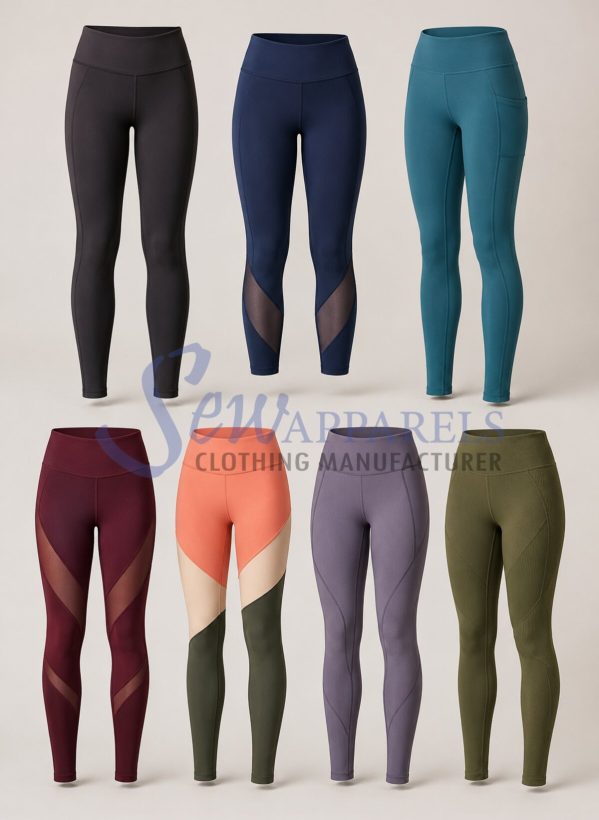
Sports leggings waistband slip prevention
Check waist contour, elastic placement, rise balance and pocket load together. The technical guide turns a slipping band into measurable pattern and wearer-approval controls.
Read the waistband guideSports leggings gusset and seam mapping
Dimension gusset length, route inner-thigh seams and align stretch direction with movement. Review annotated geometry and the full legging on a wearer.
Read the gusset guideSports Leggings Extended Sizes: Fabric Surcharge Review
Compare graded pattern consumption, cutting layout evidence, size ratios and blended or size-specific quotations before approving an extended-size charge.
Read the extended size fabric surcharge guideSports Leggings Colour Transfer: Equipment Contact Checks
Review rubbing and perspiration evidence, production shade identity and controlled surface-contact observations before approving equipment staining claims.
Read the colour transfer to equipment guideSports Leggings Inner Thigh Pilling: Wear Appearance Checks
Distinguish pills, fuzzing and yarn damage, compare suitable lab evidence and document fit, care and inner-thigh appearance before sample approval.
Read the inner thigh pilling guideSports Leggings Squat Coverage: Opacity Review Protocol
Define controlled extension, lighting, size and colour coverage checks, after-care conditions and qualified claims while preserving fit-model privacy.
Read the squat proof opacity protocol guideCustom sports leggings manufacturing
Review the original product page for high-waisted styles, four-way stretch materials, pocket and branding options, private-label packing and a manufacturing enquiry.
Explore leggings manufacturingSet wearer, activity and coverage requirements
Sports Leggings Buying Guides start with the target body profile and the level at which the waistband should sit. A high waist can still slip when the rise is too short, the contour is wrong or the body fabric grows during wear. State whether the leggings are designed for yoga, running, gym training, team conditioning or everyday use. Each activity changes how the fabric stretches and where the garment receives load. Mark required coverage in a squat and when seated, then write clear failure criteria such as back-waist drop, top-edge rolling, inner-thigh rubbing or crotch pull. Keep body measurements separate from finished garment measurements and pattern dimensions.
Use Sports Leggings Buying Guides to plan representative fitting trials. Ask testers to bend, lunge, squat, jog and sit using the intended pocket load. Include relevant sizes across the range, recording waistband position, crotch pull, seam irritation and coverage under consistent lighting. Obtain consent before taking fitting photographs, limit access to the development team and agree how the records will be retained. Photos support controlled review; testers do not need to publish them. Keep body measurements, garment measurements and revision notes separate so an observed issue leads to a specific pattern or material decision.
Control the complete waistband system
Waistband slip prevention depends on contour, elastic location, negative ease, fabric recovery and rise balance. Tightening the top edge alone can create pressure or rolling without solving the cause. Dimension the top edge, seam line and lower edge at front, side and back, and mark the band’s notch positions. Specify any elastic by width, cut length, overlap, placement and attachment stitch. Show whether it is enclosed, applied or bonded. The linked waistband article gives an annotated map and decision table for comparing those routes with the intended body shape and activity.
Check the band during repeated movement and after the planned care cycle. Observe front dig-in, back-waist drop, folding, top-edge growth and pocket drag. Use an agreed method suited to the actual material: ASTM D2594/D2594M evaluates stretch and growth of low-power knitted fabrics. It is not automatically suitable for every high-power compression fabric. Sports Leggings Buying Guides use references to frame questions, not to claim a garment passed. Specify the tested material, conditioning, method, acceptance limits and report responsibility before making a quantified recovery claim.
Map the gusset and seams to real movement
A gusset can reduce crotch concentration only when its length, width, endpoints and surrounding seams match the pattern and fabric stretch. Dimension the finished seam line as well as the cut pattern, show seam allowances and notch positions, and identify whether the piece is diamond-shaped, elongated or integrated into a larger panel. Trace inner-thigh seam routes from the gusset to the leg opening. An apparently smooth flat sample may still twist around a moving thigh or create a ridge where allowances meet. The gusset article in Sports Leggings Buying Guides includes an annotated map for checking those relationships instead of merely asking a factory to “add a gusset.”
Mark each panel’s grain and greatest stretch direction on the pattern and cutting plan. If a four-way stretch fabric is rotated, the available extension, recovery and visual surface can change. Check seam type, stitch, thread, needle, density and allowance treatment against the actual material. Review both inside and outside views, particularly the junction where multiple seams meet. The wearer should be able to squat and lunge without a restrictive pull, uncomfortable ridge or seam rotation. Capture the approved result with measurements and movement photographs, then use that record to judge the next size and the first production sample.
Review fabric, opacity and care together
Select fabric around the required stretch, recovery, hand, weight and coverage. A fabric name or fibre percentage cannot guarantee opacity or comfort in a deep squat. Test the actual production color and fabric under relevant light, on a wearer and after the agreed care route. Record whether pocket bags, seam allowances or labels show through at high-stretch areas. ISO 8559-1:2017 describes anthropometric measurement definitions useful for consistent size development. It does not define a universal sports-legging fit or approve the finished garment; apply the buyer’s own measurement, coverage and performance criteria.
Inspect the complete legging after a repeatable wash or care trial. Recheck finished waist, hip, thigh and inseam measurements; compare waistband recovery, seam appearance, panel alignment and color. If the range includes multiple colorways, do not assume the darkest sample predicts opacity in the lightest shade. Decoration and heat transfers should be trialed on the intended fabric because application conditions may alter stretch or hand. Preserve the final material code, shade standard, artwork and care label with the sealed sample. When a substitute fabric or elastic is proposed, repeat the affected fit and recovery checks rather than treating visual similarity as equivalent.
Low MOQ sports leggings planning
Sports Leggings Buying Guides separate public MOQ information from project-specific approval. The original Sports Leggings product page lists a minimum order quantity of 500 pieces per design and color. Confirm the current terms for the chosen fabric, colorway, size ratio and trims with the manufacturing team. A startup can keep its first collection manageable by approving one waistband architecture, gusset map and core fit before adding pockets or more cuts. Send the intended quantities by design and color, fabric reference, target sizes, branding and delivery window. The public page lists 10–15 days for sampling and typically 15–30 days production at MOQ after pre-production approval, subject to quantity and specification. Those timings need confirmation for the actual project.
Development support for startup activewear brands
A startup brand can bring a fit reference, sketch, sample fabric and target wearer even if the technical pack is still being prepared. Identify the decisions that need testing: waistband contour, elastic, rise, gusset geometry, seam route, pocket placement and opacity. Approve them in a planned sequence, recording each revision with body measurements, garment measurements and movement photographs. Avoid changing fabric and pattern at the same time unless the reason is documented, because it becomes hard to diagnose improvement. A clear first sample and signed pre-production standard help a young brand compare later colorways and reorder proposals without losing the original fit intent.
Turn the legging decisions into a production brief
Use Sports Leggings Buying Guides to assemble a sketch or physical reference, target measurements, intended activity, body fabric, elastic, waistband cross-section, rise, gusset pattern, seam map, pocket load, artwork, size ratio and quantities. Mark approved and unresolved items separately. Follow the six technical articles for waistband stability, gusset geometry, extended-size costing, equipment colour transfer, inner-thigh pilling and squat opacity. Then use the original Sports Leggings manufacturing page for sampling and quotation discussions. Confirm materials and commercial feasibility before promising performance or delivery. This guide organises decisions; each linked article provides its own detailed checks.
Explore Sports Leggings manufacturing