
Kids cap lead testing component map is a buyer-side control for connecting every relevant cap material, finish, supplier and test report before a children’s product is released for the United States. A finished cap can combine shell fabric, sweatband, thread, printed ink, embroidery backing, snaps, buckles, eyelets, labels and coated decorative hardware. If a report names only “cap” or “metal accessory,” the brand may be unable to prove that the tested specimen matches the actual component used in production.
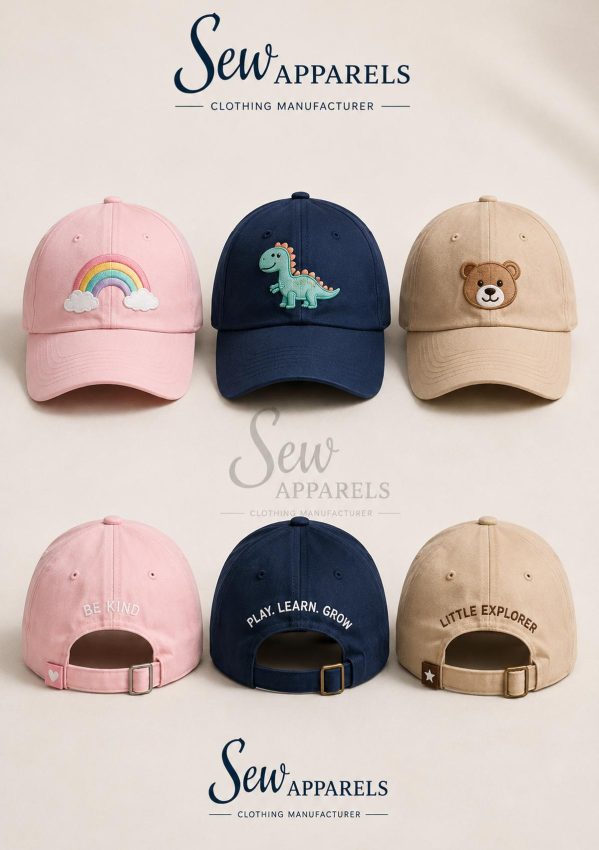
This guide is for product development and sourcing teams, not a substitute for legal advice or a laboratory’s scope decision. The responsible US domestic manufacturer or importer must determine the applicable requirements and certification route. For custom kids cap manufacturing, the practical task is to document age, intended market, accessibility, material identity, laboratory evidence and change control as one connected file.
Kids Cap Lead Testing Component Map: 6 Critical Checks
1. Confirm the Intended Age and US Product Scope
Start the kids cap lead testing component map with the product definition. Record the intended age range, labelled size, design features, marketing presentation and destination market. CPSC guidance treats a children’s product as one designed or intended primarily for children 12 years of age or younger, and the lead review depends on the product and its accessible components. A kids headwear lead requirement scope note should identify the federal citations being considered and who made the scope decision.
Do not use the word “kids” as the entire compliance analysis. A US kids cap material testing plan should name the finished style, season, colourway, supplier set and construction revision. It should also distinguish total lead content in accessible substrates from lead in paint and similar surface coatings. The CPSC’s current total lead content guidance states that accessible components of children’s products are subject to the 100 ppm total-lead limit, while paint and similar surface coatings are subject to a separate 90 ppm limit. The official source and the competent laboratory should be checked again when the test plan is issued.
Assign a compliance owner and a version number to the component map. The owner should record the intended certification party, because an overseas factory’s file does not automatically become the importer’s Children’s Product Certificate. A children cap test report review is useful only when the reviewer can connect the report, applicable rule and responsible finished-product style.
2. Map Accessible Fabric, Coating and Hardware Components
Create a line for every component that may be present on the finished cap. The childrens cap accessible component map should cover outer shell panels, visor face and underside, internal board or insert where relevant, sweatband, seam tape, lining, thread, embroidery and backing, printed decoration, heat-transfer layers, woven and printed labels, adjustment straps, snaps, buckles, eyelets, buttons, badges and packaging that forms part of the product. Give each line a unique code rather than relying on a generic description.
For each line, record material type, colour, finish, dimensions, supplier, supplier part number, lot or batch, cap location and accessibility assessment. A cap compliance material register includes photographs and an approved sample reference. The photograph should show both the component and its position on the cap. This reduces the risk of assigning a report for one black plastic snap to another visually similar snap from a different source.
Keep substrate and surface finish separate. A cap coating versus substrate evidence entry might link one report to a metal badge substrate and another to its painted or plated surface. Coating, plating or paint does not automatically make the underlying part inaccessible. Ask the laboratory to identify the correct sample preparation and applicable method instead of assuming that one result covers every layer.
Metal trims require precise identification. A cap metal trim report identity record should state alloy or supplier declaration, plating or paint system, colour, dimensions, supplier code and the cap styles that use it. If an eyelet, buckle and badge look similar but come from different suppliers or use different finishes, map them separately unless the laboratory has documented a valid basis for another approach.
3. Review Testing Determinations and Exemptions with the Laboratory
A kids cap lead testing component map should include a decision column for every component: test required, covered by valid component evidence, determined not to require third-party testing, inaccessible based on the applicable rule, or awaiting review. The wording matters. A determination that a material does not require testing is not permission to ignore the applicable content limit, and a buyer should not declare an exemption without a documented basis.
The children headwear component exemptions field should cite the source, decision maker, date and material facts relied on. CPSC guidance lists certain untreated and unadulterated materials under material determinations, but treatment, pigments, coatings, finishes or attachments can change the analysis. Do not apply a broad “textile exemption” label to printed fabric, coated material, metal hardware or an unknown decorative system. Send the actual bill of materials and construction details to the laboratory or qualified compliance adviser.
Accessibility also needs a product-specific record. A component covered by fabric is not necessarily inaccessible in every construction or after reasonably foreseeable use and abuse. Note how the cap is assembled, whether the covering is sealed, how the component could become exposed and which assessment supports the decision. The goal is a reproducible lead evidence document mapping trail rather than an unsupported checkbox.
Prepare a concise children cap laboratory submission package containing the component map, finished cap, loose component samples, supplier codes, colour references, coating details, intended age, target market and questions requiring laboratory confirmation. Ask the laboratory to confirm that its CPSC acceptance scope covers the relevant test. The submission form and laboratory report should use the same component codes used in the production bill of materials.
4. Link Every Report to the Actual Supplier and Component
The kids cap lead testing component map becomes valuable when evidence can be traced in both directions. From a cap component, a reviewer should find the governing report. From a report, the reviewer should identify the exact supplier component, colour or finish, lot where relevant and finished styles that rely on it. This is the purpose of cap component test traceability.
For every report, record laboratory name, report number, issue date, test method, applicable citation, sample description, component code, supplier, colour, finish, result and file location. A component lead compliance record should also note who reviewed the evidence, what limitation was found and whether follow-up is open. A passing number alone is not enough if the sample identity is incomplete or the laboratory scope does not match the requirement.
Supplier evidence can support certification only when the applicable conditions are met. The CPSC’s component part testing guidance explains that a firm relying on supplier testing under 16 CFR part 1109 must exercise due care and have access to the underlying documentation. It also explains that component testing may not be sufficient for requirements that must be evaluated on the finished product. Build those limitations into the review instead of treating every supplier PDF as interchangeable proof.
A kids hat lead report scope check should compare the report’s sample description with the current bill of materials. Confirm material, component number, supplier, colour or coating, test date and laboratory. If a report says “silver buckle” but the order uses an antique-brass finish, do not assume coverage. Record the gap and obtain an evidence decision before production release.
5. Control Material, Colour and Supplier Changes After Testing
A kids cap lead testing component map must remain connected to purchasing and production. Once evidence is approved, lock the supplier and component code in the bill of materials. Require written review before changing fabric source, pigment, print ink, transfer film, coating, plating, hardware supplier, recycled feedstock, backing or label construction. The change-control form should identify which compliance decisions and reports may be affected.
Use a kids cap supplier change evidence record for every proposed substitution. Compare the old and new supplier, composition, finish, colour, manufacturing process, lot structure and existing reports. Ask whether the change is material for the affected requirement and whether new component or finished-product testing is required. Record the competent reviewer’s answer rather than letting purchasing approve a visual match.
Colour can be evidence-critical. A cap tested material colour match entry should identify the tested colour and explain which production colours the evidence is intended to cover. CPSC distinguishes ordinary textile dyes from after-treatment prints and surface coatings. Record that distinction before deciding whether colour variants need additional evidence. Where composite or representative testing is proposed, obtain the laboratory’s documented sampling rationale and preserve the individual component identities.
Keep a change history showing date, requester, reason, affected component, reports reviewed, testing decision, approver and implementation lot. This history helps a private label kids cap production team prevent an approved development sample from drifting into a different compliance file during repeat orders.
6. Retain a Clear Compliance Decision Trail
Close the kids cap lead testing component map only when every line has a decision, evidence reference and owner. Use three gates: approved for the specified style and colourway, pending defined evidence, or rejected. Do not release a component marked “report requested” or “supplier says compliant.” The final map should agree with the purchase order, bill of materials, approved sample and laboratory submission.
For each finished style, assemble the component register, supplier documents, laboratory reports, review notes, applicable determinations, change records and certification inputs. A cap tested material colour match record and a cap metal trim report identity record should be easy to find without searching email threads. Set document-retention responsibility and protect version control so an obsolete report is not used for a reorder.
The evidence map should also show open questions. If an accessibility decision, exemption, laboratory scope or supplier identity is uncertain, name the person responsible and the deadline. This makes the tool useful in sample meetings and pre-production reviews. It also prevents commercial urgency from being mistaken for technical approval.
Kids Cap Component Evidence Map Template
Record each component’s style, age, market, code, location, accessibility, substrate, finish, colour, supplier, batch and photograph. Link its applicable rule, testing decision, laboratory scope, report, result, reviewer, limitations and release status to controlled files.
Teams can use the existing kids cap buying guides to define the closure construction, then carry the selected snap, buckle, strap or hook-and-loop system into this evidence map. After technical decisions are documented, the approved specification can support a sourcing discussion with the custom kids cap manufacturer programme.
Low MOQ and Startup Brand Planning
For a low MOQ kids cap manufacturing discussion, startup brands should provide the same component evidence map as established buyers. Keep the initial specification focused, confirm available materials and minimum quantities directly, and plan laboratory costs before ordering. A smaller run does not remove applicable product requirements. Review the kids cap lead testing component map whenever a supplier, coating or hardware component changes.
Practical Buyer Decision
Kids cap lead testing component map connects each relevant production component with its documented evidence and decision owner. Keep chemical evidence separate from kids cap decorative trim retention review: a lead report does not establish attachment security.
Recheck current requirements before issuing a test plan or certificate. The map does not certify the cap; it exposes gaps for the brand, importer, laboratory and factory to resolve before release.