
Kids cap licensed artwork approval file is the working record that helps a brand document supplied artwork authority, permitted uses and the approved production version before sampling or bulk manufacture. Licensed graphics can include characters, team marks, school emblems, entertainment properties, sponsor logos and artwork owned by another company. A factory needs more than a high-resolution image: it needs a controlled instruction that connects the rights holder, product category, territory, sales period, artwork version and approval contact.
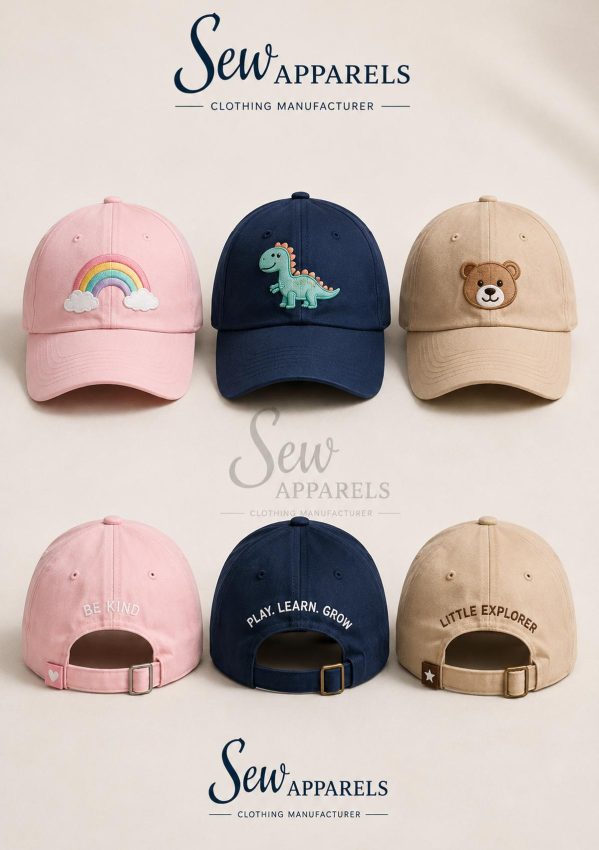
This buyer guide explains how to organise that evidence for custom kids cap manufacturing. It is a production-control framework, not legal advice and not a substitute for the buyer’s licence agreement. The buyer or licensee should confirm its rights with the relevant rights holder and legal adviser. Sew Apparels can manufacture from buyer-approved files, but the buyer remains responsible for supplying valid authority and accurate approval instructions.
Kids Cap Licensed Artwork Approval File: 6 Critical Records
1. Record the rights holder and permission chain
Begin the kids cap licensed artwork approval file with the legal identity of the rights holder, licensee and ordering company. Record the licence or authorisation reference, date, named contact and the company authorised to instruct the factory. A licensed character cap permission entry should identify the character or property, the party granting permission and the party allowed to place the order. Avoid relying on forwarded artwork alone because a file can circulate without explaining who may use it.
Create a clear kids cap rights holder approval line for every logo, character, word mark or combined graphic. If the cap includes a team emblem and a sponsor mark, treat them as separate approval items unless one written authorisation clearly covers both. Keep the email, portal approval or signed document in the same project folder and give it a stable reference number.
The approval chain should also name the character cap approval contact who can answer production questions. Include role, company, email and the type of decision that contact may approve. A merchandiser should not guess whether a contact can approve colour, placement or artwork modification. When authority is limited, route each decision to the correct owner.
2. Define product, territory and sales-period scope
A licence may cover selected products, markets and dates rather than every use of the property. The kids cap licensed artwork approval file must preserve those limits beside the production artwork. Add a childrens cap artwork licence scope summary that quotes or accurately references the permitted product description. State whether the approval covers children’s caps, youth headwear, accessories or a narrower style. Do not assume that permission for T-shirts, adult caps or digital marketing automatically covers a physical kids cap.
Use a licensed product category scope field to match the licence wording with the planned item. Record cap type, intended age range, material family, decoration method and packaging use. If the licensed image also appears on a hangtag, sticker or retail carton, confirm that those uses are included. WIPO explains that merchandising licences can grant rights to apply trademarks, designs or copyright works to consumer goods; the exact licence defines what the licensee may use. Its overview of IP assignment and licensing is a useful general reference, while the buyer’s own agreement remains controlling.
Add licensed cap territory records for every approved country or region. Include the manufacturing country if the agreement addresses manufacturing, the intended sales territories and any excluded markets. Record the authorised sales start and end dates, sell-off terms where applicable and whether samples may be shown in a factory, showroom or marketing presentation. This prevents a production team from treating a global-looking logo as worldwide permission.
3. Lock the authorised artwork and permitted modifications
The kids cap licensed artwork approval file should store the approved master file and a readable preview. Record filename, file format, revision, colour references, dimensions and the date received. A character cap authorised artwork record should show which layer, colourway and language version is approved. Keep obsolete files in a controlled archive so they cannot be selected by mistake.
Use licensed design file control to separate the rights-holder master from production files prepared for embroidery, print, patch or appliqué. The production file should refer back to the approved master and carry its own revision number. Record who prepared the conversion, what was changed for manufacturing and who reviewed the output.
Manufacturing often requires practical adjustments. Small embroidery details may need simplification, a print may need trapping, or a patch may require an edge allowance. Create a cap character artwork modification approval item for every change to shape, colour, proportion, text, outline or composition. Do not treat technical necessity as automatic permission. Send a marked comparison to the authorised contact and retain the response.
Where the design includes a registered mark, retain cap trademark permission evidence with the artwork record. WIPO’s explanation of licensing for sports merchandising notes that a trademark licence supports merchandising and that brand quality matters to the licensor. For production, that means the approved mark, approved product and quality expectations should remain connected throughout development.
4. Build the sample approval package
Before sampling, confirm the rights documentation before sample checklist. It should include the authority reference, product and territory scope, artwork master, production conversion, colour standard, placement measurement, decoration method, approval contact and open questions. Mark every line as approved, pending or not applicable. A pending right or artwork decision should remain visible instead of being buried in an email chain.
The kids cap licensed artwork approval file should connect those documents to the sample request. Specify the cap style, fabric, colour, size range, artwork position and finished dimensions. Link the request to the bill of materials and technical drawing. If the sample uses temporary material or colour, label that difference and state what still requires approval.
Use a formal licensed headwear sample sign off record when the physical sample is reviewed. Photograph the front, side, rear and inside; record sample number, date and artwork revision; and capture comments on colour, scale, position, stitch quality, edge finish and legibility. The sign-off should identify the approved sample and any mandatory correction. “Looks good” without a sample reference is difficult to control later.
5. Freeze the production version and control handover
After approval, issue one licensed cap production version. The kids cap licensed artwork approval file should point to that single released version. The release should identify the exact production artwork, machine file or print file, cap specification, colour standard, placement tolerance, approved sample and order reference. Mark earlier versions as superseded. Give production and quality teams access to the released file while protecting the master from uncontrolled editing.
The kids cap licensed artwork approval file should include a production handover page. List the files supplied to the factory, checks required at pre-production and the evidence needed before packing. Confirm whether the rights holder requires a pre-production sample, production sample, packaging approval or final inspection record. Include a stop instruction for any mismatch between the released artwork and the factory file.
For private label kids cap production, keep licensed artwork approval separate from ordinary brand-artwork approval so the additional authority can be found quickly. The product team can use the same disciplined workflow, but it should clearly flag third-party rights, scope limits and expiry dates. This supports factory control without implying that the manufacturer has independently verified the buyer’s legal rights.
6. Recheck expiry, repeat orders and changed versions
A previous approval does not automatically authorise a new order. Add a licence expiry repeat order check before accepting a reorder. Compare the new purchase order date, production window, destination, product type and sales period with the current authorisation. If the licence has expired or the permitted period is unclear, obtain written confirmation before using the artwork again.
Use a licensed cap repeat approval record when the same design returns. Confirm whether the artwork, cap construction, material, colour, size range, decoration method, packaging and territory remain unchanged. When anything changes, state whether the previous approval still applies and who made that determination. A repeat order should reference its own released production version rather than copying an old folder without review.
Connect artwork control with the kids cap buying guides when decoration materials, coatings, badges or transfers change. The rights holder may approve the appearance while product-compliance evidence still needs review. Artwork approval and material compliance are separate controls, and both should match the production bill of materials.
Connect any approved print, transfer or badge change to the kids cap lead testing component map. Approval to reproduce a graphic does not establish the composition or compliance of its ink, coating or attachment material; review those records separately.
Low MOQ Planning for Startup Brands
A startup brand preparing a low MOQ kids cap programme should resolve artwork authority before paying for physical development. Keep the first range focused, confirm minimum quantities and sampling terms directly, and distinguish licence costs from manufacturing costs. A smaller order does not widen the licence scope or replace the rights holder’s approval. Use the kids cap licensed artwork approval file to record who may approve embroidery simplification, print adjustments and sample changes. This keeps early development practical while preserving the authorised design and its commercial limits.
Buyer release checklist
Before releasing a licensed kids cap, verify that the kids cap licensed artwork approval file names the rights holder and authorised ordering party; defines product, territory and time scope; identifies the approved master artwork; records every production modification; links the signed sample and released production version; and checks the licence again for repeat orders. Keep the records with the purchase order and approved sample so sourcing, production and quality teams use the same evidence.
Brands preparing a licensed headwear programme can review construction, sampling and order options on the custom kids cap manufacturer page. Share the authorised artwork package, intended market, quantity by colour and approval route when requesting a quotation. A complete file helps the factory plan accurately and prevents unapproved artwork from moving into sampling or production.