
Kids cap tracking label production records connect a finished cap with the factory, production period and batch information needed to investigate its origin. For a buyer, the useful question is whether someone can take a cap from a retail shelf and find the correct manufacturing record without relying on a merchandiser’s memory. A short code works only when its meaning is preserved and consumers can identify the responsible business to contact for decoding.
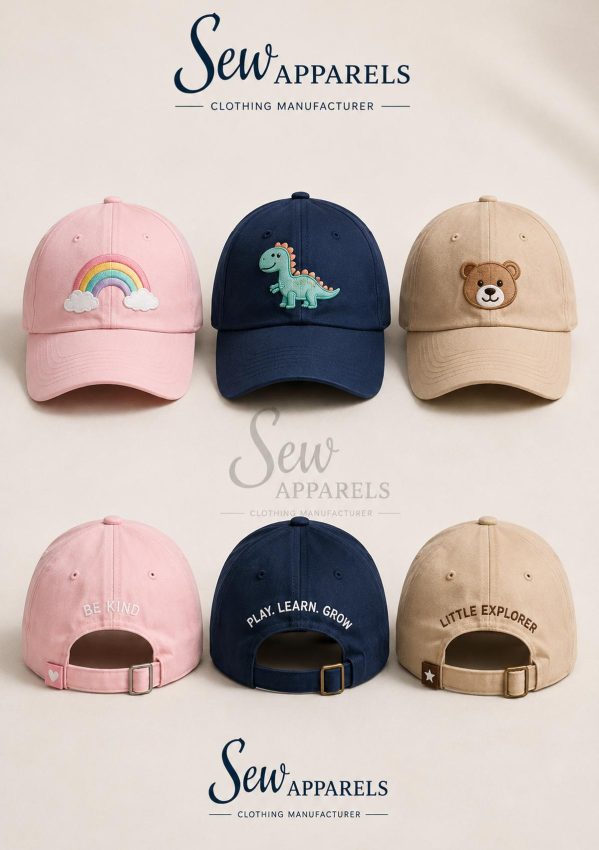
This guide explains a practical sourcing workflow for custom kids cap manufacturing. It separates the applicable US tracking-label requirements from recommended factory controls. The record examples are planning tools, not a prescribed government form or proof that a product complies with every safety rule. Confirm the intended market and responsibilities with the importer before approving artwork or releasing production.
Kids Cap Tracking Label Production Records: 6 Critical Checks
1. Define the scope of the production records
Start with the intended wearer and destination. CPSC describes children’s products as products designed and primarily intended for children aged twelve or younger. Its tracking label business guidance explains that identifying information must be ascertainable from permanent markings on the product and packaging, to the extent practicable. The identifying information includes the responsible business, production location and date, and manufacturing cohort information such as a batch or run.
The US age scope review should therefore happen before the factory treats a style as ordinary adult headwear. Record the buyer’s intended age range, marketing description and market-specific review owner. A youth size label alone is an incomplete project brief. If a collection includes both adult and children’s versions, keep the item codes and approval records distinguishable so the correct instructions reach each order.
Assign one person to approve the traceability specification and another to implement it in production. For overseas manufacture, the importer should confirm the US compliance arrangements. The factory can prepare records and samples, but a buyer should not assume that a purchase order silently assigns every legal responsibility. Include the approved label drawing in the technical pack and retain the approval message beside the order.
2. Build a readable batch code and record map
Kids cap tracking label production records need an unambiguous connection between the visible mark and the manufacturing file. Begin the children cap batch code mapping with the finished style, colour, size range, production order and actual batch identifier. Avoid using one generic collection code for unrelated production runs. It may look tidy on a label while leaving the team unable to distinguish caps made from different component deliveries.
A useful manufacturing batch identifier can be short. An illustrative internal code such as KC-A17-B02 could refer to a particular style and batch in the buyer’s controlled register. This example is not a required format. The register must explain its meaning, identify the responsible business and retain the underlying details. Make sure the code is never reused for a different production cohort in the same tracking system.
Record who creates the code and when it becomes final within the kids cap tracking label production records. If a sample carries a temporary code, mark that status on the sample approval sheet. The production label should use released data rather than a sample placeholder. Ask the factory to demonstrate the mapping with one finished cap before approving the system: read the code, locate its register entry, and retrieve the linked manufacturing file.
3. Connect dates, locations and component records
The kids cap production date label should correspond with the documented production period. Keep planned dates separate from actual dates in the internal register. If a date of production code is used, preserve its decoding rule and the manufacturing period it represents. A purchase order issue date, label printing date or shipment date should not be casually substituted for the production information. The buyer’s approved method should explain how the production period is determined and who checks it against factory records.
The CPSC tracking label FAQ discusses date ranges, coded information and production location. It explains that month and year can satisfy the date requirement, and that location information can be represented in code. It also distinguishes permanent textile marking from removable hangtags. Review the applicable details directly when agreeing the specification; a decorative hangtag should not be treated as the cap’s permanent mark.
For the production location record, retain the actual manufacturing site rather than only a trading office address. Record the factory identifier and the location information needed to interpret the approved mark. If embroidery, sewing or packing moves to another approved site, document the change and determine whether it affects the released identification system. Do not let a supplier change disappear into an unchanged template.
Extend the youth cap traceability records to the bill of materials as a recommended operational control. Link fabric deliveries, sweatband material, closures, decoration and other relevant components to the production batch. This does not mean every component number must appear on the consumer label. It means the company’s internal file can help identify which orders used a questioned material. Coordinate these records with the kids cap buying guides where compliance evidence depends on component identity.
4. Approve permanent marking and packaging information
Kids cap tracking label production records should include a marked drawing showing the permanent mark location. For a cap, the buyer might evaluate an existing sewn label or another accessible position that suits the approved construction. Check the sample on the actual product. A layout that appears clear on a flat artwork sheet may become hidden by a fold, seam allowance or sweatband after assembly.
Use the label legibility check to review the finished print, spacing, contrast and complete code. Agree a practical assessment on the approved sample and repeat it on production samples. The check should also consider normal care and handling for the selected marking method. Do not invent a universal wash-cycle threshold and describe it as a CPSC requirement. Identify the buyer’s chosen verification method and record the result.
Document the product packaging code link. The packing instruction should explain which retail pack belongs to each batch and how mixed batches are handled. A carton can contain several sizes or colours, so its shipping number should not obscure the individual product mapping. Ask packing staff to compare a cap mark, its retail packaging and the register entry during the trial pack.
A marking practicability assessment should be specific if the team considers a limitation. State the proposed location, alternative considered, physical reason and responsible reviewer. Do not use a generic “small cap” note as an automatic exception. The decision belongs in the compliance review, while the production team needs clear approved instructions. Keep the rationale and reference material together so a later reviewer can understand the decision.
5. Test retrieval before releasing the order
Kids cap tracking label production records become useful when retrieval works outside the original development team. Give a quality colleague a sampled cap and ask them to locate the matching record. The production record retrieval exercise should start with the visible mark, rather than the purchase order supplied in advance. Record any ambiguous code, missing entry or inaccessible file found during the exercise.
Build a children headwear tracking label checklist around observable decisions: approved artwork revision, responsible business information, batch mapping, production period, factory record, packaging instruction and retrieval contact. Each line should point to evidence. A tick beside “traceability complete” gives little help if the underlying register is missing. Use a clear status for unresolved items and keep release authority with the designated reviewer.
Include traceability sample retention in the project’s document-control plan. Retain a representative labelled sample or suitable reference evidence according to the agreed programme, together with its label artwork and production mapping. Define the storage owner and retrieval process. This is a recommended workflow control; do not present an arbitrary retention period as a legal requirement without identifying the applicable rule or agreement.
Protect kids cap tracking label production records from uncontrolled editing. Record corrections with the reason, author and date instead of replacing the original meaning silently. If a production batch is split or a label error is discovered, the revised record should explain what happened and which units are affected. A spreadsheet can support this work when it has a clear owner, controlled access and a reliable version history.
6. Carry approved records into repeat production
A reorder should receive its own batch record approval. Reusing the style artwork can save time, but it should not copy the previous production date or batch identifier. Confirm the new factory schedule, component deliveries and label data before printing. Keep unchanged design information separate from information that identifies the new manufacturing cohort.
Kids cap tracking label production records should also follow an agreed handover when staff or suppliers change. The new owner needs the code register, record locations, approved label specification and contact route. Test one older batch as part of the handover. If only the departing merchandiser understands the code, the system is vulnerable even when every cap has a neatly printed label.
For private label kids cap production, make traceability a quotation-stage discussion. Identify who supplies the label artwork, who confirms production data, who maintains the register and who answers a buyer inquiry. Agree the work before bulk manufacture. A complete brief helps the supplier account for label development and packing checks without implying that these activities replace product testing or certification where those are required.
Link batch records to the kids cap lead testing component map so a component concern can be traced to affected orders. The tracking mark itself does not replace applicable test evidence or a Children’s Product Certificate.
Low MOQ Planning for Startup Brands
A startup brand discussing a low MOQ kids cap order should agree tracking responsibilities before the label is printed. Confirm the minimum quantity, available materials and development terms directly, then name the person who supplies production data and maintains the batch register. Small runs still need an intelligible system for the intended market. Keep kids cap tracking label production records connected to each released order rather than assuming that a simple collection name identifies its origin. A focused first range can make the register easier to manage, but it does not replace applicable marking requirements.
Buyer release checklist
Before release, review kids cap tracking label production records against one finished sample. Confirm that its mark matches the approved register, the manufacturing file is retrievable, the packaging instruction is correct and unresolved changes have been addressed. Keep the signed release with the purchase order. This provides a concrete handover rather than a collection of disconnected emails.
Brands can discuss the cap specification and order programme on the custom kids cap manufacturer page. Share the intended market, wearer range, quantities and proposed tracking system with the technical brief. Clear record ownership lets the factory prepare accurate production instructions and gives the buyer a practical way to review traceability before shipment.