
Performance cap welded seam quotation brief is the document that makes a specialised seam enquiry comparable before a buyer commits to development. A clean-looking welded line is only one part of the decision. The supplier also needs to understand the actual fabric, panel shape, seam position, expected use, sample approval route and production quantity. Without those details, two apparently similar quotations may cover different processes and very different levels of development work.
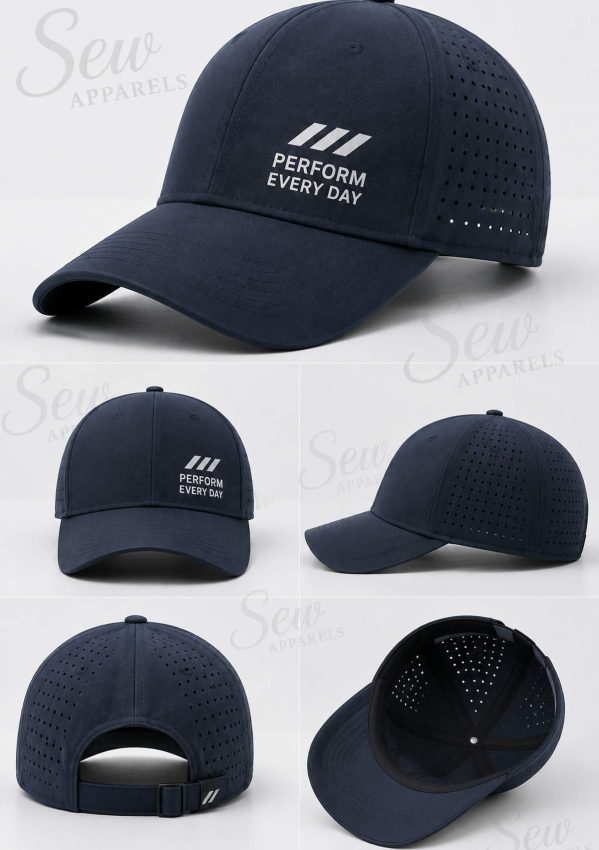
This guide helps brands prepare a commercial investigation for custom performance cap manufacturing. It does not claim that every performance fabric can be welded or that Sew Apparels has a confirmed in-house welding route for every design. Treat capability, material compatibility and production ownership as questions to resolve with the supplier. A written quotation should distinguish an evaluated proposal from an untested possibility.
Performance Cap Welded Seam Quotation Brief: 6 Critical Checks
1. Define the seam purpose
Begin with a technical drawing that identifies which join you want to change. Show panel edges, seam length, overlap, finished appearance and the adjacent visor, sweatband or closure. A request for a “seamless cap” can mean several things: fewer visible stitches, a bonded detail, an ultrasonically joined panel or an ordinary sewn seam hidden by a finish. Name the intended result before asking the supplier to price it.
The welded cap seam feasibility quote should identify the proposed joining method and the assumptions behind it. Ultrasonic processing and adhesive bonding should not be treated as interchangeable descriptions. Dukane describes ultrasonic fabric and film processing as bonding, sealing or slitting materials containing thermoplastic content. That general process description is a starting point for material review, not proof that a particular cap construction is ready for bulk production.
Describe the intended activity and the reason for the seam choice. Reduced visual bulk, a particular surface appearance or a softer internal finish are different objectives. If the design is expected to meet a measurable water-resistance or durability claim, include the proposed evidence and review route separately. A welded appearance alone should not become a marketing promise about the complete cap.
2. Supply the actual material and trial requirements
A performance cap welded seam quotation brief should identify the fabric composition, weight, construction, finish, coating and supplier reference. Include physical material where practical. A generic description such as “performance polyester” leaves important variables unresolved. A stretch woven, coated ripstop and lightweight mesh may require different handling and may not suit the same seam geometry.
Ask for weld compatible fabric confirmation on the exact proposed material. The supplier should explain whether the assessment is based on prior experience, a material trial or a completed prototype. If the fabric has not been evaluated, the quotation should say so. Define the weld trial scope, including supplied material quantity, proposed seam configurations, sample identification and the result you expect to review.
The performance cap ultrasonic process brief should also identify which layers enter the join. Include lining, reinforcement or coating where relevant. Sonobond’s textile bonding overview describes ultrasonic joining of suitable synthetic and thermoplastic materials. Buyers should use such equipment guidance to ask informed questions, while requiring a supplier-specific trial for their selected fabric and cap shape.
Keep trial material and production material connected. If the supplier tests a convenient substitute, record the difference and decide whether another trial is needed. The performance cap welded seam quotation brief should not approve an unidentified swatch that later becomes the justification for using a different bulk fabric. Save the swatch reference, sample number and written conclusions in the development folder.
3. Separate development, tooling and unit costs
Request the welded cap prototype cost separately from the estimated bulk unit price. Development may include pattern adaptation, material trials, specialist setup and sample review. The buyer needs to know how many sample rounds are included and what triggers an additional charge. A low initial price can become expensive if every unresolved decision starts a new chargeable trial.
List the cap weld tooling assumption explicitly. Ask whether existing equipment and tooling are proposed, whether dedicated tooling is needed, and who owns any purchased item. Include storage, maintenance and transfer arrangements where relevant. Do not assume a development payment purchases transferable equipment. The quotation should state whether the charge covers a service, a physical tool or both.
Where an adhesive or thermal route is offered, separate the bonded seam development charge and consumables from an ultrasonic proposal. The performance cap bond process costing should identify the material and process assumptions without revealing confidential machine recipes. The purpose is to understand what is included and which changes will affect the price.
Ask the supplier to state the quantity, colour breakdown and production location used for the estimate. A prototype price based on one fabric does not establish the price for several colours with different finishing behaviour. The performance cap welded seam quotation brief should show the currency, commercial basis, quote validity and conditions for revising the estimate after successful sampling.
4. Confirm the production route and exclusions
Bulk welding capability confirmation should name the party responsible for the specialised operation. If the proposed route involves an outside processor, ask who coordinates transport, quality review and schedule. An outside seam process quote should define the handover between cap assembly and seam processing. Clear ownership helps the buyer identify where delays or additional charges may arise.
Review welded headwear quote exclusions before comparing totals. These might include testing, additional sample rounds, material procurement, special tooling, freight between sites or changes after approval. The supplier should identify its actual exclusions rather than rely on a generic list. Bring each quoted item back to the same technical brief so the comparison covers equivalent work.
The performance cap welded seam quotation brief should also state what happens if the trial does not achieve the agreed result. Ask whether the development fee remains payable, which outputs the buyer receives and whether an alternative process will be quoted separately. Agree this before commissioning the trial. A failed development route can still provide useful evidence when its scope and deliverables were clear.
Discuss schedule dependencies in order: material availability, trial completion, prototype review, approval, capacity allocation and production. A bulk delivery estimate should identify which approvals it assumes. Avoid presenting a tentative development schedule as a confirmed shipment promise. Keep the status of each dependency visible in the sourcing comparison.
5. Define sample approval and a practical alternative
A weld sample approval condition should cover the complete cap as well as the trial join. Review the crown shape, internal finish, visible seam, flexibility and adjacent components on the approved material. Agree suitable evaluation for the intended use. Do not invent a universal strength value or inspection threshold and apply it to every lightweight headwear design.
Record the sample identification, material reference, seam drawing revision and review comments. The performance cap welded seam quotation brief should connect those approvals with the proposed bulk price. If the supplier changes a material or process after the prototype, identify whether the previous approval remains applicable. A photograph of a clean seam is not sufficient evidence of an unchanged production specification.
Include a performance cap seam process alternative in the enquiry. A conventional sewn construction may be commercially suitable if it achieves the buyer’s appearance and comfort objectives. Compare the alternative using the same material, quantity, branding and packing assumptions. This gives the team a decision based on the finished product rather than the prestige of a process name.
Consider how the seam intersects with ventilation. A join near a perforated zone needs to be reviewed with the surrounding performance caps perforated panel design. Use the performance cap buying guides to organise those construction questions. The seam choice should support the intended panel arrangement rather than force an unexplained change to the cap’s airflow layout.
6. Make the quotation decision traceable
Use a seam technology purchase brief to summarise the evaluated option, outstanding questions and approval owner. The weld quotation decision should state whether the project is moving to a trial, accepting a prototype or releasing a confirmed bulk specification. Those are different decisions. Avoid treating an indicative price as permission to begin production.
Compare proposals in a simple worksheet with rows for trial scope, prototype quantity, tooling, production route, approval criteria, exclusions, unit price and schedule. Mark unknown items clearly. A blank field should trigger a question, not an assumption that the service is free. Keep each supplier’s original quote alongside the comparison so a later reviewer can trace the interpretation.
For private label performance cap production, confirm that labels, decoration and packing remain included in the final specification. Special seam development can attract attention while ordinary finishing details are overlooked. The performance cap welded seam quotation brief should preserve the complete product requirement and identify any changed construction assumptions before commercial approval.
Low MOQ Development for Startup Brands
Startup brands considering a low MOQ performance cap programme should confirm the order route separately from specialist seam feasibility. Ask about available materials, minimum quantities and sampling terms directly. Keep the first performance cap welded seam quotation brief focused on one controlled fabric and construction so trial costs are easier to interpret. A smaller launch quantity does not establish welding capability or eliminate tooling costs. Review a conventional sewn alternative when it meets the design objective, and retain the approved trial evidence before moving to a production commitment.
Buyer enquiry checklist
Send the actual fabric reference, marked seam drawing, intended activity, quantity by colour and preferred sample route. Ask for feasibility status, development deliverables, tooling ownership, bulk capability and written exclusions. Review the resulting performance cap welded seam quotation brief with the approved sample before accepting the bulk terms. This helps sourcing and production teams work from the same decision.
Brands can discuss the wider construction and order programme on the custom performance cap manufacturer page. Describe the specialist seam request separately so capability and development scope can be confirmed for the actual project. A precise brief makes the quotation useful without assuming that an untested joining method is already available.