
SEW APPARELS · BUYER RESOURCES
Performance Cap Buying Guides
Performance cap buying guides help sports and activewear brands connect a visual reference with practical development decisions. Lightweight fabric, ventilation, crown shape, visor construction and fit should be considered together because each component changes how the finished cap handles and sits. Start with the intended activity, destination market, quantity and artwork, then identify the features that need sample approval or measured evidence. This resource brings those questions into a clear sequence for running collections, training programmes, outdoor ranges and private label projects. Use the technical guide below before preparing the first complete supplier brief.
Our performance cap buying guides work alongside the custom performance cap manufacturing page, which presents the current product range and commercial information. Use that page for sourcing discussions and this resource to organise the development details. Record the selected fabric reference, colour, closure, sweatband, visor and decoration method in one component list. A complete reference helps the sample team identify missing information before making assumptions about an image. It also gives the buyer a consistent basis for comparing proposals, explaining changes and deciding when a material substitution requires another review of the finished cap.
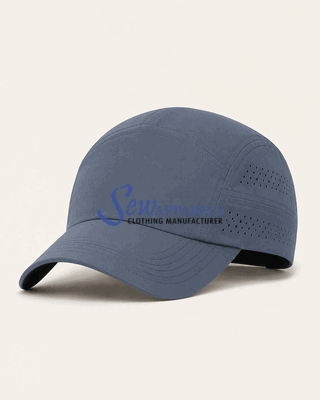
Start with perforated panel design
Compare opening size, ventilation boundaries and reinforcement using an annotated construction example and a buyer decision table. Keep the approved drawing connected with the actual fabric and assembled sample.
Read the perforated panel guideStart with lightweight visor construction
Compare lightweight visor board options, brim length, curvature and edge finishing against the approved cap sample. Check that the visor balances sun coverage with low weight and keeps its shape through wear and packing.
Read the lightweight visor guideCompare welded seam development quotations
Define fabric compatibility, trial scope, prototype costs, tooling ownership and production responsibility before comparing specialised cap seam proposals.
Read welded seam quotation guideReview finished-cap chemical certificate coverage
Map fabric, decoration, adhesive and trim evidence against the certificate scope before approving finished-cap claims or label use.
Read certificate scope guideCheck evidence behind quick-dry cap claims
Compare fabric reports with an agreed whole-cap assessment, controlled wetting, drying endpoints and wash-conditioned samples before approving claim wording.
Read quick-dry evidence guideReview reflective trim evidence and claim limits
Match the reflective trim version, report scope, worn placement and after-care evidence before approving visibility wording for the finished cap.
Read reflective trim claim guide1. Performance cap buying guides for materials and ventilation
Choose the outer fabric around the intended activity, climate, desired weight and decoration. The manufacturing range includes performance polyester, microfiber, stretch woven, nylon, ripstop, mesh and selected recycled materials, subject to the agreed specification and availability. Compare physical swatches rather than relying on a fibre name alone. Performance cap buying guides distinguish the base material from later finishing, perforation and reinforcement because these details can change the result. Keep the approved fabric reference, finish, colour and construction on the same record so sample comments continue to describe the exact material being considered for production.
Ventilation planning should identify which panels contain mesh or perforations, where the zone ends and which internal layers could cover it. A published commercial example, Richardson’s 355 cap, uses laser-perforated side and back panels; it demonstrates selective placement without defining a universal layout. Performance cap buying guides encourage buyers to mark clear seam margins, decoration areas and support boundaries on their own pattern. Review the assembled crown from inside and outside. Openings visible in a flat swatch may interact differently with a sweatband, lining or seam after the complete cap has been assembled and shaped.
2. Balance crown fit, visor shape and closure
Specify crown profile, panel construction and the intended head-size range before approving the outside appearance. A low-weight cap still needs a secure and comfortable relationship between its crown, sweatband and closure. Use performance cap buying guides to record the measurement position and sample condition, then compare fitting observations against the same reference. Describe movement, pressure or excess material clearly instead of using only broad comments such as too tight or too loose. Review more than one intended adjustment setting where relevant, and identify whether a proposed correction changes the pattern, the band or the closure assembly.
A visor decision should consider shape, flexibility, weight, attachment and the intended use. Record the insert reference, finished dimensions, curve and stitching arrangement, then compare the actual sample with the visual brief. Performance cap buying guides also connect visor approval with crown balance: a light fabric does not automatically make every visor combination suitable. Ask the supplier to explain available options and the sample route for a proposed construction. Keep packaging and handling expectations in the review, especially where the collection requires a compact presentation or where an approved curve must be retained through dispatch and unpacking.
3. Plan branding and private label details
Branding needs to fit the selected fabric and the areas available around ventilation. Flat embroidery, heat transfers, reflective graphics and patches involve different application requirements, so the artwork file alone cannot establish the finished result. Performance cap buying guides recommend a representative decorated sample with the intended backing, thread, adhesive or application process. Record the artwork footprint and its position relative to seams, openings and the visor. Review clarity and panel movement together. If a logo changes size, density or location, ask whether another trial is needed before treating the earlier decoration approval as valid for production.
Private label coordination should cover the sweatband label, care information, hang tag, barcode and packaging as well as the visible logo. Confirm the destination market and the buyer’s required labelling content through the appropriate approval process. Performance cap buying guides help keep these details in the same brief as the construction, reducing the chance that a late label or packing change affects the sample schedule. Maintain a clear artwork revision and check the final placement on the physical cap. Retain one approved reference that connects the product appearance, inside finishing and retail presentation intended for the order.
4. Low MOQ performance cap manufacturer options
A low MOQ performance cap manufacturer enquiry should begin with the quantity per colour and style, rather than only the total collection size. Sew Apparels currently lists 576 pieces using matching export-quality stock fabric or 5,184 pieces using custom fabric per colour and style. Technical materials, special perforation, unique trims and complex branding can affect the development requirements, so confirm the applicable terms for your proposal. Performance cap buying guides help buyers compare available-material options with custom development before committing to artwork or launch dates. Keep the confirmed quantity basis and material choice visible in the quotation record.
For a smaller first range, review whether a consistent fabric, closure or decoration approach across the planned collection can simplify development. This is a planning discussion, not a promise that different styles or colours can be combined to meet one minimum. Performance cap buying guides encourage buyers to ask which choices drive dedicated material orders and which can use confirmed available options. Explain the intended launch quantity and longer-term range honestly, then request a sample and quotation based on the actual specification. Record any revised minimum or material condition before comparing prices from different proposals or suppliers.
5. Practical support for startup brands
Startup brands can approach Sew Apparels with a tech pack, physical reference, artwork or an initial product concept. Begin with the intended activity, target quantity, preferred fabric and branding, then work through the details needed for a useful sample. Performance cap buying guides give new teams a structure for that discussion without assuming they already have every measurement or component reference. Identify which decisions are confirmed and which need supplier input. Keep a written approval list so feedback on fit, ventilation, decoration and presentation is consolidated before the next development stage or any production commitment is made.
6. Prepare sampling and approval evidence
Current published sampling guidance is 10–15 days, with production typically 15–30 days at the applicable MOQ after pre-production approval; quantity and development complexity can change the schedule. Confirm timing for the actual order. Performance cap buying guides also separate measured fabric evidence from whole-cap observations. The public scope of ASTM D737 addresses textile air permeability, while fitting, appearance and handling require their own review. Agree suitable methods and acceptance criteria when a performance claim is important. Finish with a matching drawing, component list, artwork revision and approved sample before releasing the order for production.
Turn your development decisions into a product brief
Bring together your intended activity, quantity by colour and style, fabric reference, ventilation plan, visor, closure and artwork. The performance cap buying guides can support the review, while the manufacturing team confirms feasibility, sampling and the commercial terms for the actual design. Keep the final approval record with the sample so the production discussion starts from the same agreed specification.
Discuss your performance cap project