
A rope cap discontinued trim replacement can change the identity of a repeat style even when the crown fabric, logo and visor remain the same. The decorative cord sits across the front of the cap, where buyers notice its thickness, colour and curve immediately.
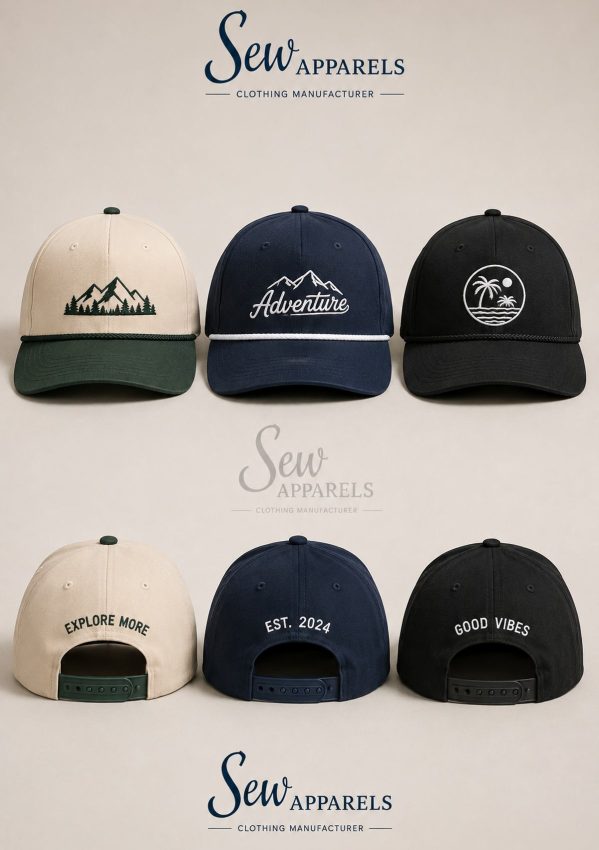
When the approved rope becomes unavailable, a purchasing team needs more than a supplier photograph and a promise that the alternative is close enough.
A rope cap discontinued trim replacement requires a documented decision. This guide explains six decisions before accepting a substitute rope: confirm the supply position, compare the replacement, sample the assembly, agree the test scope, review the commercial impact and control the transition.
The aim is to preserve an approved product standard while creating a traceable route for future orders. Treat the replacement as a component change with an accountable decision, rather than an informal factory adjustment.
Rope cap discontinued trim replacement: six approval decisions
1. Establish why replacement is needed
Ask for a written rope supplier discontinuation notice that identifies the component code, affected colours, remaining availability and any final ordering date. Separate a permanent withdrawal from a temporary shortage, a colour-specific problem or a distributor changing its range.
Those situations may require different decisions. Record who provided the information and when it was checked, because a last-buy offer can become outdated before the cap order is confirmed.
Next, reconcile rope trim end-of-life stock with existing commitments. Count usable stock against open purchase orders, approved samples, expected cutting or attachment losses and any quantities already reserved for other customers.
A stock balance expressed only as metres is not yet a guaranteed number of finished caps. Ask the factory to calculate the required length from the actual construction, including the way the ends are finished and secured.
Make a documented last-buy decision
A cap rope last-buy decision may bridge a short transition, but it also creates inventory exposure. Compare the likely repeat demand with the money tied up, storage arrangements and the possibility that the product changes before the rope is used.
Define the remaining rope stock allocation by order and colourway. Do not assume that buying extra material removes the need to develop a replacement; it may simply provide time for a more careful approval process.
2. Compare the discontinued cap rope alternative against a physical standard
For a rope cap discontinued trim replacement, retain an identified length of the original rope and an approved finished cap. Specify the substitute’s composition where documented, diameter, braid appearance, surface finish, firmness and colour reference.
A cap rope replacement component code should identify a particular supplied product, rather than serve as a generic description such as navy rope. Record any information that remains unverified and ask the supplier to clarify it.
Identify the substitute trim affected colourways before approving the range. Review colour on the material that will actually be used. Coats’ colour shade cards illustrate the use of product-specific colour references across threads and braids.
They are a useful reference for colour selection practice, but a shade card does not approve a decorative rope for your cap. Compare actual replacement samples beside the original rope, crown and visor under the viewing conditions agreed with the brand.
The rope substitute appearance approval should cover the whole front view. A slightly firmer cord may sit differently across a curved visor; a shinier braid may create a stronger contrast than a matte original. Photograph the comparison for the approval record, while keeping the physical samples as the decision standard. Assess each affected colourway separately when its fabric background changes the visual result.
3. Request an assembled sample before accepting the component
A loose rope sample cannot demonstrate what happens during attachment. For a rope cap discontinued trim replacement, the rope substitute sample request should include the intended crown fabric, visor shape, attachment method, end treatment and production sewing thread.
Ask the factory to identify the replacement component on the sample paperwork. If the trial uses a different colour or temporary thread, make that limitation explicit instead of treating the sample as final approval.
Compare the rope’s position across the cap front, its contact with the visor and the treatment of both ends. Review rope caps rope trim attachment against the revised cord and its approved fixing points. Check for uneven tension, visible twisting, fraying, protruding ends or distortion of the fabric near the attachment points.
Assess the cap on an agreed form or in its intended presentation, not only while flattened on a table. Use the existing rope cap buying guides to keep the component decision connected to the construction review.
Ask whether the change requires different needle, thread, seam or handling settings. AMANN’s sewing thread product information makes application suitability and colour assessment relevant to thread selection. This supports checking the attachment thread for its actual use; it does not establish that a decorative rope substitute is equivalent. Keep the cord specification and attachment-thread specification as separate items in the bill of materials.
4. Define the rope replacement test scope
The rope cap discontinued trim replacement review should state which checks establish acceptability for this style and its intended use. Agree the relevant appearance, attachment and care assessments with the buyer, factory and laboratory where needed.
The original trim’s report may help identify previous requirements, but it cannot automatically certify a different material, finish or supplier version. Record the sample identity and the decision criteria before testing begins.
For a washable cap, consider the intended care instructions and the risks introduced by the replacement: colour transfer, change in surface appearance, dimensional change, loosening or deterioration of the ends. These are review topics, not a universal mandatory test package.
The exact methods and acceptance levels depend on the product brief, market requirements and buyer standard. Avoid inserting arbitrary test thresholds simply to make the specification look complete.
Inspect an assembled sample after the agreed assessment and compare it with the retained reference. A rope can look acceptable on its own yet leave staining on the adjacent fabric or lose its intended curve after care.
If the cap is designed for children or another use with additional safety requirements, obtain the appropriate review for that finished product. Decorative appearance approval does not replace applicable safety or chemical requirements.
5. Review replacement cost and supply continuity
A rope cap discontinued trim replacement quotation should show the rope trim substitute cost alongside the component price, order minimum, colour availability, sample charges and the consequences for cap assembly. A cheaper rope may create additional handling or waste; a more expensive option may reduce uncertain availability.
Compare quotations on the same specification and quantity assumptions so the team can distinguish a genuine material saving from a different production scope.
Ask which colours are routinely supplied and which depend on a separate production run. Clarify the lead time basis, the period for which the quotation is valid and the conditions attached to any stock reservation.
Rope supply continuity review should also establish how future changes will be communicated. A supplier’s current stock statement is useful evidence for a purchase decision, but it is not a permanent guarantee of availability.
For startup brands, the transition may be easier if the sample process concentrates on a small set of priority colourways before extending the range. Discuss the actual order minimum and development cost with Sew Apparels through the custom rope cap manufacturing page.
Confirm feasibility for the proposed material and order; do not assume that a low garment quantity also satisfies a rope supplier’s colour minimum.
6. Control the old-to-new rope transition
An approved rope cap discontinued trim replacement needs a clear effective point. State the first order, production lot or colourway that will use the new rope. Identify orders that must retain the original version, and decide whether mixed versions are acceptable within a shipment.
Where appearance differs, get the buyer’s explicit decision before mixing stock. Warehouse and production teams should be able to tell the versions apart without relying on memory.
Update the component code, bill of materials, sample reference and purchase-order instructions together. The rope change purchase order should name the approved replacement and prohibit an unreviewed alternative.
Keep a replacement rope approval register with the original code, new code, affected colours, sample date, assessment results, approval owner and any restrictions. Attach the discontinuation notice and the agreed stock allocation so later reorders can follow the same evidence.
Finally, check the first production output against the approved assembled sample. Confirm that procurement supplied the approved component, production followed the agreed method and packing records preserve the intended version separation. For private label rope cap production, this makes a replacement decision usable beyond the development meeting. A signed sample without updated order information leaves too much room for the old specification to reappear.
Buyer questions before releasing the revised order
Can a similar-looking rope be accepted without sampling?
Similarity is a starting point for screening, not finished-cap approval. Request an assembled comparison when the material, diameter, firmness or finish changes. Document a justified reduced review only when the buyer has sufficient evidence and accepts the remaining risk.
Should every colourway be changed at once?
Not necessarily. Remaining stock, appearance and replacement availability may differ by colour. Define the transition for each affected colourway, and keep the version information visible in orders and packing records. Avoid an undocumented gradual switch.
What makes the replacement decision complete?
The rope cap discontinued trim replacement decision is complete when the approved component, assembled sample, relevant assessment, commercial terms and order instructions agree. Use that combined record to release the order and support the next repeat. The result is a controlled product change with a clear reference, rather than another substitution to investigate when bulk arrives.