
Performance cap reflective trim claim review connects a visible design detail with the evidence supporting what a brand says about it. Reflective piping, transfers, patches and printed graphics can add interest to a running or training cap, but a bright photograph does not establish a complete visibility claim.
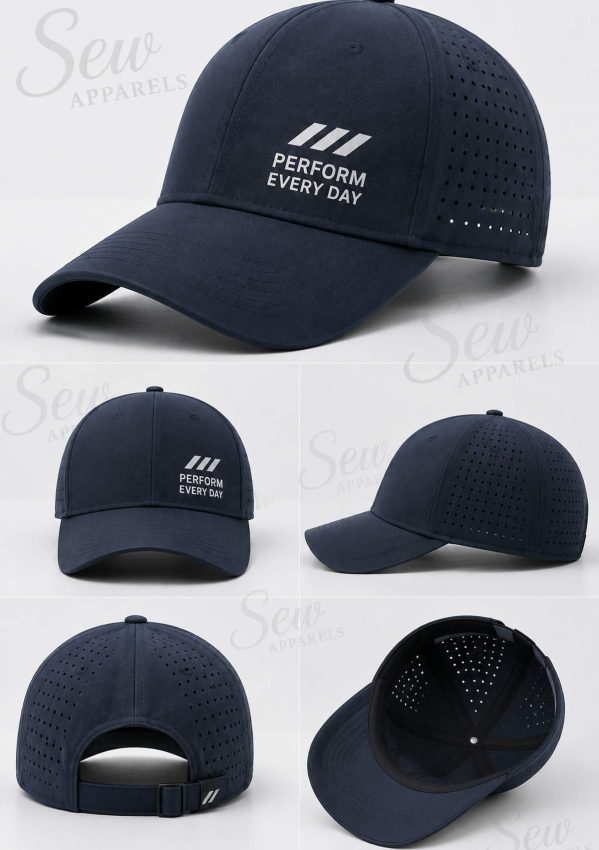
Buyers need to identify the actual trim, understand the report and review its position on the finished cap before approving product copy.
This guide supports custom performance cap manufacturing enquiries where a brand proposes reflective detailing. It does not confirm that Sew Apparels uses a named reflective material or that a particular cap is certified protective equipment.
Obtain evidence for the actual proposed component and finished design. A material’s properties, its application and the wording used to sell the cap are related decisions with different approval requirements.
Performance cap reflective trim claim review: six approval decisions
1. Define the claim and intended use
Start with the intended statement. Does the brand want to describe a reflective detail, a tested material property or a certified finished article? Those statements need different evidence. A cap visibility wording checklist should identify the proposed sentence, the product it describes and the person responsible for approving it. Avoid treating general supplier language as ready-to-publish copy.
Describe the intended activity and conditions without promising that the detail makes a wearer visible in every situation. A running collection, casual outdoor range and protective workwear programme have different product requirements. If a protective claim is intended, ask a qualified assessor about the applicable market and product requirements before designing the evidence programme.
3M’s reflective transfer material description explains that retroreflective material returns incident light towards its source. That is a useful starting point for understanding a proposed detail, rather than evidence that the selected cap uses that product. Keep the supplier’s actual material reference and technical information attached to the enquiry.
The cited 3M series is labelled for industrial and occupational use; it is an explanation of retroreflection, not a recommendation for a recreational cap. Confirm that the chosen trim is suitable for the intended market and use.
The performance cap reflective trim claim review should end this stage with a written scope: which component is proposed, which claim is being considered and what remains unconfirmed. This prevents a decorative sample from becoming a broad safety promise during marketing handover. It also makes the supplier’s next task clear: provide evidence for the identified material and application.
2. Identify the trim and trace the component report
Running cap reflective material evidence should identify the manufacturer, product reference, version and supplied form. A fabric strip, transfer film and reflective print are not interchangeable descriptions. Record the colour, width, artwork or shape used in the cap. If the supplier offers an alternative, ask for its own supporting information rather than transferring approval from the first option.
Component report traceability means connecting the submitted or described material with the material in the approved sample. Check the report identifier, specimen description, date, test method and results. Ask the supplier to clarify any mismatch. A document for another product in the same range may be informative, but it should not silently become evidence for the selected trim.
Review the reflective cap trim report scope. Determine whether the report evaluates an unused material, a treated specimen or a finished application. Identify any stated conditions and limitations. Do not combine a laboratory report and a supplier specification under one generic certified heading; retain the evidence type and the actual question each document answers.
A performance cap reflective trim claim review register should contain the component reference, report reference, sample version and approval status. Keep unresolved items visible. This is especially helpful when several colours or decorations use different materials. A single approved trim entry cannot describe an entire collection unless the evidence owner confirms the relevant coverage.
3. Review placement on the worn cap
A worn visible area review should show the detail on the complete cap in its intended position. Inspect the front, sides and back, including how the visor, crown shape or closure affects the detail. Record where seams, decoration or folds interrupt it. These observations help identify the actual design being discussed without replacing a formal evaluation where one is required.
Use the performance cap buying guides to organise the adjacent visor specification. The visor can change the cap’s shape and the position of nearby detailing. Keep reflective placement on the same drawing revision as the approved crown and visor so later adjustments do not disconnect the sample from its evidence.
Photographs can document location, but camera settings and lighting can change how bright the detail appears. Do not use an attractive flash photograph as a measured visibility result. Ask the evaluator which observations or measurements are appropriate for the intended wording, and retain the conditions used. A visual record is useful when its purpose is stated honestly.
The performance cap reflective trim claim review should identify which parts of the design need further assessment. A material report does not explain every consequence of its placement on a three-dimensional cap. If the design changes the trim width, artwork or position, review whether the existing evidence and wording still describe the approved product.
4. Check application and after-care evidence
Trim version approval should include how the material is attached. Record the actual construction or application reference provided by the supplier, including relevant substrate information. Ask whether the application follows the material manufacturer’s instructions. Avoid inventing temperature, pressure or stitch requirements from a general product description; the applicable technical guidance belongs with the selected product.
Performance hat reflective wash durability needs a defined care basis. Ask what treatment the evidence covers and whether it matches the intended care instructions. A result after a stated treatment should not become a promise of unlimited durability. Keep the specimen state, procedure and reported outcome together rather than quoting a cycle count without its conditions.
After-care reflection evidence should distinguish the material property from the physical condition of the applied trim. Record any assessment of peeling, cracking, attachment or appearance separately where relevant. An attached detail and a reflective result answer different questions. Agree the appropriate review with the supplier or laboratory for the actual design and proposed claim.
The performance cap reflective trim claim review file should retain the approved care record and sample reference. If the care instructions, substrate or application route changes, ask whether another review is needed. This avoids reusing a favourable result from one configuration for a different finished cap simply because both use a reflective-looking detail.
5. Keep certification and decorative claims distinct
A certification scope gap can arise when a material meets particular requirements but the finished design has not been assessed for the claimed purpose. The public scope of ISO 20471 includes requirements for high-visibility clothing materials and their area and placement. A component statement alone cannot establish that a complete cap meets a finished-product requirement. Confirm the applicable edition and amendments with the assessor; the published ISO 20471:2013 page lists a revision under development.
Use a visibility test lab brief that identifies the intended product, market, wording and evidence already available. Ask the assessor which requirements apply and what the existing report proves. Do not assume that a standard mentioned on a trim supplier’s website certifies the cap. The assessment needs to address the actual claim and finished design.
A decorative reflection claim limit should be explicit in the approval record. Describe the feature only to the extent supported by its evidence. Avoid promises that the wearer will always be seen, or language implying protective equipment status without the appropriate basis. If the brand wants stronger wording, identify the additional assessment required before releasing it.
The performance cap reflective trim claim review should record the boundary around any PPE claim. This is a sourcing approval question, not a universal statement about every cap or every market. Keep the decision tied to the actual evidence and obtain the relevant assessment when protection is intended. Do not let a casual product description imply an unreviewed protective function.
6. Control substitutions and approve the final wording
Reflective print substitution should trigger a documented review. A new ink, film, backing or material reference can alter the evidence relationship even when the artwork looks similar. Ask for the replacement’s specification and supporting report. Record the difference and the approval decision before accepting it as equivalent to the sampled component.
Claim wording evidence should be stored with the approved product copy. Identify which statement relates to the material, which relates to the finished cap and which qualifications are needed. Review hang tags, packaging and online descriptions together. Inconsistent wording across those surfaces can turn a carefully limited statement into a broader unsupported promise.
For private label performance cap production, assign an approval owner who can connect development and marketing decisions. The performance cap reflective trim claim review should include the sample revision, component reference, application, care information, evidence references and final wording. Keep a record of outstanding questions rather than treating an indicative supplier response as final approval.
Keep the performance cap chemical certificate scope separate from visibility evidence. Chemical coverage for a transfer or adhesive does not establish retroreflection, finished placement or a protective claim.
Buyer release checklist
Before releasing the product description, identify the actual reflective component and match it with the report. Review worn placement, application and care evidence. Confirm the scope of any certification statement and approve wording that stays within that scope. Preserve the final decision with the drawing and physical sample so repeat orders use the same reference.
Share the proposed detailing and unresolved evidence questions through the custom performance cap manufacturer page when discussing development. Ask for project-specific material and sample information. A clear performance cap reflective trim claim review helps the brand decide which feature can be described now and which claim needs further confirmation.
Low MOQ performance caps for startup brands
Startup brands can bring a focused reflective-detail brief to the sampling discussion without treating a small order as a reason to relax evidence review. Specify one initial cap configuration, the intended customer and the exact wording you want to support.
Ask about feasible quantities, sample costs and trim sourcing for that configuration; availability and minimum quantities need confirmation. A performance cap reflective trim claim review gives a new brand a practical approval record that can travel with its design, care instructions and product copy when production expands.