
Work chino shorts dye route quotation should identify what is being coloured, when that happens and what finished appearance the buyer is approving. A price for shorts made from dyed fabric is not directly comparable with a price for a garment-dyed arrangement unless material, quantity, finishing and approval assumptions are made explicit.
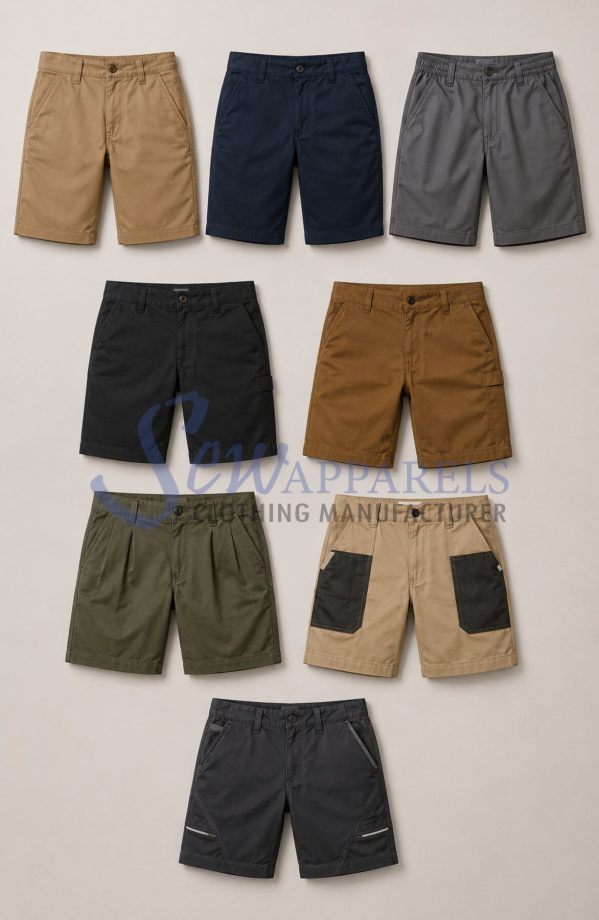
This guide gives sourcing teams a practical way to compare quotations without treating one dye route as automatically cheaper or better. It does not publish Sew Apparels prices, dyeing capacity or guaranteed minimums. The relevant route, availability, development work and commercial terms must be confirmed for the actual fabric, colour assortment and order.
Work Chino Shorts Dye Route Quotation: 6 Easy Checks
Begin with the finished product brief, then ask each supplier to price a clearly defined route. Keep provisional assumptions visible and update the comparison when sampling changes the specification. A useful comparison explains differences rather than hiding them inside one unit price.
1. Name the proposed route and its material basis
For work chino shorts dye route quotation, state whether the proposal uses fabric coloured before garment assembly or garments coloured after assembly. Ask for the proposed material reference and the relevant preparation and finishing sequence. “Custom colour” alone does not describe the production scope.
A fabric dye chino short commercial brief should identify composition, construction, weight reference, finish and colour requirement. A garment dyed work chino shorts quote should identify the corresponding proposed substrate and assembled components. Compare those actual references rather than assuming that both routes begin with interchangeable materials.
CottonWorks’ dyeing preparation guidance explains the importance of preparing cotton substrates before dyeing and finishing, including removing unwanted impurities and controlling preparation. This is relevant context for asking what material state is included in a proposal. It does not confirm the preparation of a particular Sew Apparels fabric or specify a recipe for this order.
Ask suppliers to describe their work shorts dye process assumptions in commercial terms: which materials are available, which steps require development and which steps are included in the price. Technical teams should determine the suitable process. Avoid turning a sourcing worksheet into an instruction to apply an unverified dye recipe.
2. Hold the colour and quantity brief constant
A work chino short dye route comparison needs the same target assortment. List quantity by colour and size, not just the total number of shorts. A proposal for one large colour run and another for several smaller colours may differ because of assortment scope, not only dye route.
For work chino shorts dye route quotation, confirm the colour reference and how final acceptance will be decided. Name the reference sample, agreed viewing or evaluation conditions and approval owner. A colour name or screen image is an incomplete substitute for the accepted reference.
Chino shorts colour quantity price basis should show whether a price depends on the proposed quantity per colour, the total order or another stated condition. Ask what happens if the mix changes after sampling. Keep quote validity, currency and relevant delivery basis visible so the comparison does not mix different commercial assumptions.
Use chino short dye minimum questions to confirm the applicable minimums for the proposed route and materials. Ask whether development quantities, colour runs and garment production have separate conditions. Do not infer a universal minimum from a previous style or assume that a smaller assortment will always have a particular price.
3. Review the assembled components and final appearance
Garment dye trim compatibility belongs in the development brief. Identify thread, labels, fastening parts, pocketing and other components, then ask which are exposed to the proposed process and which are added later. Confirm the actual intended arrangement rather than assuming every component responds like the shell fabric.
Coats’ sewing post-dyed garments brochure discusses sewing and finished-quality issues associated with garment dyeing, including component and shade compatibility considerations. It also cautions that apparently similar materials do not guarantee a matching response. Use this as technical context for requesting development evidence; it does not establish the suitability of any selected Sew Apparels components.
For work chino shorts dye route quotation, describe the desired work chino shorts final appearance. Include the intended surface character, seam appearance and relationship between visible components. Request an appropriate assembled sample before making an appearance commitment from loose fabric alone.
Garment dye work short development should identify what the sample is meant to prove and what remains provisional. A sample made with substitute pocketing or thread needs that substitution recorded. If an accepted change affects process compatibility, fit or appearance, update both the technical record and the quotation assumptions.
4. Separate development charges from the production basis
Fabric dyed chino shorts costing should state the proposed scope rather than only a total figure. Ask what material sourcing, colour development, sample preparation, finishing and agreed evaluation work are covered. The supplier may price some items separately; make those differences visible instead of treating an omitted charge as a saving.
For work chino shorts dye route quotation, a chino shorts finishing route quote should explain whether the finished result requires additional operations beyond the named dye step. Record the proposed finish and any associated approval. Do not compare an unfinished sample-stage proposal with a production-ready scope as though they are equivalent.
Ask how extra sample rounds, changed colour references or revised material choices would be priced. Keep recurring production charges separate from one-time development charges where the quotation supports that distinction. A lower first figure may become a different commercial decision when the missing work is added.
Confirm packaging, labels and delivery assumptions at the same time. Where a supplier has not yet confirmed an inclusion, mark it unresolved. An accurate comparison can contain questions; it should not fill gaps with invented costs or assume that every quotation includes the same services.
5. Approve a representative finished sample
Work chino dyed sample approval should connect the accepted colour and appearance with the actual material and component references. Keep the sample identifier, process proposal and relevant comments in one version of the file. Do not let a photograph of an early development piece become the final approval by accident.
For work chino shorts dye route quotation, ask what relevant quality evidence is required for the intended care and use. Agree suitable evaluations and acceptance criteria with the technical team. Neither a dye-route label nor a colour match alone establishes dimensional stability, colour performance or garment durability.
A chino shorts custom colour quotation may remain conditional until development resolves the material and finish. Name those conditions clearly. When the sample changes, request a revised price or confirmation that the existing quotation still covers the accepted arrangement.
Keep feedback specific: identify the component, observation and requested review rather than writing “make colour better.” Distinguish a target-shade concern from a seam-appearance concern or a changed fit measurement. Separate decisions make the next sample and commercial revision easier to understand.
6. Close the comparison with a written scope
Chino shorts dye route inclusions should be confirmed in the accepted quotation or order record. Identify the route, material references, colour-size quantities, finished appearance approval, included work and remaining conditions. Record who accepted the scope and what change requires renewed review.
For work chino shorts dye route quotation, use a work short dye process quote worksheet to keep alternatives on the same basis. Include a column for confirmed, provisional and excluded items. Compare the complete accepted scope rather than ranking suppliers solely by the first visible unit price.
When discussing custom work chino shorts manufacturing, send the fabric proposal, colour reference, quantity breakdown and desired finish together. Ask the team to confirm feasible options, sampling steps, applicable minimums and the quotation for that specific brief. This article does not promise that every proposed process is available for every material.
For private label work chino shorts production, keep the accepted quotation linked to label, trim and packaging references. Review any later substitution against the approved appearance and process scope. Repeat orders should refer to the agreed baseline while still confirming availability, pricing and the effect of changes.
Work Chino Shorts Dye Route Quotation Worksheet
- Route and stage at which colour is applied.
- Material composition, construction, preparation and finish references.
- Quantity by colour and size, with applicable minimums confirmed.
- Component exposure, assembly sequence and compatibility questions.
- Development, sample, evaluation and finishing inclusions or exclusions.
- Approved finished sample, quotation conditions and change procedure.
Keep the worksheet short enough to use, but specific enough to explain price differences. Attach the supporting references rather than replacing the written scope with a long informal message. Unresolved items should have a named next action before the order is released.
A Practical Quote Comparison Example
Imagine two fictional proposals for the same colour assortment. Proposal A includes an assembled finished sample and the agreed review work. Proposal B lists a lower unit price but leaves finishing and sample development unconfirmed. The buyer requests clarification before selecting either option. The initial difference is not evidence that one route is inherently more economical.
Once both suppliers confirm their scope, the buyer compares the accepted material, appearance, quantities and inclusions. If the final sample changes a component or finish, the worksheet is revised again. This example illustrates commercial comparison; it is not a Sew Apparels price offer, lead-time promise or account of an actual order.
Frequently Asked Questions
Is garment dyeing always the lower-cost option?
No universal answer applies. Compare the actual material, assortment, development and finishing scope in confirmed quotations rather than relying on the route name.
Can one colour reference approve every component?
Confirm how the assembled result will be reviewed. Shell, thread and other visible components need an agreed relationship in the finished sample.
What should happen after a sample change?
Update the specification and ask whether the quotation still covers it. Keep the revised approval and commercial confirmation together.
Connect Colour Decisions to the Product Brief
Use the Work Chino Shorts Buying Guides alongside fabric and construction planning. A work chino shorts dye route quotation works best when the accepted colour result, components and price scope describe the same garment. Keep that connection intact through sampling and later order changes.
Use the work chino shorts smart uniform fabric selection review to define the intended presentation before comparing routes. Record the accepted material, surface character and care requirement. A commercially attractive dye proposal still needs to deliver the approved product brief, with any accepted difference made explicit.