
Work chino shorts fit block assortment should describe the body proportions and working movements the range is intended to accommodate. A nominal size label is only part of the choice. Buyers also need to know how each pattern block relates waist, hip, rise and leg shape, and how the proposed garment performs in a representative fit review.
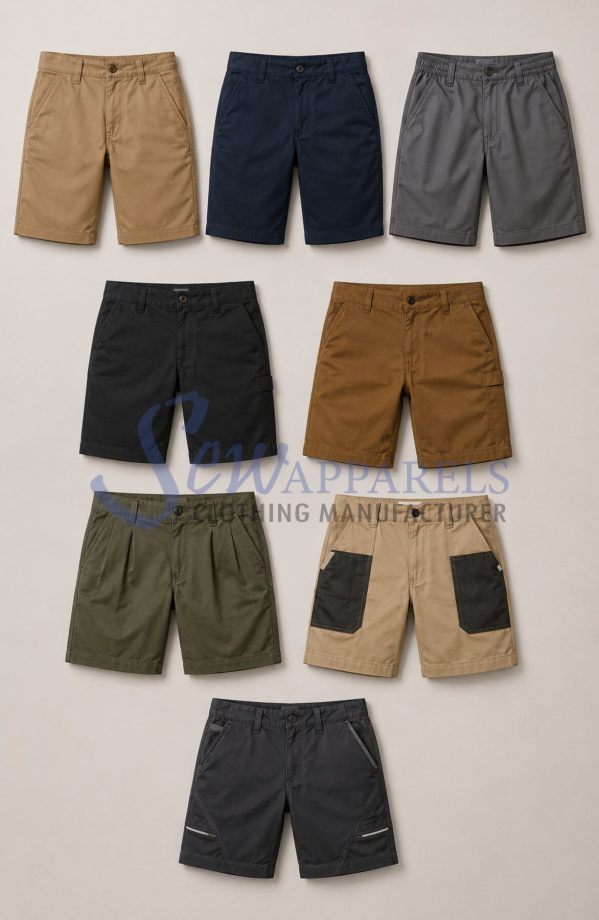
This guide helps uniform buyers and brands plan fit alternatives, sampling and order allocation. It does not claim that Sew Apparels has a tested block for every body shape or that one arrangement guarantees comfort for all wearers. Confirm feasible development options, measurements and sample requirements for the actual assortment before approving production.
Work Chino Shorts Fit Block Assortment: 6 Easy Checks
Start with the intended wearers and task, then separate body measurements from finished garment dimensions. Give each proposed block a stable identity. Compare samples under the same review conditions and carry the accepted choice into labels, ordering and repeat production.
1. Define the wearer and proportion brief
For work chino shorts fit block assortment, describe the intended uniform use and relevant wearer range. Ask which movements matter: sitting, walking, bending or reaching in the actual work context. Record the planned base clothing and footwear where they affect the sample review. A general request for a “comfortable fit” is not a complete pattern brief.
A work chino shorts wearer fit survey can organize relevant feedback and measurement needs without collecting unrelated personal details. Explain how information will be used, keep identifiable records controlled and share only what the development team requires. A few responses can highlight issues but should not be described as a representative population study unless the evidence supports that claim.
The public abstract of ISO 8559-1:2017 describes body-measurement definitions used to support clothing size and shape profiles. It is useful context for agreeing a consistent measurement basis. The abstract does not supply a finished shorts pattern, a universal ease allowance or proof that a Sew Apparels block fits a particular population.
Define the chino short body proportion range being considered using the agreed measurements and intended fit. Keep body dimensions and garment dimensions clearly labelled. A garment waist measurement cannot be silently substituted for a body measurement, and a size name does not explain every relationship in the pattern.
2. Identify what changes between blocks
A work chino shorts alternate fit block should have a reason for existing. Identify which proportions or shape relationships differ from the baseline and what issue the change is intended to address. Keep this separate from merely extending the size range or changing the style details.
For work chino shorts fit block assortment, review the work chino shorts hip waist relationship alongside rise, seat and leg shape. Increasing one circumference is not a complete answer to every fit concern. Ask the pattern team to show the proposed differences in a controlled measurement and drawing record.
A chino shorts multiple block assortment needs clear names or references that do not overpromise suitability. Describe the actual dimensional and silhouette differences rather than assuming that a broad body-shape label is self-explanatory. Keep work chino shorts block identity connected to the pattern revision, sample and size chart.
Prepare a work shorts fit block comparison using the same measurement names and methods. Note which measurements are the same, which differ and which require sample review. A useful comparison explains the choice to the buyer and production team without implying that every wearer with the same nominal size will prefer the same block.
3. Evaluate representative samples in the proposed material
Chino shorts body shape sampling should reflect the proportions being addressed, not only the easiest base-size wearer to find. Agree what sample sizes and wearer contexts are needed for the development decision. Keep the limits of the sample coverage visible rather than claiming universal fit from a small trial.
In work chino shorts fit block assortment development, use the proposed fabric and construction where possible. If a mock-up uses substitutes, record them and keep the relevant decision provisional. Material hand, stretch behavior and construction can change the observation, so an early pattern mock-up is not automatically the final fit approval.
A work chino shorts representative fit trial should use consistent, safe tasks and a recorded sample reference. Observe standing and the movements relevant to the brief. Ask about restriction, waistband behavior, seat room and access to pockets. Avoid treating one favorable standing photograph as evidence of working fit.
Review uniform chino shorts block selection through specific observations. Record the location and movement involved, then ask whether the proposed block change addresses it. Distinguish a shape issue from an incorrect sample measurement or construction departure. They may require different corrections even if the wearer describes both as “too tight.”
4. Review measurements, feedback and care state together
CottonWorks’ garment quality control overview includes fit and seam integrity among garment-quality considerations and notes that performance such as shrinkage also requires measurement. It supports keeping these questions visible in development. It does not prescribe an acceptance rule for this shorts range or certify a finished sample.
For work chino shorts fit block assortment, identify whether the sample is being reviewed before care, after an agreed care process or at another specified stage. Where a relevant care evaluation is required, keep the conditions and subsequent observations traceable. A pre-care approval should not be presented as evidence of unchanged fit after every laundering route.
A chino shorts fit complaint pattern is useful only when comments can be connected to sample, size, block and context. Group observations by waistband, hip, rise, leg opening, movement and pocket access. Keep isolated preferences distinct from repeated concerns, and avoid turning feedback counts into claims about the entire intended workforce.
Agree criteria before closing the sample review. Name the measurements, tolerances, relevant tasks and decision owner. If a revision is requested, identify it clearly and review the new sample rather than combining favorable comments from different versions into an approval for a garment that was never evaluated.
5. Make the ordering choice understandable
A uniform shorts fit choice guide should explain the accepted differences between blocks using plain language and the relevant size information. Give buyers enough detail to choose a starting option without promising that a chart replaces a fit review. Where uncertainty remains, arrange the appropriate sample or sizing check for the program.
For work chino shorts fit block assortment, acknowledge chino short nominal size limitations. The same label in two blocks may describe different finished proportions. Make those differences visible in ordering information instead of treating the labels as interchangeable.
A work short fit allocation record should distinguish block, size, quantity and specification revision. Use a controlled reference for the order and retain the accepted chart. Keep personal wearer information separate when it is not needed by the supplier; production usually needs an accurate quantity breakdown, not an unrestricted list of personal measurements.
Provide chino shorts block order guidance for changes and replacements. Confirm how the block reference appears on the relevant label, packing record or order line. If a wearer changes the selected option, record the new allocation instead of leaving two conflicting choices in the production file.
6. Approve the range and control later changes
For work chino shorts fit block assortment, final approval should identify each accepted block, its pattern revision, covered sizes and sample references. Name any sizes or proposed alternatives that remain provisional. Keep the approval boundary clear so an unfinished block is not accidentally included in the production release.
When requesting custom work chino shorts manufacturing, send the intended wearer brief, measurement basis, fabric proposal and block-size quantities together. Ask which pattern development, sample rounds and evaluations are included in the quotation. Confirm applicable minimums and delivery assumptions for that actual scope.
For private label work chino shorts production, keep labels and packing references aligned with the accepted assortment. A later fabric substitution, pattern revision or altered size chart needs review for its effect on fit. Do not assume that an earlier sample approval covers a changed arrangement merely because the product name is unchanged.
Work Chino Shorts Fit Block Assortment Checklist
- Describe the wearer proportions, uniform tasks and relevant clothing context.
- Separate body measurements from finished garment dimensions.
- Identify each block, pattern revision and intended dimensional differences.
- Review representative samples with consistent, safe tasks.
- Record care state, observations, measurements and approval limits.
- Match block-size choices to labels, quantities and change records.
Use this checklist to close the assortment decision, not to replace the sample evidence. Keep the drawing, measurement sheet and accepted sample available to the teams preparing the order. Resolve open points before treating the complete range as approved.
A Practical Fit Choice Example
Consider a fictional uniform program comparing Block A and Block B at the same nominal size. One wearer finds A’s waist suitable but reports restriction around the seat when sitting. The team checks the sample measurements and reviews B against the same tasks. A recorded improvement may support that wearer’s selection while still leaving other sizes and wearers subject to their own review.
The buyer records the accepted block and size instead of writing only the nominal size on the order. If the pattern changes later, the revised sample is checked against the original concern. This example illustrates a development and allocation process; it is not a Sew Apparels trial result or proof that one block suits every wearer.
Frequently Asked Questions
Is a second block the same as a larger size?
Not necessarily. An alternate block can change proportion relationships, while a size change follows the specified range. Compare the actual charts and samples.
Can one base-size approval cover the entire assortment?
Confirm the agreed coverage. Record what was reviewed and what further sample or measurement checks are required instead of assuming that every size is proven.
Does a size chart eliminate the need for feedback?
No. Measurements help describe the garment, while relevant wearer observations help assess the intended use. Keep both connected to the same sample reference.
Keep the Fit Decision Connected to Development
Use the Work Chino Shorts Buying Guides alongside fabric, fastening and colour planning. A work chino shorts fit block assortment record connects the accepted proportions, sample evidence and ordering choice. Preserve that record so repeat orders and later changes start from the actual approved arrangement.
Keep the accepted material and care state connected to the work chino shorts dye route quotation. If development changes the fabric, finishing or assembled sample, identify which fit observations need review. A block approval made in one material should not silently become approval of a different production arrangement.