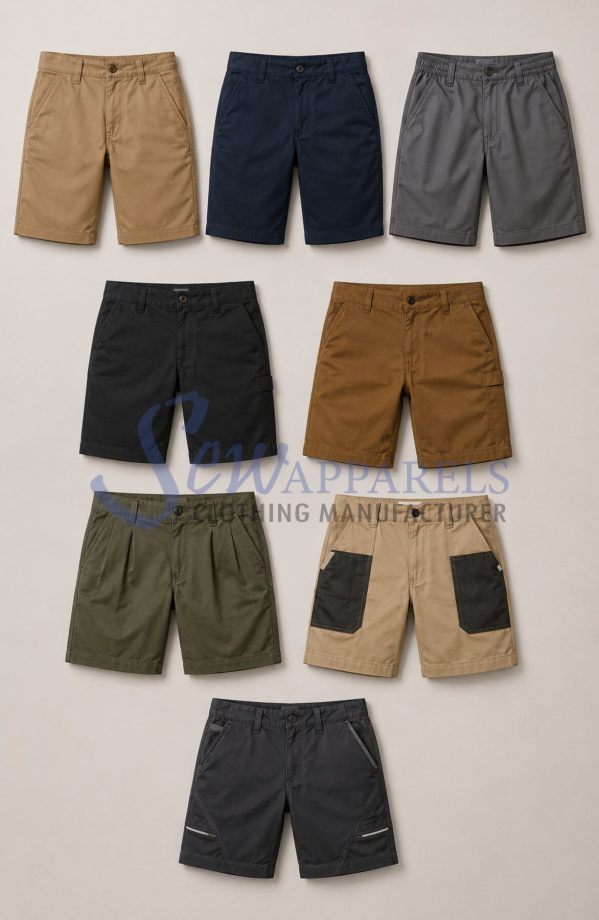
Smart Uniform Fabric Selection: 7 Essential Checks
Compare twill weight, stretch content and crease behaviour before approving a work chino shorts fabric for a uniform program. Keep the material reference and finished sample connected to the intended wearer and care route.
Use the uniform-fabric specification and approval checklist to record the agreed sample decisions.
Read the guide →
Waist Fastening Reinforcement: 7 Essential Checks
Compare button support, fly construction and belt-loop attachment before approving a work chino shorts fastening package. Record the sample revision, construction details and the accepted scope rather than judging the fastening in isolation.
Use the waist-fastening construction and approval checklist to document the accepted configuration.
Read the guide →
Work Chino Shorts Dye Route Quotation: Colour, Components and Complete Scope
Compare fabric-dyed and garment-dyed proposals using the same material, colour quantities and approved appearance. Confirm component compatibility, sample work, finishing inclusions and commercial conditions before selecting the quotation.
Read the dye route quotation guide
Work Chino Shorts Fit Block Assortment: Proportions, Samples and Order Choices
Compare block proportions using clear body and garment measurements, representative samples and recorded wearer feedback. Keep the accepted block identity, size chart, labels and quantity allocation aligned through order changes.
Read the fit block assortment guide
Work Chino Shorts Front Pocket Gaping: Fit, Construction and Correction Review
Record empty-pocket standing and seated observations, review the complete front fit and compare pocket construction references. Check matched revisions for appearance and access before closing correction and size coverage approval.
Read the front pocket gaping guide
Work Chino Shorts Wash Crease Appearance: Care Conditions, Seams and Presentation
Compare seam and fabric appearance under recorded washing and drying conditions. Keep unpressed observations, any pressing trial and the accepted reference sample separate before approving care presentation or easy-care claims.
Read the wash crease appearance guide
Custom Work Chino Shorts
Review fabrics, sampling, fit, MOQ and production details on the core product page.
View product page →
Work Chino Shorts Buying Guides: Preparing a Connected Brief
Work chino shorts must look polished while remaining comfortable through walking, sitting and repeated daily movement. Fabric choice affects drape, crease recovery, durability, wash appearance and the final cost of the garment. This hub connects each construction decision to a measurable sample check. Evaluate the shorts on the intended wearer in standing, walking and seated positions. Set a visible approval point for fabric appearance and another for comfort, so neither gets lost in a single subjective comment.
Use these guides before sampling, when comparing a supplier sample or when preparing a repeat order. The product page remains the place for manufacturer, supplier, MOQ and production questions. Keep the fabric swatch, care method and sample version together. If a repeat order uses a new fabric lot, compare it against the sealed reference before changing the approved specification. At the first meeting, agree what the shorts must do: hold a neat crease, move comfortably during work, withstand the planned laundering process and retain a consistent shade. Write these outcomes in the sample comments. A shared evaluation form makes it easier to compare two fabrics without relying on a vague judgement that one simply feels better.
How to use these guides during sampling
Start with the decision that matters most to the brief. Review fabric weight after conditioning, test stretch in the actual waistband and seat, and compare crease recovery after the planned wash or finishing route. Record the fabric code, width, composition, weight, stretch direction and tolerance with every sample comment. For each size, compare waist level, seat ease, hem clearance and pocket opening when the wearer sits and reaches. Mark any change against a dated pattern version so the factory can separate fabric effects from fit changes.
For a startup brand or smaller first run, approve one controlled fabric and colour before adding multiple trims. This keeps development focused while protecting the intended silhouette and uniform appearance. Ask the supplier to identify the base fabric and any substitute before a quotation is approved. A smaller launch can still specify a clear approval sequence: fabric swatch, first fit sample, revised sample and sealed reference. During sample review, photograph the same poses from the same angles, measure the waist and hem on a flat garment, and note whether the waistband twists or the pocket mouth opens under movement. After washing, compare shrinkage, crease appearance and seam puckering with the pre-wash record. If the fabric changes, repeat the relevant checks before accepting a revised price.
Buyer checklist before bulk approval
Use the same work chino shorts specification for fabric, fit, fastening and finishing. Before bulk approval, confirm that the reviewed garment was made from the intended material and that the wear and care trials reflect real use. Record who approved the sample and which tests remain open. An approved swatch does not automatically approve the finished garment: waistband support, seam balance, pocket opening and hem shape can change after stitching and pressing. Compare the first production sample against the sealed reference and list any approved tolerances in the purchase brief.
- Confirm the fabric weight method and conditioning state.
- Check stretch direction, recovery and waistband comfort.
- Review crease behaviour after sitting, folding and wash.
- Compare shade continuity and lot-to-lot risk.
- Approve hand feel, pocket support and seam appearance.
- Record tolerance, test method and sealed reference sample.
Why a connected fabric brief improves the result
Fabric, fit, fastening and finishing decisions affect the complete sample together. When comparing dye routes, the official CottonWorks dyeing preparation guidance explains why the cotton substrate preparation needs attention. Ask which material state and development steps are included in each proposal. This is process context, not confirmation of the preparation of a particular Sew Apparels fabric. Keep colour quantities, material references and the approved assembled appearance consistent when comparing offers. A changed substrate or finish should reopen the affected sample and commercial questions.
The official Coats sewing post-dyed garments brochure discusses component and seam-quality considerations for garment dyeing. Use it to frame compatibility questions about the actual shell, thread, pocketing and other components. Similar-looking materials need not respond identically. Confirm the proposed assembly and representative finished sample instead of treating a route name as proof of shade matching or overall performance. Neither reference certifies this short style or establishes which processes Sew Apparels offers. Retain evidence and accepted limitations with the order brief.
Low MOQ Work Chino Shorts Manufacturer
A low MOQ work chino shorts manufacturer discussion should start with the actual design, colour, size range and finishing route. Sew Apparels can review an early-stage brief and quote the applicable minimum for the requested fabric and trims; the minimum must be confirmed in the quotation rather than assumed from a sample order. Keep one approved base fabric and a controlled colour plan when preparing a first launch, then expand only after the fit and care results are consistent. Explain whether the programme is a single uniform style or several related styles, because each change in fabric, colour or trim can affect cutting, stock control and production planning. Ask the factory to state the assumptions behind its lead time and material availability.
Support for Startup Uniform Brands
Use the work chino shorts buying guides to prepare a practical first-range brief for a startup clothing or uniform brand. Share a reference style, wearer profile, fabric target, branding, size range and launch date so the team can identify what must be tested first. A focused first order helps you compare samples fairly and document the decisions behind the final specification. Confirm sample charges, production terms and the applicable MOQ in writing before bulk approval.
Turn your work chino shorts decisions into a product brief
Combine the decisions from the work chino shorts buying guides in one dated product brief: fabric identity, fastening details, dye-route quotation scope, accepted fit block, pocket appearance and the relevant care observations. Keep body and garment measurement references distinct, record the representative sample and link each accepted change to its reviewer. State unresolved items before releasing the order. Use the core product page for manufacturing enquiries and confirm quantities, sample charges, material availability and delivery assumptions for that specific project. On a repeat order, compare substitutions with the approved baseline and reopen only the decisions affected by the change.
Explore work chino shorts manufacturing