
Work chino shorts front pocket gaping should be assessed on an identifiable sample in the positions that matter to the uniform wearer. A pocket opening that lifts away from the body may involve fit, opening geometry, construction or the condition of the sample. One standing photograph is not enough to establish the cause or approve a correction.
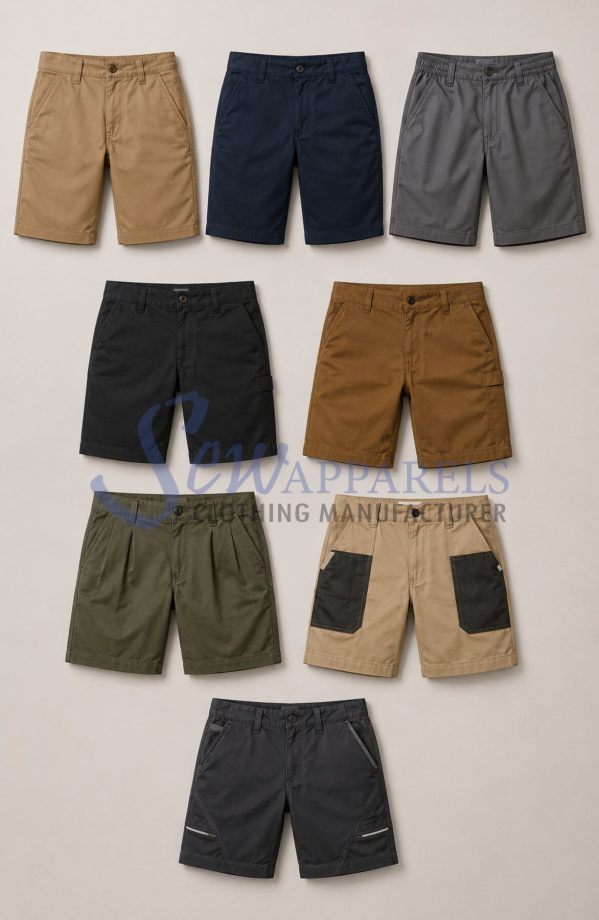
This guide helps buyers document the observation, compare revisions and close pocket-mouth approval without losing access or working fit. It does not claim that a Sew Apparels sample has been tested or that one alteration fixes every style. Use the actual fabric, block and construction references, then agree the relevant review with the pattern and sample team.
Work Chino Shorts Front Pocket Gaping: 6 Easy Checks
Start by recording when the opening changes, then review the complete front fit and pocket assembly. Keep empty-pocket observations separate from loaded-pocket observations. Compare matched samples and make the accepted change traceable through the size range and production specification.
1. Define the observation before assigning a cause
For work chino shorts front pocket gaping, describe the location and condition precisely. Is the opening lifted along its full length or only near one end? Is the effect visible on the table, while standing or after sitting? Record the sample, size, block, material and revision alongside the comment.
A chino work shorts pocket gape assessment should distinguish appearance from function. Note whether the opening still allows the intended hand access, whether the lining is visible and whether the wearer reports restriction. Avoid writing only “pocket wrong,” because the next sample team cannot tell which characteristic needs review.
Capture work chino shorts front opening standing appearance with the waistband fastened as intended and the garment positioned consistently. Keep work chino shorts empty pocket seated observation as a separate entry. A change that appears only during movement needs a different description from a persistent opening distortion on an unworn sample.
Where the intended use includes carrying items, record those observations separately with the agreed representative contents. Do not use an overloaded pocket to diagnose the empty garment. Likewise, a satisfactory empty-pocket appearance does not establish that the pocket suits every possible load or object.
2. Review the full waist and hip relationship
In work cargo or uniform development, the front pocket sits within a larger fit arrangement. For work chino shorts front pocket gaping, review the waist position, hip room, rise and nearby seams rather than treating the opening as an isolated strip of fabric. Keep measured sample departures separate from proposed pattern changes.
Work chino shorts hip fit pocket gape is a question for investigation, not an automatic diagnosis. Compare the actual sample dimensions with the agreed chart and review wearer observations. Do not assume that increasing one measurement will solve every case or that a smooth standing front guarantees sufficient movement room.
Closet Core’s pants-fitting guidance uses sample fitting, recorded observations and repeated review after adjustments. It is a home-sewing reference, not an industrial acceptance standard. Its relevance here is the value of examining the whole fit and checking a revision rather than selecting a correction from appearance alone.
A work chino shorts waist hip balance diagnosis should be supported by the sample review and technical assessment. Name the evidence that leads to the proposed change. If a different size or block is being compared, record that difference; it is not the same experiment as changing only the pocket construction.
3. Inspect opening geometry and construction references
A uniform shorts diagonal pocket opening needs an agreed drawing showing its endpoints, shape and relationship to stable garment references. Identify facing, pocket bag, any support material and the assembly route. State how relevant dimensions are measured so the drawing and sample comments refer to the same feature.
For work chino shorts front pocket gaping, compare the sample construction with that record. Look for differences in component identity, attachment position or finished opening measurement. Keep findings factual before deciding whether the issue belongs to pattern geometry, sewing execution or another aspect of development.
Closet Core’s slashed-pocket tutorial illustrates a pocket stay and opening stabilization within its Sasha Trouser construction. This provides an example of how support belongs to a complete pocket assembly. Its specific materials and dimensions should not be copied as a universal industrial fix; an alternative needs review in the actual shorts fabric and pattern.
Work chino shorts opening shape fit effects should be considered alongside hand access and appearance. A proposed shorter or differently angled opening may alter how the pocket is used. Ask for the relevant revised sample rather than approving a sketch solely because the opening appears flatter on paper.
4. Compare matched samples in standing and seated positions
A work chino shorts diagonal pocket sample comparison should identify exactly what changed. Hold material, size, block and review conditions constant where practical. If several factors change together, record them and avoid attributing the result to only one alteration.
For work chino shorts front pocket gaping, use work chino shorts standing seated pocket fit observations to compare the baseline and revision. Review safe movements relevant to the wearer brief and use consistent views. Keep appearance, access and reported restriction in separate fields so an improvement in one does not hide a new concern in another.
A work chino shorts matched sample fit review should retain the original sample identity and the revision under assessment. If a mock-up uses substitute fabric or an incomplete waistband, state that limitation. The trial can guide development without being treated as final proof for a different assembled garment.
Check the agreed care state as well. If the sample has been washed or pressed differently, its comparison basis has changed. Record that condition and decide what further review is needed. Do not make a final correction claim by comparing an unwashed baseline with a heavily reworked revision without explanation.
5. Define appearance and size coverage criteria
A work chino shorts front pocket appearance rubric should describe how the opening will be viewed, which conditions are included and who accepts the result. Use agreed references and clear observations rather than inventing a universal gape allowance. Keep cosmetic preferences distinguishable from access or fit requirements.
For work chino shorts front pocket gaping, review the planned work chino shorts pocket flare size set. An accepted base-size change may affect other sizes differently. Agree the representative sizes and measurement checks needed for this pattern and retain the coverage limits in the approval record.
Chino shorts pocket mouth sample approval should identify both the sample and the conditions reviewed. If an opening is accepted for standing appearance but seated access remains unresolved, keep that point provisional. A partial decision should not be rewritten as a complete garment approval.
Review both sides of the garment and relevant component intersections. Where the opening joins the waist or side seam, compare the intended relationship with the sample. Do not conceal an unresolved shape issue by pinning or pressing the opening for the approval photograph and then omitting that intervention from the record.
6. Close the correction and production reference
A work chino shorts pocket mouth pattern revision should name the changed feature, drawing version and sample required to verify it. Update related component references where necessary. Keep the baseline and revised instructions distinct so the sample room is not selecting between conflicting comments.
For work chino shorts front pocket gaping, a work chino shorts pocket gape correction record should connect the observation, proposed change, revised sample and acceptance decision. Include any accepted differences and remaining limits. A message saying “pocket fixed” is less useful than a traceable record of what was checked.
When discussing custom work chino shorts manufacturing, send the wearer brief, fabric proposal, block reference and pocket drawing together. Confirm sample rounds, applicable minimums, development costs and the scope of any further evaluation in the actual quotation. This guide does not promise a particular alteration service or result.
For private label work chino shorts production, retain the accepted pocket reference with the size chart and material list. A later fabric substitution or block change needs review for its effect on the opening. Repeat production should follow the approved arrangement while still checking whether the new order contains relevant changes.
Work Chino Shorts Front Pocket Gaping Review Checklist
- Identify the sample, size, block, material and care state.
- Record empty-pocket standing and seated observations separately.
- Check complete front fit and measured sample dimensions.
- Verify opening geometry, components and assembly references.
- Compare matched revisions for appearance, access and movement.
- Approve the stated size coverage and record the accepted correction.
Keep this checklist with the drawings and sample comments. Photographs support the record, while the measurements and conditions explain what the photographs represent. Resolve open points before carrying the revised construction into production.
A Practical Revision Comparison
Imagine a fictional buyer comparing Sample A with Sample B. A shows a lifted opening during the seated review. B changes the opening support while retaining the documented material and block. Its standing appearance improves, but the wearer reports more difficult hand access. The team records both observations and requests another review before approval.
This comparison illustrates why appearance alone cannot close the decision. The preferred arrangement still needs to meet the agreed fit and access requirements in the relevant sample set. It is not a Sew Apparels test result or evidence that adding support always resolves gaping.
Frequently Asked Questions
Does gaping always mean the hip is too tight?
No single cause can be assumed from the opening alone. Review fit, construction, sample dimensions and conditions before choosing a correction.
Can an opening be made smaller just to hide the gape?
Evaluate the proposed geometry in a sample. The change must be reviewed for access and working fit as well as appearance.
Can one corrected sample approve every size?
Confirm the agreed size coverage and further checks. Record what was actually reviewed instead of extending the decision without evidence.
Connect the Pocket Review to the Product Brief
Use the Work Chino Shorts Buying Guides alongside block, fabric and fastening decisions. A work chino shorts front pocket gaping review works best when the complete fit, pocket assembly and accepted sample describe the same revision. Preserve that connection when materials or patterns change.
Connect the front-fit observations to the work chino shorts fit block assortment review. Confirm which block and size were evaluated before changing the pocket. Keep a construction revision distinguishable from selecting a different fit option, so the accepted sample and ordering information remain consistent.