
Woven shirt packing specification connects garment presentation, collar protection and product identification in one repeatable instruction. A shirt can leave sewing in good condition yet arrive with a crushed collar, an awkward fold or the wrong size label. Buyers should approve the complete packed unit and carton arrangement before bulk packing begins.
This guide explains six checks for a woven shirt packing specification. It covers the packing components, size-range trials, barcode proof, carton assortment and release record. The approach is a buyer planning framework; actual packaging performance, retailer requirements and transport conditions must be confirmed for the proposed shirt and shipment.
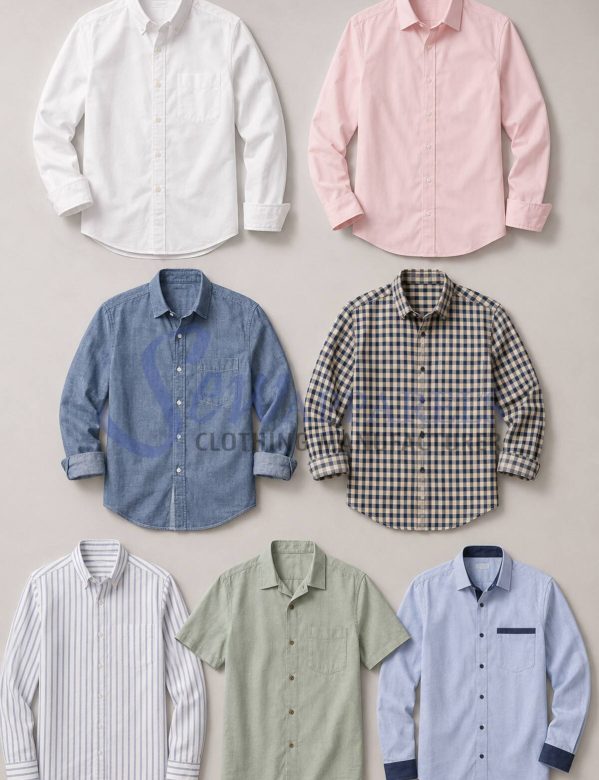
1. Define the woven shirt packing specification around delivery
Start with the receiving channel and the appearance expected when the package is opened. A retail shirt box, an individual bag for warehouse distribution and a bulk uniform order may need different arrangements. State whether the shirt will be displayed folded, unpacked for hanging or issued directly to wearers.
The shirt packing component list should identify every approved item: bag or box, folding board, collar insert, tissue, labels, hang tags and outer carton. Include quantities per shirt, supplier references, relevant dimensions and attachment or insertion instructions. Avoid informal descriptions such as “standard packing” when the buyer has a specific presentation requirement.
Separate presentation from shipping protection
DHL’s clothing shipping guide explains that suitable inner and outer packaging helps limit creasing, damage and contamination. It discusses structured packaging options for shirts. Use that guidance as background, then confirm the actual transport route and package suitability; it is not proof that a particular shirt pack will survive every handling condition.
In the woven shirt packing specification, distinguish the consumer-facing unit from the outer shipping package. A visually attractive bag does not establish carton strength, and a sturdy carton does not ensure a satisfactory retail fold. Keep the non-iron claim evidence separate from packing appearance: a neat unpacked unit does not establish its appearance after customer laundering. Assign separate approval decisions so an accepted outer box cannot conceal an unresolved collar or unit-label issue.
2. Approve collar support and the folding board
A shirt collar support packing trial should use the actual collar construction and the proposed packing materials. Compare how the shirt looks immediately after packing and after the agreed handling or storage simulation. Review collar tips, collar stand, button area and any marks introduced by supports. Describe observations rather than assuming additional stiffness will solve every problem.
The shirt collar insert specification should identify material, shape, dimensions, contact location and insertion method. Check that the support does not create unwanted pressure, snagging or a difficult unpacking experience. If a component changes, compare it with the approved assembly before allowing it into bulk packing.
Match the board to the complete folded unit
A woven shirt folding board specification should describe the board reference and how it relates to the planned fold. Record which shirt surfaces contact it and whether its edge can become visible or leave a mark. Do not select a board solely because it fits one sample; the size range and fabric construction may alter the packed result.
In the woven shirt packing specification, document the folding sequence with a clear reference, including sleeve placement, front alignment, collar position and fastening requirements. A labelled sample and annotated instructions can communicate details that a generic folded-shirt photograph misses. Keep the component references linked to the fold so later reviewers understand the whole packing arrangement.
3. Trial the size range, cuffs and retail bag
A shirt folded size range test should include the sizes and constructions most likely to challenge the selected packing method. Identify the selection basis with the buyer and packing team. Small and large sizes may need different handling even when the intended displayed width is similar; do not assume one successful sample covers every variant.
For shirt cuff presentation packing, state whether cuffs are visible, concealed or positioned to show a design detail. Check the relationship between sleeve folds, cuff thickness and collar support. Avoid forcing the garment into the desired outline if that creates distortion, hard pressure points or conspicuous creasing.
Check the bag after the shirt is inside
Shirt retail bag fit approval should review the filled package, not an empty bag measurement alone. Check closure, available space, label visibility and how the bag behaves around the collar and folded edges. Identify whether the approved dimensions include any closure allowance, and keep the measurement convention clear to the supplier.
Inspect the pack when handled in the way expected at receiving and retail. If the garment shifts, identify the cause and assess a revised arrangement. Additional materials should have a defined purpose rather than being added automatically. Record changes to bag size, board or folding sequence and confirm that the revised unit remains easy to unpack.
4. Proof barcode data and its visible placement
A woven shirt barcode placement brief should identify the barcode purpose, approved data source, label format and exact position on the unit. Distinguish a retail product identifier from warehouse or transport identification. The brand or receiving organisation should confirm its requirements; packing staff should not invent identifier data to fill a label template.
GS1 Greece’s barcode placement guidance explains that symbols should remain visible and unobstructed, with smooth placement surfaces and appropriate quiet zones. Position depends on the symbol and scanning environment. Confirm the applicable specifications rather than applying a generic placement measurement to every shirt package.
Review the actual printed label
A shirt packing label proof should connect style, colour, size and identifier information to the approved master data. Review the printed sample as well as the artwork file. Text can be correct in a spreadsheet but misplaced or unreadable when printed, so content approval and physical label approval need their own records.
Shirt pack barcode visibility should be checked with the shirt and inserts in place, the bag closed and other labels attached. Ensure folds, seams, glare, tape or overlapping components do not obscure the intended scanning area. Have the relevant team establish suitable verification or scanning checks; a successful casual phone scan is not comprehensive print-quality evidence.
For the woven shirt packing specification, make the approved data version and label placement reference available at the packing station. Quarantine or clearly identify superseded labels according to the agreed procedure. If a mismatch is found, investigate its scope before assuming the error affects only the first unit noticed.
5. Reconcile unit quantities and carton assortments
A shirt carton assortment packing list should show the quantities by style, colour and size for each carton or clearly defined carton group. State whether cartons contain a single SKU or an agreed mixed assortment. Keep the carton identity connected to the order and the receiving requirement so contents can be checked without guesswork.
Shirt carton SKU assortment should follow the approved allocation rather than whatever combination happens to fill the box. If an order requires a mixed-size ratio, verify both the total count and the breakdown. Two cartons can contain the same total number of shirts while carrying very different and commercially important size distributions.
Close the quantity record before sealing
Shirt unit carton reconciliation should compare the actual packed units with the assigned carton record and order requirement. Define who checks the count, who records exceptions and how a corrected carton is identified. A changed assortment should be reflected in the final documents rather than explained only in an informal message.
Review the filled carton for appropriate fit, protection and labelling. Record its actual dimensions and weight where required for shipment planning. Avoid claiming a universal carton capacity or guaranteed freight saving from a fold change. Packaging volume, protection and the receiving process need to be considered together for the specific shipment.
6. Release the packed reference and control changes
A woven shirt packed sample reference should identify the garment version, component references, fold, labels and approval date. Preserve the complete unit where practical and link it to photographs and written instructions. State what the approval covers, including any size or presentation variants that require a different arrangement.
A shirt visible brand packing check should review the logo, hang tag, label and any intentionally displayed garment feature against the approved reference. Ensure the packing method communicates the intended presentation without concealing necessary product identification. Keep aesthetic observations separate from quantity and protection checks so each issue has a clear owner.
Build a repeatable release brief
The woven shirt packing specification should name the current component list, packing sequence, label data version, carton allocation and exception procedure. Identify who may approve substitutions. A different board, bag or label position may appear minor but can affect presentation, scanning or carton fit, so assess its effect before making it routine.
For custom woven shirt manufacturing, provide packing expectations with the garment development brief and ask which components and trials are included in the quotation. Discuss customised inserts, label printing and carton assortments early. A manufacturing price should not be assumed to include every proposed branded packaging item.
For private label woven shirt production, align packing decisions with retail presentation and warehouse requirements. Buyers can use the woven shirt manufacturing page to prepare a specific enquiry. Confirm availability, order quantities and commercial terms for the actual garment and packing arrangement.
Frequently asked questions
Is one folded sample sufficient for all sizes?
Not automatically. A woven shirt packing specification should identify the range covered by approval and assess sizes or constructions that challenge the method. Keep exceptions clear so a different cuff or collar does not silently inherit an unsuitable packing reference.
Should every shirt use the same collar insert?
Use an insert only where its suitability has been assessed for the actual construction and handling needs. Collar shape, fabric and presentation can differ. A familiar insert reference is a starting point for review, not evidence of universal compatibility.
Can a startup use a simple packing arrangement?
A startup can prepare a focused packing brief and discuss feasible materials without adding unnecessary complexity. Simple packing still needs clear product identity, quantity and presentation instructions. The discussion does not establish a fixed minimum order or guarantee every customised component is available.
What should remain in the approval file?
Retain the packed sample, component references, approved label proof, size-range decisions and carton allocation. The woven shirt buying guides connect packing with related development and sourcing tasks. A traceable woven shirt packing specification helps future orders reproduce the accepted arrangement while making changes visible.